
Beyond Methyl Salicylate: The Minor Compounds in Sweet Birch Oil
Ask most people what is in a bottle of sweet birch oil and you will get one answer: methyl salicylate. It is not wrong. In a properly distilled oil from Betula lenta, methyl salicylate can account for roughly 98 to 99 percent of the total volume, which is an unusually high concentration for a single compound in any essential oil. But that remaining fraction, often under two percent by weight, is where a lot of the interesting chemistry lives. Understanding sweet birch oil chemical composition beyond its headline molecule helps explain batch-to-batch differences in scent, why lab reports matter more for this oil than for almost any other, and where the real safety considerations sit. This piece looks at what gas chromatography actually finds in the bottle, what research has observed about those minor constituents, and what that means for anyone evaluating quality or safety.
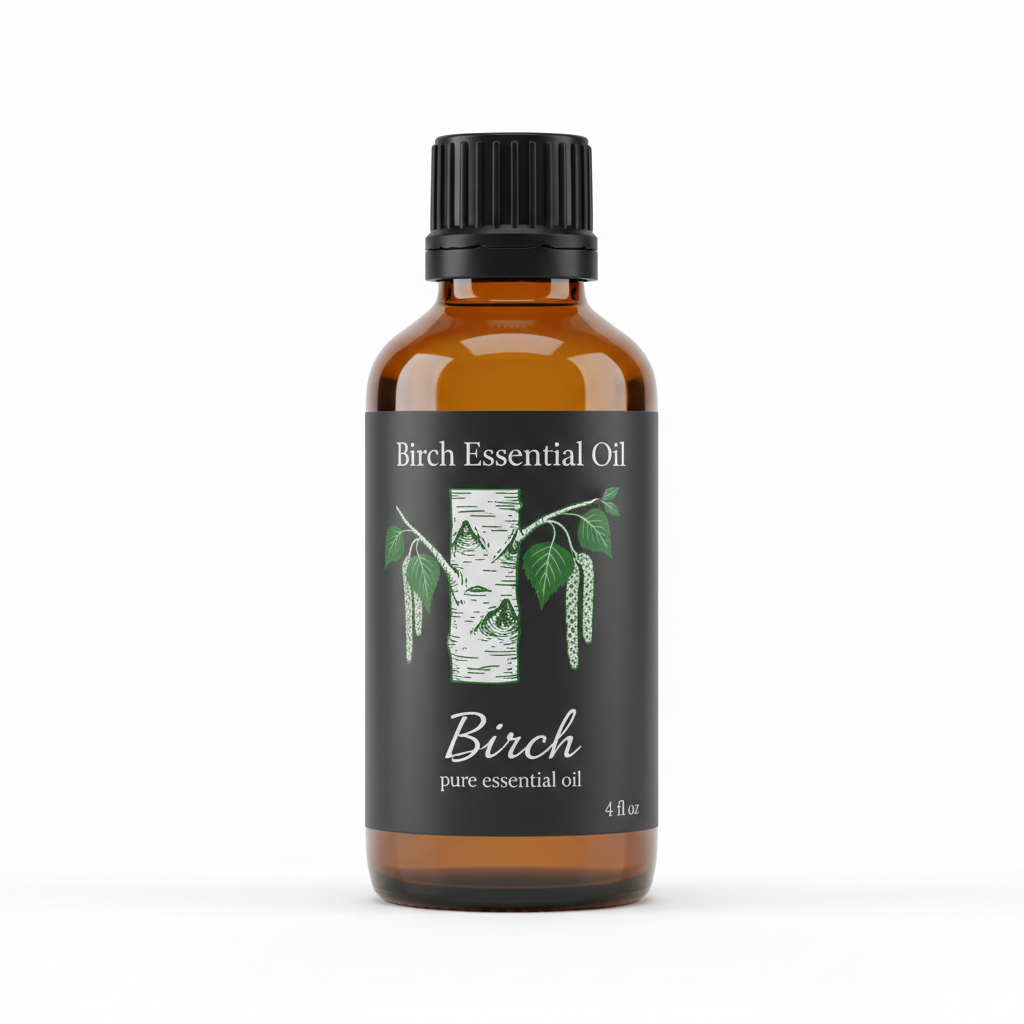
What Is Actually in the Bottle: A Chemical Fingerprint
Sweet birch oil is produced by steam distilling the bark, and sometimes the twigs, of Betula lenta, a tree native to the eastern United States and eastern Canada also known as black birch or cherry birch. The distillation process concentrates a glycoside called methyl salicylate primaverin (technically gaultherin, the same precursor found in wintergreen) into free methyl salicylate through enzymatic and thermal breakdown. The result is an oil that, chemically, looks almost identical to oil distilled from wintergreen leaf (Gaultheria procumbens), which is why the two are so often discussed together and occasionally substituted for one another in commercial supply chains.
Published gas chromatography-mass spectrometry (GC-MS) analyses of sweet birch oil generally report a composition that looks something like this, though exact figures shift from harvest to harvest and lab to lab:
| Compound | Typical Range | Chemical Class |
|---|---|---|
| Methyl salicylate | 96 - 99.5% | Ester |
| Ethyl salicylate | trace - 0.5% | Ester |
| Methyl benzoate | trace - 0.3% | Ester |
| Alpha and beta pinene | trace - 0.2% | Monoterpene |
| Betulene and related sesquiterpenes | trace amounts | Sesquiterpene |
| Residual salicylic acid | trace, batch dependent | Phenolic acid |
Those percentages look small, and individually they are. But in fragrance chemistry, compounds present at a fraction of a percent can still shift how an oil smells, because human noses are far more sensitive to some molecules than others. A trace ester with a low odor threshold can register more strongly than a monoterpene present at ten times the concentration.
The Terpene Profile Beyond the Headline Compound
When people search for a birch oil terpene profile, they are often surprised how thin it looks compared to an oil like clary sage or black pepper, where terpenes make up the bulk of the composition. In sweet birch, terpenes are a minority report, not the main story. The monoterpenes most commonly identified in trace GC-MS peaks are alpha-pinene and beta-pinene, both common across the plant kingdom and typically present at well under half a percent. Sesquiterpene traces have also been reported, though identification at these concentrations is difficult and results vary between analytical labs and instrument sensitivity.
This is part of why what else is in birch essential oil is a harder question to answer definitively than it is for oils with a more distributed terpene makeup. At such low concentrations, some compounds sit right at the detection limit of standard GC-MS equipment, and a batch that shows a given trace compound at 0.05 percent in one lab report might show it as "not detected" in another simply due to instrument calibration or sample size. Reputable suppliers account for this by reporting a compound as present, not detected, or below quantification limit rather than omitting it from a certificate of analysis altogether.
Sweet Birch vs. Birch Tar Oil: Why Species and Process Matter
One point of real confusion in the birch category is that "birch oil" is used to describe at least two very different products. Sweet birch oil, distilled from Betula lenta bark using steam distillation, is the near-pure methyl salicylate profile described above. Birch tar oil, sometimes labeled white birch oil or rectified birch tar, is produced through dry distillation (destructive distillation under high heat) of bark from Betula pendula or Betula pubescens, and its chemistry looks nothing like sweet birch. Birch tar contains phenolic compounds such as guaiacol, cresols, and creosol, along with polycyclic aromatic hydrocarbons that form during the high-heat process, and it carries a smoky, leathery scent rather than the wintergreen-like aroma of sweet birch.
Confusing the two matters because their safety profiles and typical uses diverge sharply, and product listings do not always specify species or distillation method clearly. Anyone comparing sweet birch oil chemical composition data across sources should first confirm which species and which distillation process the certificate of analysis is actually describing, since a report for birch tar oil says almost nothing useful about a bottle labeled sweet birch, and vice versa.
What Research Observes About the Minor Constituents
Most published research on sweet birch oil chemistry has focused on the dominant methyl salicylate fraction, given both its concentration and its long history of use in fragrance and flavor applications. Research bodies including the Research Institute for Fragrance Materials (RIFM) and the International Fragrance Association (IFRA) have published safety assessments and usage restrictions specifically around methyl salicylate as a fragrance ingredient, reflecting how much regulatory and scientific attention this one molecule receives relative to the trace compounds around it.
Research on the minor constituents themselves is comparatively sparse, and what exists tends to come from analytical chemistry papers cataloguing plant volatiles rather than studies designed around any particular outcome. Some GC-MS surveys of birch species have noted the presence of triterpenes such as betulin and betulinic acid in birch bark extracts more broadly, though these compounds are largely associated with the solid bark material rather than the volatile oil fraction recovered through steam distillation, and their presence in a finished essential oil, if any, would be at very low levels. It is worth being direct here: research suggests these minor compounds exist and contribute to the oil's chemical signature, but there is no body of research establishing specific outcomes tied to any individual trace compound in sweet birch oil, and readers should treat any such claim with skepticism regardless of where it appears.
Anecdotal evidence from aromatherapy practitioners sometimes attributes subtle differences between batches, brighter versus flatter aromas, for example, to variation in the minor fraction. That is a plausible explanation given how odor-sensitive human perception is to low-concentration esters and terpenes, but it remains an observation rather than a documented finding, and no peer-reviewed work has isolated which specific trace compounds drive which sensory differences in sweet birch oil.
Safety Profile and Considerations
Sweet birch oil's dominant compound is also the reason it carries a more serious safety profile than most botanical oils on the aromatic shelf. Methyl salicylate is closely related, chemically, to acetylsalicylic acid, the active compound in aspirin, and the body absorbs it readily through skin. Poison control resources have long flagged pure wintergreen-type oils, sweet birch included, as carrying meaningful risk if ingested even in small amounts: a teaspoon of undiluted oil delivers a dose of methyl salicylate roughly comparable to a large number of standard aspirin tablets. For that reason, undiluted sweet birch oil should never be taken internally, and bottles should be stored well out of reach of children and pets, with a tight cap and, ideally, a bottle that is not easily opened by small hands.
For topical or aromatic use, proper dilution is non-negotiable with this particular oil. A common starting point in aromatherapy references is a dilution of one percent or less in a carrier oil for skin application, meaning roughly five to six drops of sweet birch oil per ounce of carrier, though individual skin sensitivity varies and a patch test on a small area of skin, waiting 24 to 48 hours before broader use, is worth doing every time with a new bottle or a new carrier combination. Avoid application on broken or irritated skin, and keep the oil away from eyes and mucous membranes.
Because methyl salicylate shares that chemical relationship with aspirin, anyone who avoids aspirin-family compounds for any reason, is pregnant or nursing, or takes medication that affects blood clotting should talk with a qualified healthcare provider before adding sweet birch oil to a routine, topical or aromatic. This is general safety guidance, not a substitute for that conversation, and nothing here should be read as advice to start, stop, or adjust any medication or care plan without professional input.
Reading a GC-MS Report: Sourcing and Quality Indicators
Given how concentrated sweet birch oil is in one compound, and given that synthetic methyl salicylate is inexpensive and widely available, this is one of the essential oil categories most prone to adulteration. A bottle can be stretched, or entirely replaced, with lab-synthesized methyl salicylate and still smell correct to most noses, since the synthetic and naturally derived molecules are chemically identical. This is exactly where the minor compounds matter for buyers, not the aromatherapy chemistry so much as the authenticity chemistry.
A few practical indicators separate a genuine, well-documented batch from a vague listing:
- A batch-specific GC-MS report, not a generic spec sheet, showing the actual trace compound profile for the lot in the bottle, including anything reported as trace or below quantification limit rather than omitted.
- Species and plant part identified by Latin binomial, specifically Betula lenta bark, distinguishing the product from birch tar or other birch species oils.
- Country and region of origin, since sweet birch is commercially harvested primarily in the Appalachian region of the United States and parts of eastern Canada, and a supplier who can name the harvest region is generally further along in traceability than one who cannot.
- Isotope ratio testing where available. Carbon isotope ratio analysis (IRMS) can distinguish naturally derived methyl salicylate from petrochemical-synthesized methyl salicylate, since they carry different carbon-13 signatures. Not every supplier runs this test, but its presence on a certificate of analysis is a strong authenticity signal for a compound this easy to synthesize.
- Consistent specific gravity and refractive index values from batch to batch, both of which shift measurably when an oil has been cut or blended with synthetic material or a carrier.
None of this means every trace compound needs to be individually named for a bottle to be trustworthy. It means the paperwork should exist, should be specific to the batch in hand, and should be something a supplier is willing to share rather than describe as available on request.
Practical Takeaways
Methyl salicylate will always be the headline of any sweet birch oil chemical composition discussion, and for good reason: it drives both the oil's characteristic wintergreen-like aroma and its safety considerations. But the minor compounds, the trace esters, the scattered monoterpenes, the sesquiterpene fractions sitting at the edge of detection, are not just chemical trivia. They are a useful lens for evaluating whether a given bottle is what it claims to be, and they are a reminder that even a seemingly simple oil rewards a closer read of the lab report before it rewards a closer read of the marketing copy.
For anyone building a habit of checking sourcing on any botanical product, sweet birch is a good teacher. It shows plainly why a batch-specific GC-MS report, clear species identification, and honest disclosure of trace-level findings matter more than a pleasant scent alone. The nose can tell you an oil smells right. The chromatogram is what tells you it actually is what the label says.