Sweet birch is one of the most distinctive oils a maker can buy, and one of the most frequently faked. This guide covers how the oil is actually produced and graded, who buys it by the pound, what separates a documented supply from a drum of mystery liquid, and how order sizing typically scales as an operation grows.
Tell us what you make and the volumes you pour, and we will put real numbers and documentation in front of you.
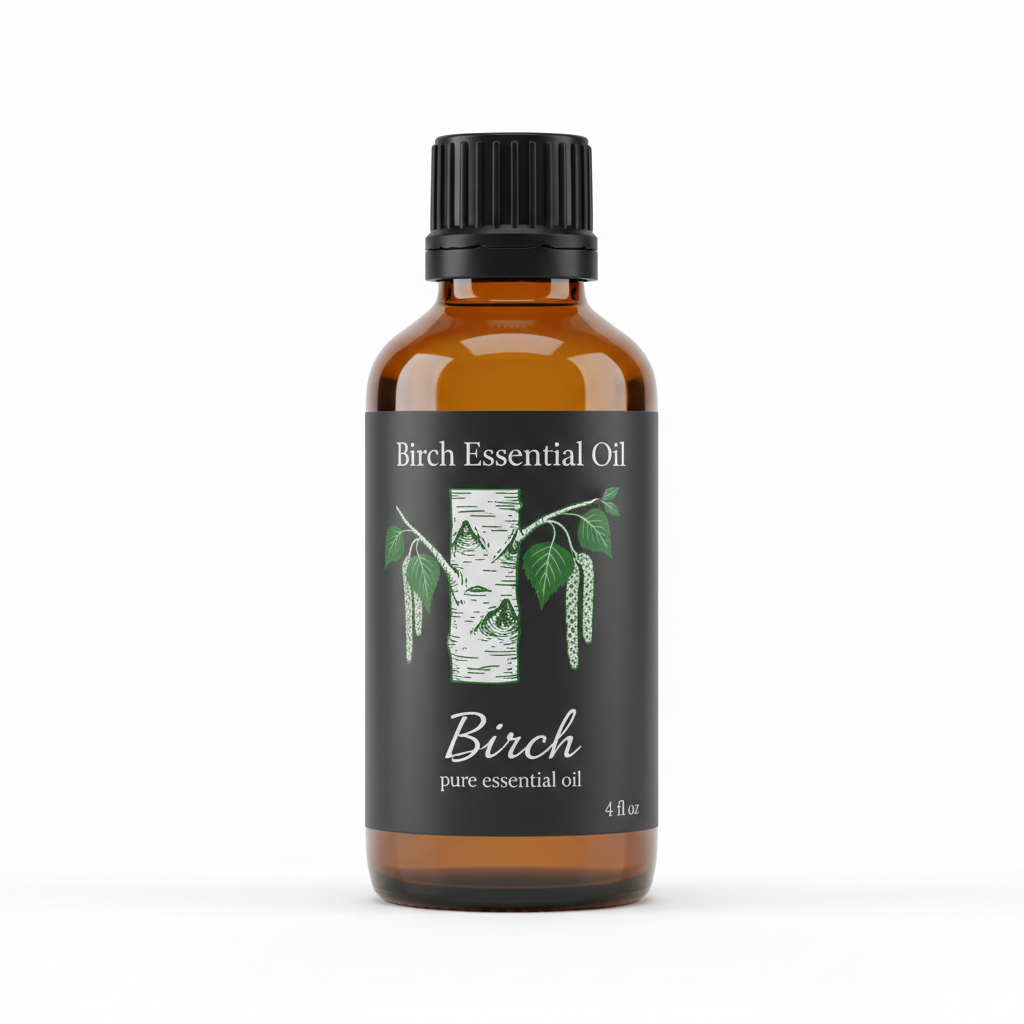
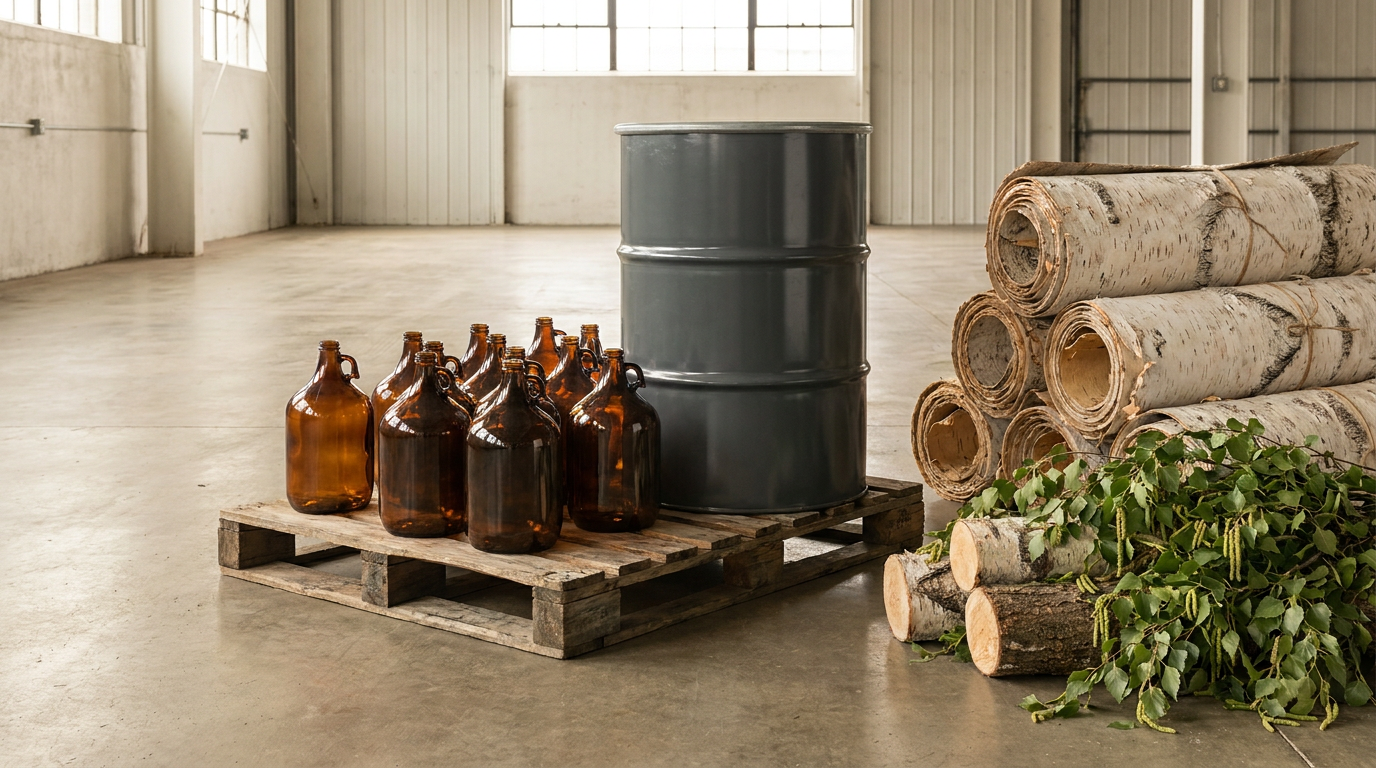
Birch essential oil, in the form sold on this site, is distilled from the bark and twigs of Betula lenta, the sweet birch of eastern North American hardwood forests. The bark itself holds almost no free essential oil. It is macerated in warm water first, and that soak sets off the reaction that develops the oil's signature compound before the wet charge goes into the still. The result is a clear to pale yellow oil with an intensely sweet, cool, wintergreen-like aroma and a woody, root beer edge. Our step-by-step account of how birch essential oil is distilled, from bark to bottle follows that process on our own equipment.
Chemically, sweet birch is unusual among essential oils: it is very nearly a single-constituent material. Published analyses of authentic sweet birch oil consistently report methyl salicylate as the overwhelming majority of the oil, commonly in the range of 93 to 99 percent, with the remainder made up of trace compounds such as guaiacol, veratrole, and a pair of decadienals that only appear in true bark distillates. That near-purity of one molecule is what makes birch gradeable in a way many botanicals are not: the analytics are simple to run and hard to argue with.
The wholesale market sorts loosely into four things sold under the name birch, and only one of them is this oil:
| Sold as | What it actually is | How to recognize it |
|---|---|---|
| True sweet birch oil | A distillate of macerated Betula lenta bark and twigs | Botanical name and plant part on the COA; natural trace markers present alongside methyl salicylate |
| Synthetic methyl salicylate | A single lab-made aroma chemical, sometimes labeled as birch or wintergreen | Very low price, no botanical documentation, no trace constituents |
| Diluted or cut oil | True or synthetic material stretched with carriers or cheaper oils | Physical constants such as density and refractive index drift outside pharmacopoeia ranges |
| Birch tar oil | A smoky, leathery pyrolysis product of birch wood, a different material entirely | Dark color and campfire aroma; a legitimate perfumery material, but not sweet birch |
If the synthetic route is genuinely on your table, our comparison of birch fragrance oil vs. birch essential oil lays out when each one belongs.
A widely cited market survey of commercial birch oils found that none of the 27 retail samples tested carried the trace markers of genuine bark distillate. Adulteration is not an edge case in this category; it is the default. Documentation is not a nicety when you buy birch in bulk, it is the entire purchase.
Demand for birch by the pound comes from makers and brands for whom the aroma is the product. Cold-process soap houses use it for classic wintergreen-style bars, where a trace scents an entire batch. Candle studios build root beer, fireside, and northwoods lines around it. Perfumers and fragrance houses buy it as a crisp, penetrating top-to-middle note and prize verifiable naturalness. Body-care formulators work with it at conservative cosmetic dilutions in massage and after-activity products. Sauna and spa suppliers draw on the long northern tradition of birch in the bathhouse. Room-scent brands lean on its nostalgic Americana register, and private-label sellers rebottle documented oil under their own marks.
Each of those buyers weighs the same oil differently, which is why this guide splits into the application-specific sourcing pages listed at the end. What they share is the arithmetic: birch is potent enough that even modest product lines consume it by the pound, not the ounce, and per-pound cost falls steeply with size.
Three things separate a supply you can build a product line on from a commodity drum: documentation, honest grading, and consistency between orders.
Read the COA before you price-shop. With sweet birch, the certificate is cheap to verify and nearly impossible to fake convincingly: physical constants, botanical identity, and batch traceability tell you more than any marketing page. Our current certificate is published here as a PDF, and we keep a guide to reading birch lab reports.
Because birch is used at trace levels in most finished products, a pound goes a long way, and the sensible path into bulk is stepped. The path most growing operations take runs in three stages: a bench sample to approve the aroma against the formula, a pilot quantity to run a full production trial, and then pound-tier orders once the line is proven. Per-pound cost falls at every tier; the price ladder behind these tiers is unpacked in our guide to how much birch essential oil costs.
All sizes are the same oil from the same batch stream; bulk tiers are not a separate grade. The 5 lb size is where per-pound pricing starts to step down, and it keeps falling through 400 lbs.
Order a 0.5 oz bench bottle from the shop and evaluate the oil in your own formula.
Review the published COA for the current batch, and ask us anything it does not answer.
Pound sizes check out directly on the bulk page; unusual volumes and standing orders go through a quote.
Each delivery carries its batch code, so repeat orders can be verified against their certificates.
Each guide covers why birch suits that use, how formulators in that category typically approach it, what those buyers should demand from a supplier, and how to size orders.
Why a trace of birch carries an entire batch, and how soap houses scale from pilot pours to standing orders.
Read the sourcing guide →Load planning, flash-point awareness, and sizing a seasonal fireside line without over-committing.
Read the sourcing guide →A near single-constituent wintergreen note, and why authenticity documentation matters most to perfumers.
Read the sourcing guide →Cosmetic formulation practice for a potent oil: dilution discipline, salicylate awareness, and batch documentation.
Read the sourcing guide →The northern bathhouse tradition, translated into scent products for saunas, steam rooms, and spa lines.
Read the sourcing guide →Root beer nostalgia and cabin-in-the-woods accords for sprays, diffuser lines, and scent marketing.
Read the sourcing guide →Rebottling a documented single-origin oil under your own brand, from first tranche to repeat supply.
Read the sourcing guide →Request a quote for the volume you actually use, or start with a bench sample and the published COA.