For perfumers, sweet birch is a paradox: chemically almost one molecule, yet impossible to replace with the synthetic when a brief calls for verifiable naturals. This page is part of our Guide to Buying Birch Essential Oil in Bulk.
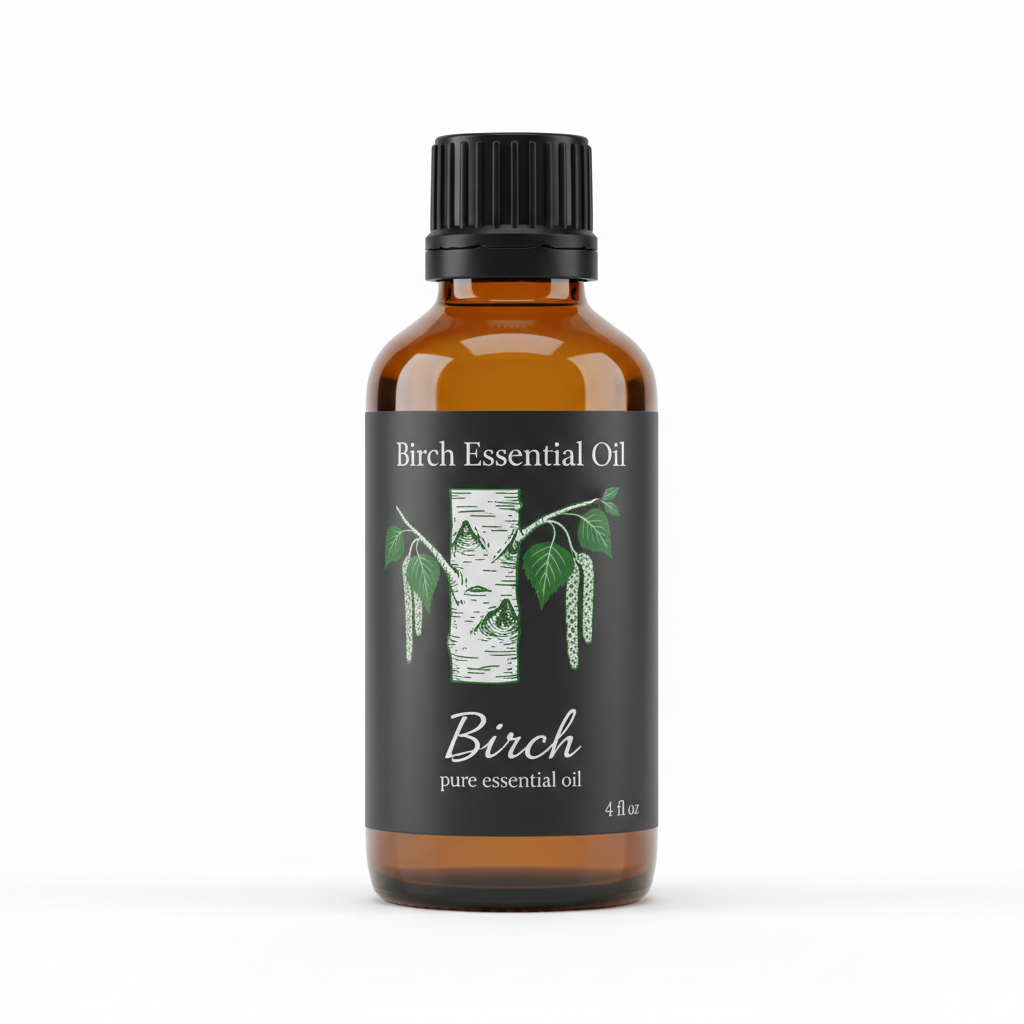
Request the current batch's documentation with your quote, or evaluate the material from a bench bottle.
Sweet birch reads as a crisp, sweet wintergreen note with an apothecary edge with a woody, faintly smoky undertone that pure synthetic methyl salicylate lacks. Published analyses of authentic bark distillate report methyl salicylate commonly at 93 to 99 percent, but the perfumery interest is in the remainder: trace guaiacol, veratrole, and decadienals that round the note and mark the material as genuine. In a naturals-led brief, those markers are the difference between declaring a botanical and declaring an aroma chemical.
Structurally it behaves as a top-to-middle note with unusual authority. It anchors woodland and outdoors accords, gives lift to fougère-adjacent builds, and is the core of Americana root beer accords. It is distinct from birch tar, the smoky pyrolysis material behind classic leather bases; a house that wants both is buying two different materials, and our guide to birch tar in perfumery covers the other one.
Birch is a dominant material, and compounders dose it accordingly: as a small percentage of the concentrate, balanced against conifers, citrus, mints, and soft woods. Our perfumery guide to birch works through crisp woodland compositions in detail, and the general blending rules for keeping a dominant note in check are collected in our conifer, citrus, and mint pairing guide.
On the regulatory side, methyl salicylate does not carry its own IFRA restriction standard, but professional formulators still track salicylate exposure guidance and finished-category limits in their target markets, and some jurisdictions cap total salicylate content in cosmetic products at around the one percent mark. None of that is a barrier at the doses birch is actually used; it is simply part of the paperwork a serious supplier should be able to discuss.
In a category where a market survey found no genuine bark distillate among 27 commercial samples tested, a fragrance house's real risk is not price, it is declaring a natural that is not there. Buy against the certificate, not the label.
Perfumery consumes birch the most slowly of any bulk category: concentrates use it by the gram, and even a successful fine-fragrance line draws down a pound over many compounding runs. Independent perfumers typically work from 2 oz to 16 oz bottles; compounding houses and brands with a birch-forward accord in production step into 5 lbs, and contract compounders into 25 lbs.
Request a quote, order a 0.5 oz evaluation bottle, or read the published COA now.