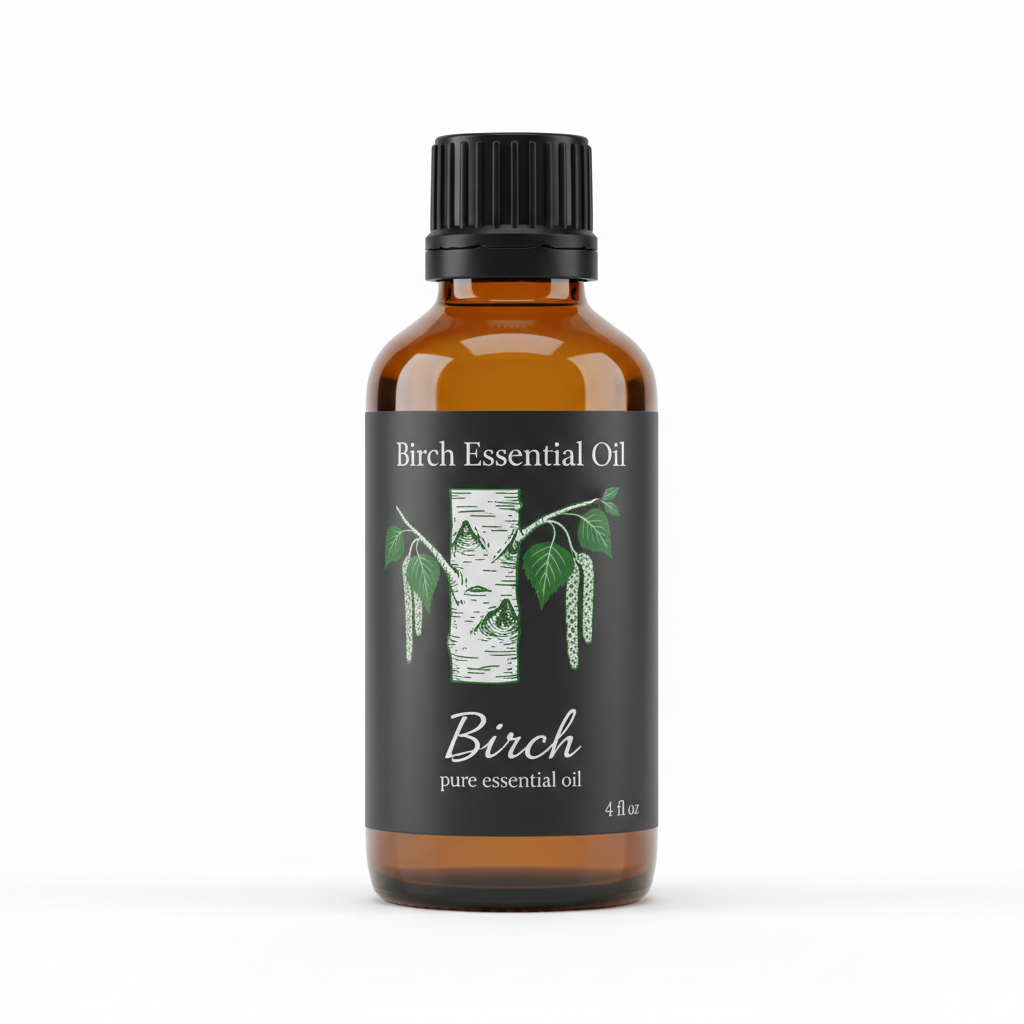
Sweet birch is almost entirely one compound, and that compound demands respect. We distil it ourselves and we put the warnings where you will actually read them.
Sweet birch is dominated by methyl salicylate, and that single fact should shape how it is sold.
It smells like wintergreen because it is chemically almost the same thing, and it is one of the most concentrated aromatic materials a home user can buy. Most sellers shelve it next to lavender and say nothing at all. We would rather move fewer bottles and know they are being handled correctly.
There is a second problem worth naming: synthetic methyl salicylate is cheap, and a great deal of what sells as birch oil is either synthetic or a wintergreen substitute. Buying the crop and running our own still is the only way we can answer for which one you are getting.
This is the most hazardous oil we sell and we are not going to soften that. Methyl salicylate is absorbed through skin, and birch oil has caused serious poisoning, including deaths in children who swallowed it. Keep it locked away from children entirely.
Do not use it if you are pregnant or breastfeeding, do not use it on children at all, and do not use it if you take anticoagulants or are sensitive to aspirin and salicylates, because methyl salicylate acts on the same pathway. Dilutions must stay very low, far below anything you would pour for a citrus or a lavender, and it must never go under a dressing or onto broken skin. It must never be swallowed.
No medical claims are made here. Birch has a traditional association with muscular rubs and we are deliberately not making that argument for you: the dose that matters is small and the margin is narrower than most people assume.
A batch that fails to read as genuine distilled Betula lenta never reaches a bottle. We would rather have nothing to sell than fill one from a synthetic drum.
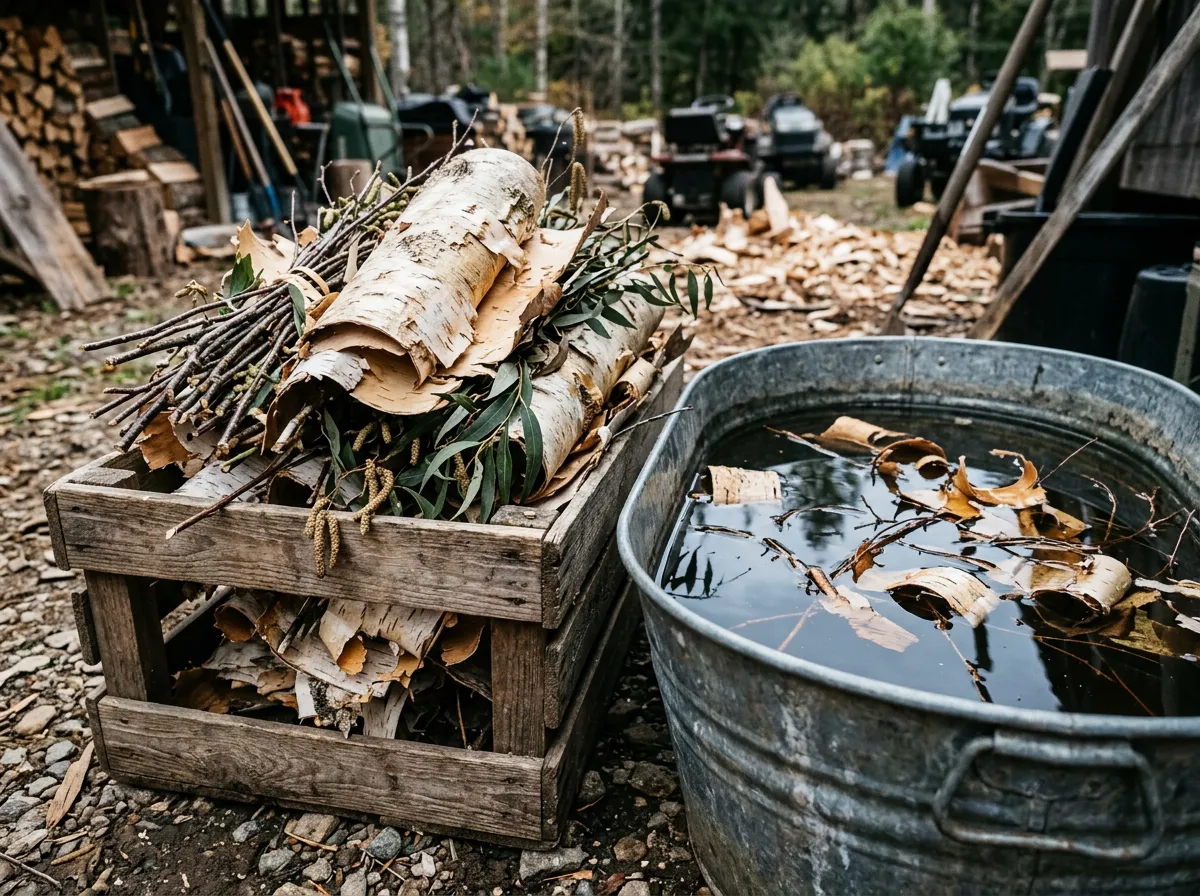
Betula lenta is the sweet birch of eastern North American forests, and it is the bark and fine twigs we work with rather than the timber.
Unusually for an aromatic, the material is macerated in warm water before distillation. The aroma is not simply sitting in the bark waiting to be steamed out: soaking develops it, and skipping that step gives a thin, disappointing oil.
Bark showing mould, insect damage or excess moisture is discarded before it goes anywhere near the tub. It is unglamorous sorting work, and it is where a careless producer loses the batch before the still is even lit.
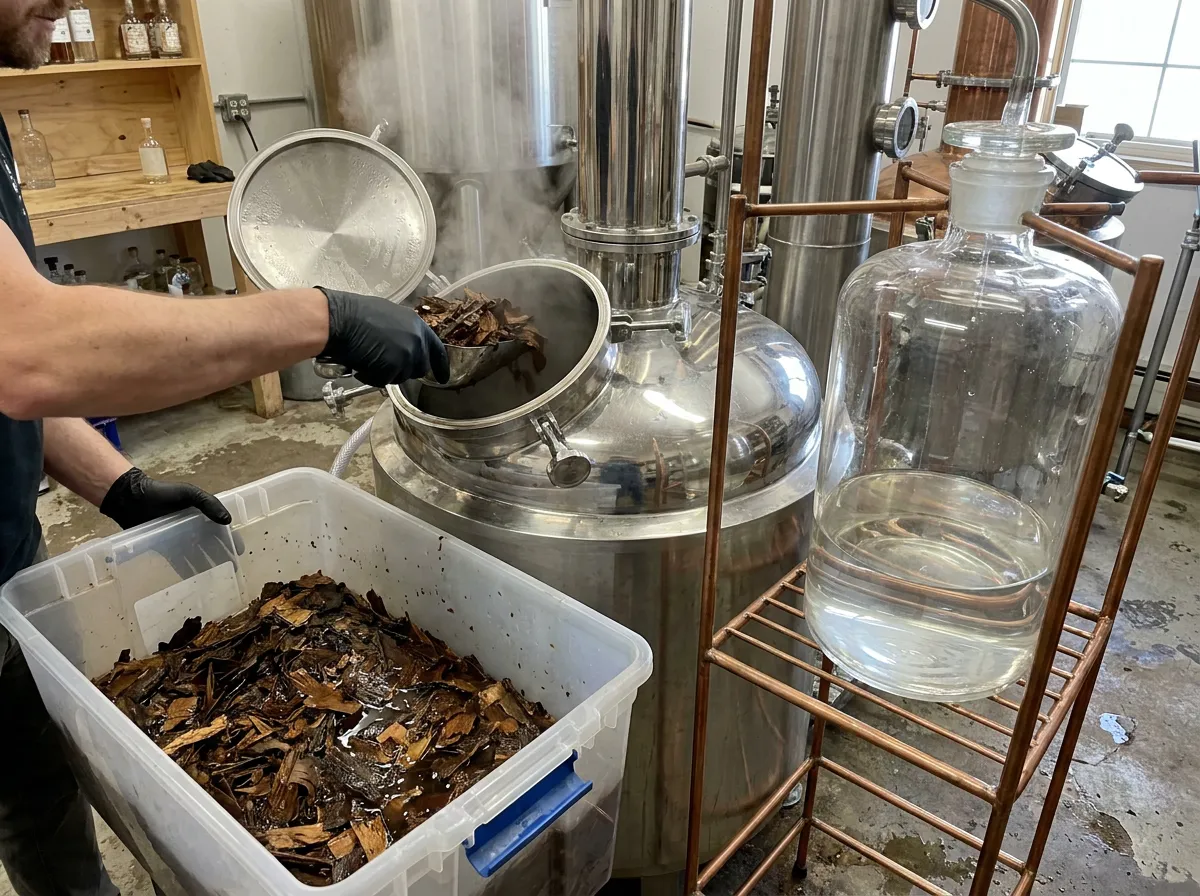
The maceration and the distillation both happen here, which is the only way to be certain no synthetic methyl salicylate has joined the batch along the way.
Once the soak has done its work the material is distilled, and the oil separates intensely sweet and cool, very close to wintergreen with a woody edge underneath.
The charge is taken out fully rather than to a clock, and then the batch goes away to be measured before anything is bottled.
Every batch is analysed by an independent laboratory, and on this oil the result is a safety document before it is a quality one.
Measured for every batch. It dominates the oil, and the cautions below follow from the figure.
Isotope and profile work distinguishing genuine distilled birch from cheap synthetic methyl salicylate.
Confirms this is Betula lenta rather than gaultheria oil sold under the birch name.
We will send the figure for whichever lot you hold. The contact page reaches us too.
The still date, the fill date and a lot reference tying both to an analysis.
Amber in every size, and a cap you should keep firmly closed.
Pure distilled Betula lenta, undiluted, with no synthetic methyl salicylate added.
Sweet birch bark and twig, sorted, soaked and stilled on site, with methyl salicylate quantified and the restrictions set out at the top of this page rather than the bottom.
Store it out of reach.
Shop Birch Oil