
Birch vs Cedarwood: Choosing a Woodsy Base Note for Fall Blends
Fall is when a lot of home blenders start reaching for something deeper. The bright citrus and green herb notes that carried summer diffuser blends start to feel thin against cooler air, and a woodsy base note is usually the fix. Two of the most common candidates are birch and cedarwood, and they get compared often enough that it's worth laying out exactly where they overlap and where they diverge. This is a birch vs cedarwood essential oil comparison built for people actually choosing between bottles, not a lab report.
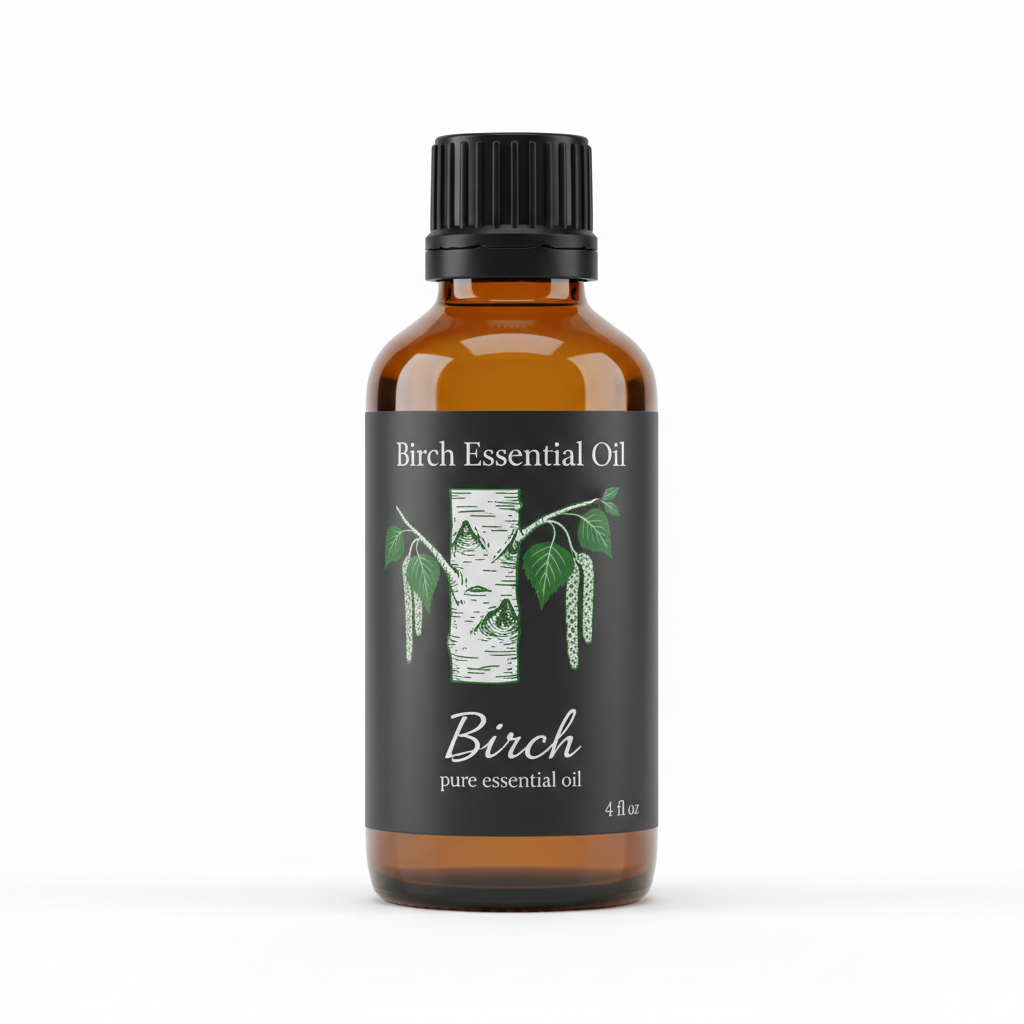
Both oils read as "woodsy" on a shelf label, but they come from different plant families, different distillation processes, and they behave differently once they hit a diffuser or a carrier oil. If you're trying to decide birch or cedarwood for fall blend work, the short answer is that it depends on whether you want a sharper, more medicinal-leaning wood note or a soft, dry, pencil-shaving warmth. The longer answer is below.
Where Each Oil Comes From
Birch essential oil, in the sweet birch (Betula lenta) form most fragrance and cosmetic suppliers sell, is steam distilled from the bark. It shares a chemical backbone with wintergreen (both are high in methyl salicylate), which is why sweet birch has that instantly recognizable, almost cool, minty-sharp edge underneath the wood. Some suppliers also sell white birch (Betula pubescens or Betula pendula) distilled from the bark or sap, which reads drier and smokier with far less of that wintergreen quality. When you're comparing oils online, always check which species is actually in the bottle, since "birch essential oil" on a label can mean two fairly different scent experiences.
Cedarwood essential oil is a broader category. Atlas cedarwood (Cedrus atlantica), Virginia cedarwood (Juniperus virginiana, technically a juniper, not a true cedar), and Himalayan cedarwood (Cedrus deodara) are the three most common on the market, and they're distilled from wood chips or sawdust, often as a byproduct of the lumber and pencil industries. That sourcing history is part of why cedarwood tends to be inexpensive and widely available compared to birch.
Scent Profile Side by Side
Describing scent in words is always going to be an approximation, but here's how the two typically present in a blotter test and in a diffuser:
- Sweet birch: Sharp, cool, minty-medicinal top note (that wintergreen character) settling into a warm, slightly sweet wood base. Reads assertive. Some people describe it as smelling closer to a liniment than a candle.
- White birch: Smoky, leathery, tar-like in small amounts, drier than sweet birch, less sweetness overall.
- Atlas cedarwood: Soft, round, slightly sweet, with a warm balsamic undertone. Often the "friendliest" of the cedarwoods for beginners.
- Virginia cedarwood: Dry, pencil-shaving, sharper and more resinous than Atlas, closer to the smell of a freshly sharpened pencil.
- Himalayan cedarwood: Deep, smoky, almost incense-like, considered the most complex of the three by many perfumers.
For a woodsy base note comparison in the context of a fall blend, cedarwood in any of its three common forms tends to sit quietly under other notes without demanding attention. Sweet birch, by contrast, pushes forward because of that wintergreen sharpness, so it works better as a co-star than as pure background.
Comparison Table
| Attribute | Birch Essential Oil | Cedarwood Essential Oil |
|---|---|---|
| Common species sold | Sweet birch (Betula lenta), white birch (Betula pubescens/pendula) | Atlas, Virginia, Himalayan |
| Part of plant distilled | Bark (sometimes sap) | Wood chips, sawdust |
| Scent character | Sharp, minty-medicinal top note over a sweet wood base | Soft to dry, pencil-shaving, balsamic warmth |
| Fragrance note position | Middle to base, projects strongly | True base note, low projection |
| Typical dilution for topical blends | Very low, often 0.5 to 1 percent, due to methyl salicylate content | Standard 2 to 5 percent range is generally well tolerated |
| Diffuser blending strength | Strong, use sparingly (2 to 3 drops per blend) | Gentle, can be used more liberally as a base (4 to 6 drops) |
| Typical price point | Moderate to higher, depending on sourcing | Budget-friendly, one of the more affordable wood oils |
| Shelf stability | Moderate | Excellent, cedarwood is known for long shelf life |
| Best paired with | Citrus, clove, cinnamon leaf, black pepper | Lavender, bergamot, patchouli, sweet orange |
Birch Essential Oil: Pros and Cons
Pros
- Distinctive, memorable scent that stands out in a crowded blend, useful when you want a signature note rather than a background wood
- The wintergreen-adjacent sharpness pairs unusually well with warm spice notes like clove and cinnamon, which suits fall and winter blending
- Sweet birch reads sweeter than most other wood oils, so it can bridge a fruity or spiced top note into a woodier base without feeling disjointed
Cons
- Methyl salicylate content means it needs to be used at low dilution in any topical application, and it is generally not recommended around children, during pregnancy, or for anyone on blood-thinning medication, since methyl salicylate is closely related to aspirin chemically. Always check with a qualified healthcare provider before topical use if any of this applies to you.
- Sourcing quality varies a lot between suppliers. Because true sweet birch bark distillation is labor intensive, some "birch" oils on the market are actually synthetic methyl salicylate blended to mimic the scent, which is worth asking a supplier about directly
- Strong projection means it's easy to overdo. A blend can tip from "woodsy" to "medicine cabinet" with just a drop or two too many
- Less widely stocked than cedarwood, so it can be harder to find at a consistent price and quality
Cedarwood Essential Oil: Pros and Cons
Pros
- Gentle enough for a wider range of uses, including most topical dilutions, without the same salicylate caution that comes with birch
- Inexpensive and consistently available, making it an easy oil to keep stocked year-round
- True base note behavior means it rounds out a blend and extends the life of lighter top notes without overpowering them
- Long shelf life compared to many essential oils, so a bottle purchased for fall blending will likely still perform well the following year
Cons
- Less distinctive on its own. As a background note, it can read as generic "wood" or "sawdust" if not paired thoughtfully
- Virginia cedarwood is technically a juniper rather than a true cedar, which can be confusing when comparing labels between suppliers, and it's worth checking the botanical species listed rather than assuming a shared origin
- Quieter projection means it can get lost entirely in a blend with strong citrus or spice top notes unless the ratio favors it
Best For: Use Case Recommendations
Choose birch if:
- You want a blend that stands out in a room rather than fading into the background, such as an entryway or gathering-space diffuser
- You're building an autumn blend around clove, cinnamon leaf, or orange and want a wood note with enough character to hold its own against those spices
- You've used sweet birch before and enjoy its particular sharpness, and you're comfortable with careful, low-percentage dilution for any topical use
Choose cedarwood if:
- You're new to working with wood notes and want something forgiving that's hard to overdo
- You need a reliable base note to round out lighter blends without a strong scent of its own competing for attention
- Budget and shelf life matter, and you want an oil you can keep on hand as a go-to base across seasons, not just fall
- You're formulating for topical use, such as a diluted roller blend, where cedarwood's gentler profile is generally the easier starting point
Consider using both together if:
You want the depth of cedarwood as a true base with the character of birch layered in as a smaller accent. A common approach is building the bulk of a blend on cedarwood (60 to 70 percent of the wood component) and adding birch as a top-off (30 to 40 percent) so the sharper note reads as an accent rather than the dominant character. This kind of layering is a good example of the broader idea covered in how to layer essential oil notes for a more complex finished blend.
The Verdict
For most people asking birch or cedarwood for fall blend work, cedarwood is the more versatile everyday choice. It's affordable, forgiving in dilution, shelf-stable, and works as a true base note that supports other scents rather than competing with them. If you're building your first few fall diffuser blends and want one dependable wood oil to keep around, start there.
Birch earns its place when you want a blend with more personality, something that leans into the season's spice notes instead of just sitting quietly underneath them. It rewards a bit more care (lower dilution, mindful pairing, attention to sourcing) but delivers a scent profile cedarwood simply doesn't have.
In a cedarwood versus birch fragrance matchup, there isn't really a losing side. They solve different problems. Cedarwood is the dependable base you build on. Birch is the note you reach for when you want the blend to say something a little louder. Many blenders end up keeping both on the shelf for exactly that reason, using cedarwood as the default and birch as the occasional statement note when the blend calls for it.
Whichever you choose, patch test any new blend before wider use, keep dilution ratios conservative when working with birch in particular, and check with a qualified healthcare provider before topical use if you're pregnant, nursing, managing a medication routine, or blending for a child. For general guidance on getting dilution ratios right across different oils, see this essential oil dilution guide before you start measuring drops.