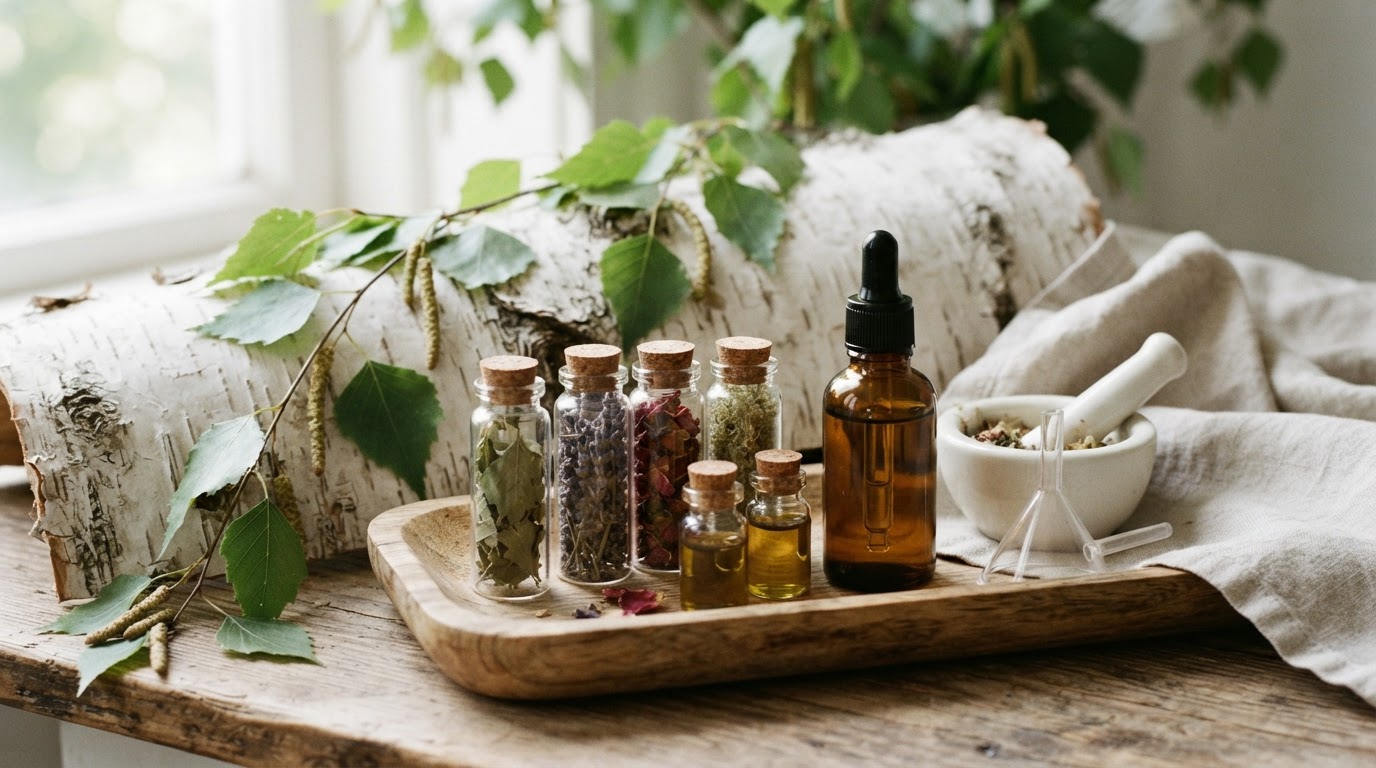
How to Build a Birch Sauna-Inspired Aromatic Steam Blend at Home
There is a particular kind of quiet that settles in once steam starts curling off hot stones. In Nordic and Baltic sauna culture, that steam is rarely just water. It carries scent: pine, eucalyptus, and often birch, whose green, slightly sweet, woodsy note is closely tied to the sauna experience itself. You do not need a cedar-lined bathhouse to bring that atmosphere home. With a bottle of birch essential oil, a few household items, and a little patience, you can build a birch sauna oil blend that turns an ordinary shower or steam session into something closer to a ritual.
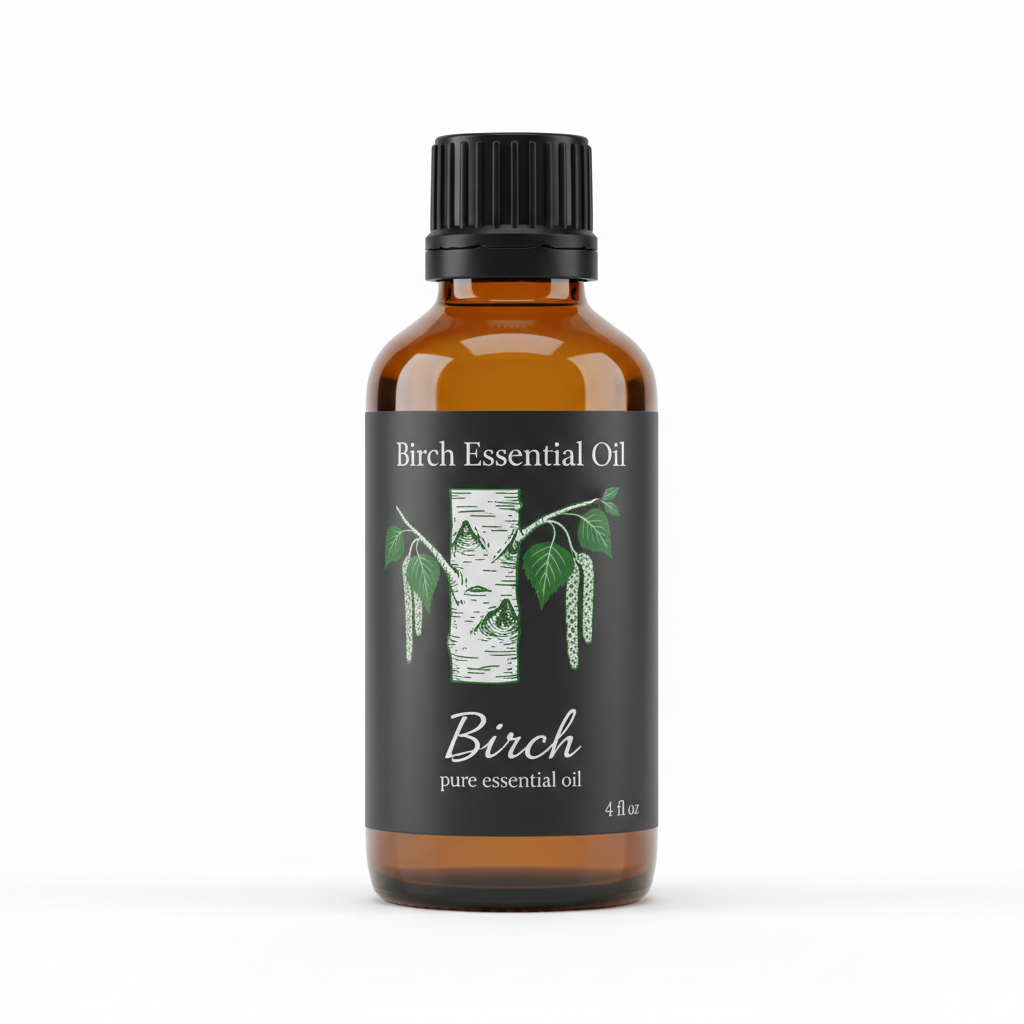
This guide walks through a birch essential oil steam blend from start to finish: what to gather, how to dilute it properly, how to use birch oil in sauna-style steam safely, and what kind of atmosphere to expect once you get the ratios right.
What You'll Need
Before you start, gather everything so you are not measuring oil with wet hands halfway through a steam session.
- Birch essential oil, from a supplier that shares batch-specific GC-MS testing so you know what is actually in the bottle.
- A carrier liquid: distilled water works for a steam bucket recipe, while a light carrier oil (fractionated coconut or sweet almond) is needed for any blend that will touch skin.
- A heat-safe glass or ceramic bowl or bucket, roughly 1 to 2 liters, for mixing and pouring.
- A wooden ladle, the traditional tool for pouring water over hot stones or a steam generator basin.
- A small glass measuring dropper or 5ml amber bottle for accurate dosing.
- Optional complementary oils: eucalyptus, cedarwood, or fir needle all pair naturally with birch's woodsy profile.
- A patch-test strip (a cotton pad or a small area of forearm skin) for first-time use.
- A well-ventilated room or sauna space with a door or window that can be cracked if the scent becomes too concentrated.
Step-by-Step: Building Your Birch Aromatic Steam Recipe
Step 1: Start with a Patch Test
Before your first full session, mix one drop of birch essential oil into a teaspoon of carrier oil and apply a small amount to the inside of your forearm. Wait 24 hours. This step matters more with birch than with many other oils, since it is naturally high in methyl salicylate, a compound that can be more reactive on skin than gentler florals or citrus oils. If you notice redness, itching, or irritation at the test site, do not proceed with topical use, and consider a diffused or steam-only application instead.
Step 2: Choose Your Application Method
There are two distinct ways to bring birch into a steam setting, and they are not interchangeable:
- Steam-bucket method: oil is diluted into water and ladled over hot stones or a steam generator basin, so the scent travels through vapor rather than direct skin contact.
- Pre-steam skin application: a heavily diluted blend is applied to skin before entering the steam room, similar to a light massage oil.
For a first attempt, the steam-bucket method is the simpler and gentler starting point, and it is the one this recipe focuses on.
Step 3: Measure Your Water Base
Fill your bucket or bowl with 1 liter of warm (not boiling) water. Warm water helps the oil disperse more evenly than cold water does, since essential oils do not truly dissolve in water and will always sit on the surface to some degree.
Step 4: Add the Birch Oil, a Few Drops at a Time
For a 1-liter steam bucket, start with 3 to 4 drops of birch essential oil. This is intentionally light. Birch is a strong, penetrating scent, closer in character to wintergreen than to a soft floral, and it is easy to overshoot on a first try. You can always add another drop after smelling the result; you cannot easily take drops back out.
Step 5: Layer in a Complementary Note (Optional)
If you want more depth than birch alone provides, add 2 to 3 drops of eucalyptus for a brighter top note, or 2 drops of cedarwood for a rounder, warmer base. Fir needle works well too, echoing the forest-floor quality that makes birch feel at home in a sauna setting. Stir the water gently with the ladle handle to distribute the oils across the surface.
Step 6: Ladle, Don't Pour, Onto Hot Stones
Use the wooden ladle to pour small amounts, roughly a quarter cup at a time, over the hot stones or steam basin. Never pour undiluted essential oil directly onto a heat source. Concentrated oil poured straight onto hot stones can flash into a strong, sharp vapor almost immediately, which is unpleasant at best and irritating to eyes and airways at worst. Diluting in the water bucket first, as in Steps 3 through 5, keeps the release gradual and manageable.
Step 7: Give the Steam Room a Minute to Fill
After ladling, step back and let the vapor spread through the space for 60 to 90 seconds before your next ladle pour. Birch's scent builds quickly in an enclosed room, so pacing your pours prevents the space from becoming overwhelming.
Step 8: Adjust for the Room and the Session
A small home steam shower will need less than a full sauna cabin. If you are working in a smaller space, cut the recipe in half: 1 to 2 drops of birch oil per half liter of water is usually enough to fill the air with scent without becoming heavy. Keep the door cracked slightly if the aroma intensifies more than you'd like partway through.
Safety First: Dilution, Patch Testing, and Sensible Precautions
Birch essential oil is potent, and a little care goes a long way toward a good experience.
- Always dilute. Undiluted birch oil should never touch skin directly or go straight onto a hot surface.
- Keep concentrations low in steam settings. More drops does not mean a better session; it usually just means a room you have to leave early.
- Ventilate the space. Even a diluted blend can feel strong in a fully enclosed room. Crack a door or window if needed.
- Keep away from eyes. If vapor feels sharp on the eyes, step out and let the room air out before returning.
- Store away from children and pets. Concentrated essential oils, birch included, should be kept out of reach in a closed cabinet.
- Talk to a qualified healthcare provider first if you are pregnant, nursing, or have any ongoing health concerns, before adding birch oil to your routine.
- Buy from a source that publishes lab testing. Knowing the actual composition of what you're diluting is part of using any essential oil responsibly.
Common Mistakes to Avoid
- Pouring oil directly onto hot stones. This is the single most common misstep. Always dilute in water first.
- Overloading the water bucket. Ten or fifteen drops in a liter of water will not make the experience ten times better; it will just make the room hard to stay in.
- Skipping the patch test. Birch's methyl salicylate content makes it more likely than many oils to cause skin sensitivity, and skin reacts differently person to person.
- Using it in a completely sealed space. Even a well-loved home steam room needs some airflow when essential oils are part of the session.
- Buying oil without any testing documentation. Essential oil quality varies widely between suppliers, and birch is one where sourcing transparency matters.
- Reusing bucket water for a second full session without rediluting. Scent fades fast once the oil has volatilized off the surface, so a stale bucket will smell mostly like warm water by your second round.
What to Expect
Done well, a birch aromatic steam recipe fills a room with a green, slightly sweet, forest-like aroma that many people describe as brisk or invigorating, similar in character to a walk through birch woods after rain. Some people report that the combination of warm steam and birch's aroma makes for a more grounding, calming atmosphere during an evening wind-down, though individual experiences with scent are subjective and this is not a claim about any specific outcome. The ritual itself, the slow ladling, the building steam, the quiet room, tends to be as much a part of the effect as the oil is.
Expect the scent to peak within the first few minutes after ladling and to soften gradually as the water cools. A well-diluted blend should never sting the eyes or feel harsh to breathe; if it does, the mixture is too concentrated for the space and should be cut with more water next time.
Variations Worth Trying
Once you're comfortable with the base birch sauna oil blend, small adjustments can shift the mood of a session:
- Forest blend: birch, fir needle, and a single drop of juniper for a deep, woodland character.
- Bright morning blend: birch with eucalyptus and a touch of peppermint, kept especially light since peppermint is strong on its own.
- Warm evening blend: birch with cedarwood and a drop of vanilla-scented carrier for a softer, cozier finish.
Whatever combination you choose, keep the same principle from Step 4: start light, smell before adding more, and let the room tell you when it's enough.
Caring for Your Sauna Bucket and Ladle
Wooden ladles and buckets absorb oil over repeated use, which is part of why they develop such a rich patina in traditional sauna culture. Rinse both with warm water after each session and let them air dry fully before storing, since trapped moisture in wood can lead to a musty smell that competes with the birch aroma you worked to build. Avoid soaking wooden tools, which can cause warping over time.