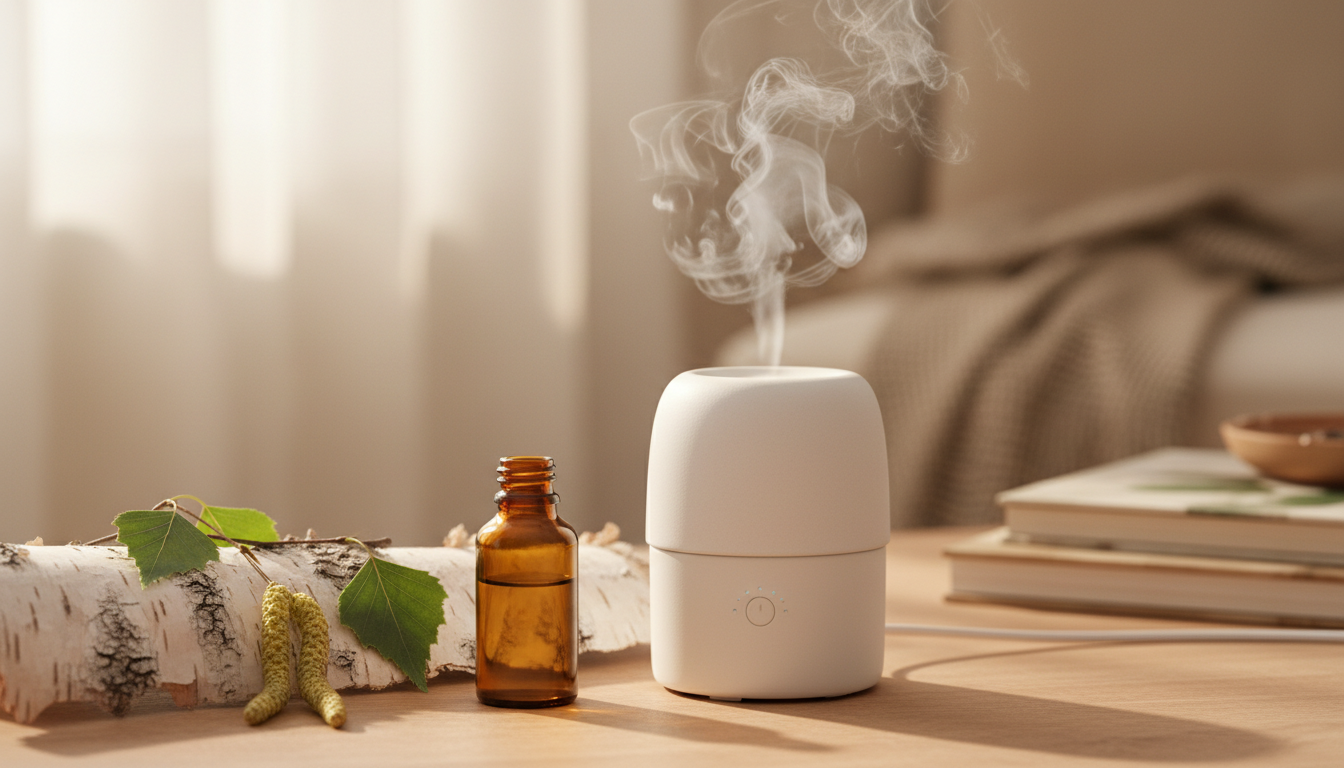
How to Diffuse Birch Essential Oil: Room Size Ratios That Work
Birch essential oil carries a crisp, wintergreen-like scent with a cool, forest-floor edge that many people associate with cold mornings and quiet woods. Getting that scent right in a diffuser is less about the oil itself and more about ratio: how many drops per how much water, matched to how much air the room actually holds. Too few drops and the scent disappears into the room. Too many and it turns sharp and overwhelming within minutes. This guide walks through how to diffuse birch essential oil with room size ratios that actually hold up, step by step.
What You'll Need
- An ultrasonic (cool-mist) diffuser, sized for your room
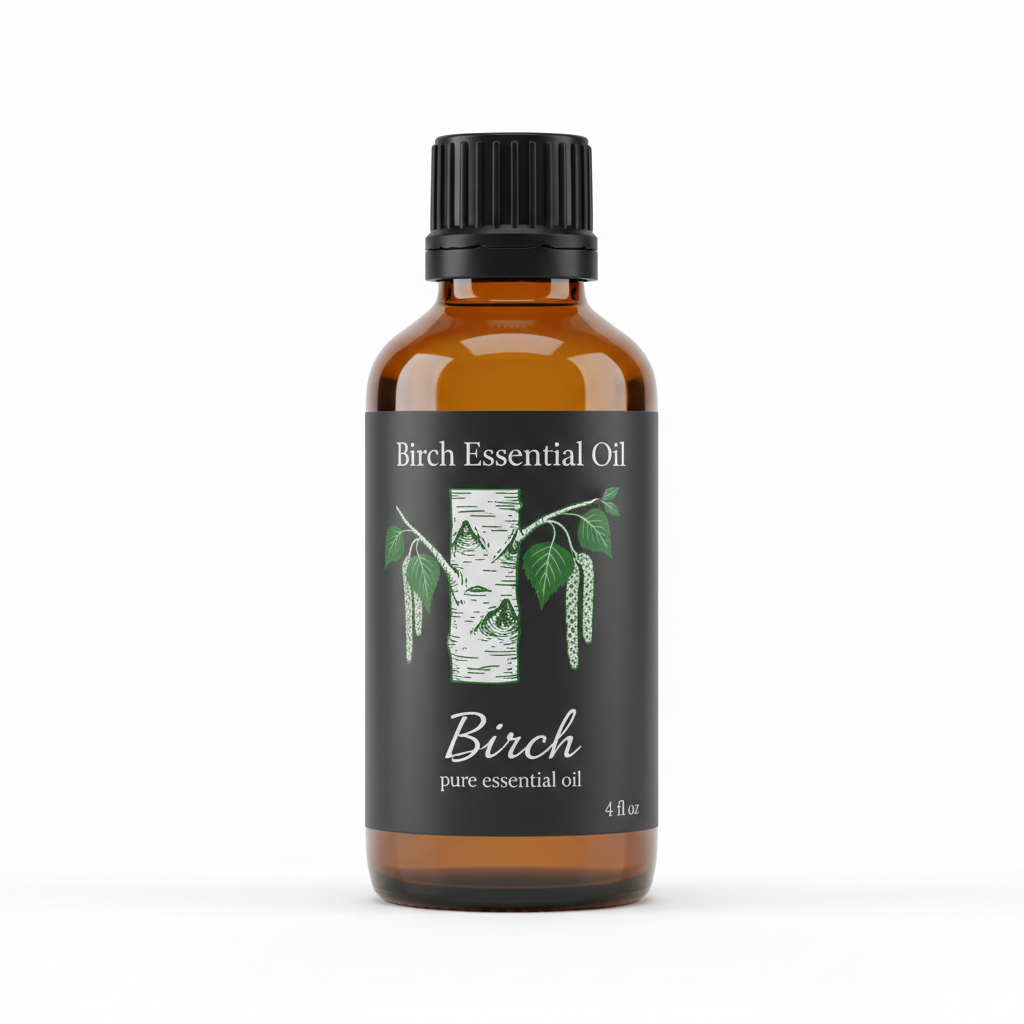
- Pure birch essential oil (check the label for species; sweet birch, Betula lenta, is the common aromatic variety)
- Filtered or distilled water (tap water with heavy mineral content can leave residue in the tank)
- A measuring cup or the diffuser's marked fill line
- A soft cloth and a cotton swab for cleaning
- A tape measure, if you don't already know your room's square footage
Birch Essential Oil Diffuser Ratio by Room Size
The single biggest factor in how many drops of birch oil to use in a diffuser is room volume, not personal preference. A ratio that fills a home office nicely will barely register in an open-concept living room, and the same ratio in a small bedroom can feel like standing in a spruce forest. Here's a starting-point table for birch oil room diffuser instructions, based on a standard 100 to 150ml ultrasonic diffuser tank.
| Room Size | Example Rooms | Water Fill | Birch Oil Drops |
|---|---|---|---|
| Small (under 150 sq ft) | Bathroom, home office, small bedroom | 100ml | 3 to 4 drops |
| Medium (150 to 300 sq ft) | Standard bedroom, den, guest room | 100 to 150ml | 5 to 6 drops |
| Large (300 to 500 sq ft) | Living room, open-plan kitchen | 150ml | 7 to 9 drops |
| Extra-large or open-concept (over 500 sq ft) | Great rooms, studio apartments, loft spaces | Two diffusers or 200ml+ tank | 10 to 12 drops, split across units if possible |
These numbers are a starting point, not a fixed rule. Birch oil is potent, so most people find they prefer the lower end of each range, then adjust upward by a drop or two over a few sessions once they know how the scent settles in their specific space.
Step-by-Step: How to Diffuse Birch Essential Oil
1. Measure your room, not just guess
Multiply length by width in feet to get your square footage. If the room has high ceilings (over 9 feet), treat it as one size category larger since there's more air volume to fill. This single step prevents the most common overcorrection: adding more drops when the real issue is ceiling height or an open floor plan pulling scent into adjoining rooms.
2. Choose the right diffuser for the space
Small ultrasonic diffusers (under 150ml) work well for bedrooms and offices. For living rooms or open kitchens, look for a diffuser rated for 300ml or larger, or plan to run two smaller units. Nebulizing diffusers, which disperse oil without water, are far more concentrated and need proportionally fewer drops, roughly half of what an ultrasonic model calls for in the same room.
3. Fill the tank with water first
Add filtered or distilled water up to the marked fill line before adding any oil. Overfilling past the line is one of the most common setup mistakes and can cause the unit to leak or mist unevenly.
4. Add birch oil according to your room ratio
Using the table above, count drops directly into the water rather than eyeballing it. A steady hand and a slow pour matter here: birch oil bottles often have wider-flow orifice reducers than floral oils, so a quick tip of the bottle can release two or three drops instead of one.
5. Position the diffuser away from walls and furniture
Place it at least a foot from walls, curtains, and electronics, and ideally at a height between knee and chest level. Mist settling directly on fabric or wood surfaces over time can leave a faint residue, especially with resinous, woody oils like birch.
6. Start with a timed or intermittent cycle
Most diffusers offer an intermittent setting (misting in short bursts rather than continuously). For a scent as assertive as birch, intermittent cycling of 30 seconds on and 30 seconds off, run for one to two hours, tends to feel more balanced than continuous misting for an entire evening.
7. Ventilate the room lightly
Crack a window or door, or run the room's air circulation, especially in smaller spaces. This keeps the scent from concentrating in one corner and helps the whole room pick up an even, ambient level of fragrance rather than one overpowering pocket of air.
8. Observe and adjust over a few sessions
Note how strong the scent feels after 20 minutes, not just at the moment you turn the diffuser on. Birch oil can feel mild initially and build as it circulates. Adjust your drop count up or down by one drop at a time across future sessions rather than mid-session.
9. Clean the diffuser after each use
Empty any leftover water, wipe the tank with a soft cloth, and use a cotton swab dampened with a little white vinegar on the ultrasonic disc every few uses. Oil residue left in the tank can affect misting output and, over weeks, alter how future scents diffuse.
Common Mistakes to Avoid
- Using a small-room ratio in a large space. This is the most frequent complaint people have with birch oil specifically: it feels like it "disappears" in a big room. The fix is almost always more water volume and a second diffuser, not simply more drops in one small tank.
- Running the diffuser for hours on end. Continuous multi-hour sessions tend to saturate a room's air rather than create a light ambient layer. Shorter, intermittent sessions generally read as more pleasant over time.
- Placing the diffuser near heat or direct sunlight. Heat can degrade the oil's aromatic compounds faster and change how the scent smells over the course of a session.
- Skipping the water measurement. Eyeballing water levels leads to inconsistent ratios session to session, which is why the scent might feel perfect one day and overwhelming the next, even with the same drop count.
- Forgetting about pets in the room. Cats in particular are known to process essential oil compounds differently than humans, so many households choose to diffuse in a room pets can leave rather than a shared, enclosed space, and ventilate well regardless.
- Storing the oil bottle near the diffuser's heat source or in direct light. This shortens the oil's shelf life and can shift its scent profile over a few months.
Tips for Getting the Most Out of Birch Oil Diffusion
- Birch pairs well in a blend with cedarwood, pine, or eucalyptus for a fuller forest profile if a single-note woodsy scent feels too sharp on its own.
- Morning and early-evening sessions tend to suit birch's brisk, cool character better than late-night diffusing, when many people prefer softer floral or citrus notes.
- If a room consistently needs the high end of its ratio range to register scent, that's usually a sign of poor air circulation rather than a reason to keep adding drops. Try relocating the diffuser to a more central spot first.
- Label your diffuser's water line with a permanent marker if the built-in fill indicator is hard to see, so measuring stays consistent across sessions.
What to Expect
People who diffuse birch oil often describe the resulting atmosphere as crisp, woodsy, and a little invigorating, similar to walking through a cold forest in early winter. Some report that a light birch scent in a workspace feels grounding or helps set a focused mood during the day, though individual experiences vary and this is anecdotal rather than something with any of guarantee. Diffusing is an aromatic and ambiance-focused practice, not a substitute for professional guidance on any health-related concern.
Safety Notes Before You Start
Birch essential oil, particularly the sweet birch variety, is highly concentrated and contains naturally occurring methyl salicylate, the same aromatic compound found in wintergreen oil. Because of this, a few precautions are worth keeping in mind:
- Keep the bottle sealed and stored well out of reach of children and pets. It's meant for diffuser use only and should never be ingested.
- If oil drips on your skin while filling the diffuser, wipe it away and wash the area with soap and water rather than leaving it to sit.
- Diffuse in well-ventilated rooms and avoid running a diffuser in a closed space where a child, pet, or anyone sensitive to strong scents sleeps overnight.
- People who are pregnant, nursing, or under a healthcare provider's regular care, especially anyone monitoring salicylate intake, should check with that provider before making birch oil diffusion a regular routine.
- Stop diffusing and ventilate the room if anyone present develops a headache, nausea, or general discomfort while the diffuser is running.
With the right ratio for your room and a bit of trial and error over the first few sessions, birch essential oil settles into a diffuser routine easily: a light, cool, woodsy backdrop that's simple to dial in once you've measured your space and started low.