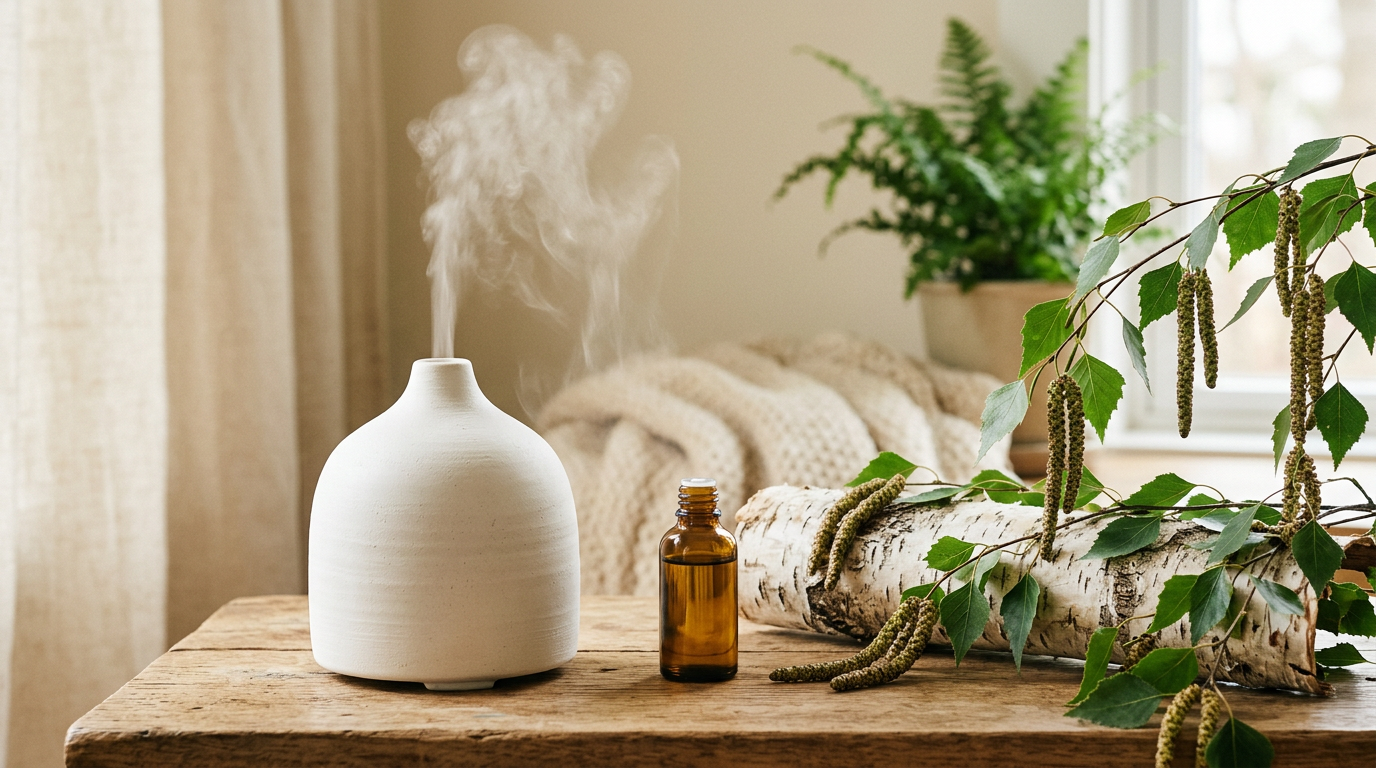
Birch vs Eucalyptus: Comparing Crisp Winter Diffuser Scents
Walk into any shop stocking essential oils in November and you will find both bottles sitting near the front: birch, with its cool, candy-like wintergreen note, and eucalyptus, with its sharp, camphor-bright edge. Both get pitched as the answer to a crisp winter diffuser scent, and both have loyal followings. But they are not interchangeable, and the birch vs eucalyptus essential oil question comes up so often precisely because the two smell nothing alike once you actually compare them side by side.
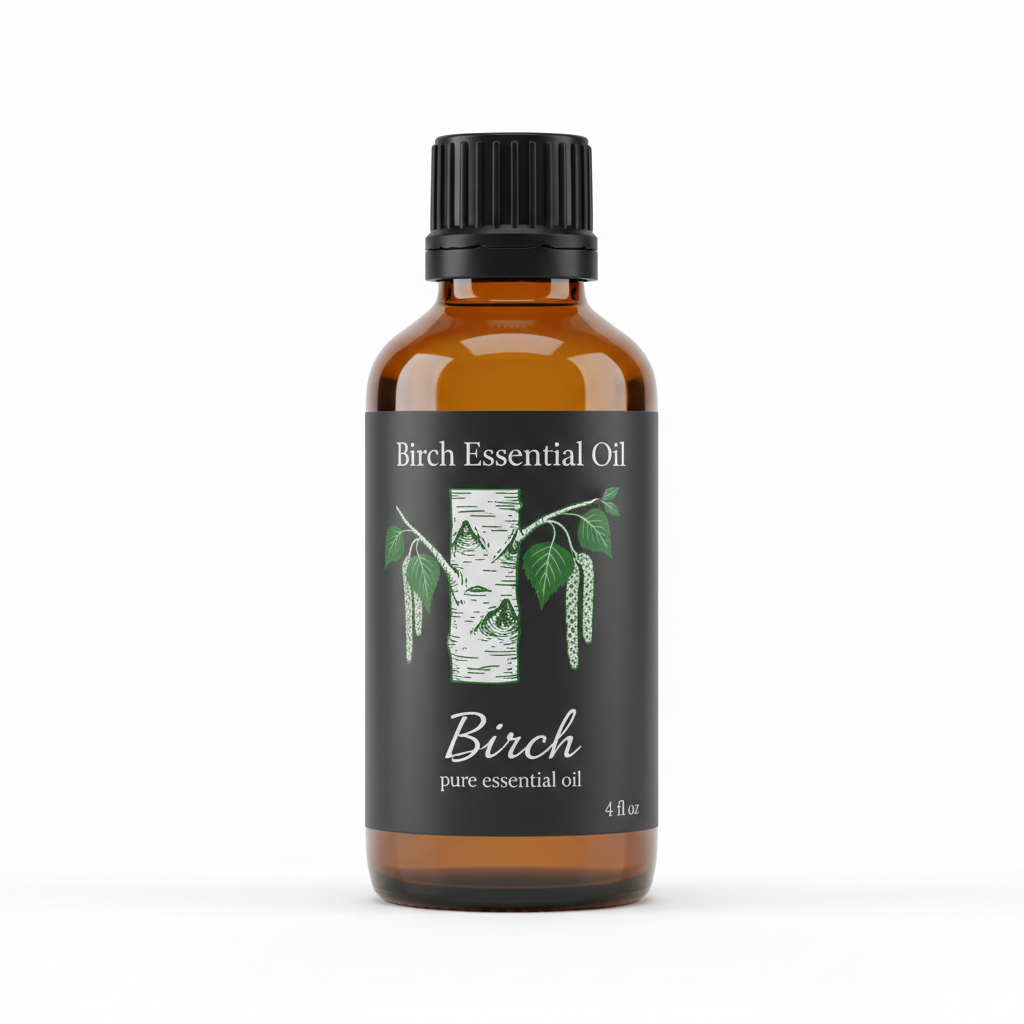
This guide breaks down the botanical sourcing, aroma character, blending behavior, and practical shopping considerations for each oil, so you can make an informed choice about eucalyptus or birch oil for winter diffusing rather than guessing from a shelf label. We source and sell birch oil here at Birch Essential Oil, so we will say plainly where our bias sits, but the comparison below is meant to be a fair one. If eucalyptus is the better fit for what you are after, we will say so.
Meet the Two Oils
Birch essential oil most commonly sold for fragrance and cosmetic use comes from Betula lenta, sweet birch, native to the eastern woodlands of North America. The oil is steam distilled from the bark, and its defining characteristic is a very high concentration of methyl salicylate, the same aromatic compound that gives true wintergreen its recognizable smell. That single compound is responsible for almost everything distinctive about birch oil: the sweet, minty, slightly medicinal-adjacent coolness that reads instantly as "winter" to most noses.
Eucalyptus essential oil, by contrast, is steam distilled from the leaves of various eucalyptus species, most often Eucalyptus globulus or Eucalyptus radiata. Its dominant aromatic compound is 1,8-cineole (also called eucalyptol), which produces a sharp, clean, camphoraceous scent with almost no sweetness to it. Where birch leans toward candy-shop nostalgia, eucalyptus leans toward crisp, cool air and open space.
Both are genuinely popular choices for a birch essential oil diffuser comparison because both read as "cold weather" scents, but they get there by entirely different aromatic routes.
Comparison at a Glance
| Attribute | Birch Essential Oil | Eucalyptus Essential Oil |
|---|---|---|
| Botanical source | Betula lenta (bark) | Eucalyptus globulus or radiata (leaf) |
| Dominant aromatic compound | Methyl salicylate | 1,8-cineole (eucalyptol) |
| Scent family | Sweet, minty, woody-cool | Sharp, camphoraceous, green |
| Character in a diffuser | Rounded, nostalgic, candy-adjacent | Bracing, airy, almost metallic-fresh |
| Typical retail range | Moderate, bark-sourced oils vary by region | Widely available, generally lower cost per ounce |
| Blends well with | Fir, pine, peppermint, cedarwood, citrus | Rosemary, tea tree, lemon, peppermint, pine |
| Suggested diffuser use | 3 to 5 drops in a standard ultrasonic diffuser | 3 to 6 drops in a standard ultrasonic diffuser |
| Skin dilution caution | Higher, due to methyl salicylate content | Moderate, standard dilution guidance applies |
| Pet household caution | Keep diffusers in ventilated, pet-accessible-free rooms | Same caution, eucalyptus is also flagged around cats and dogs |
| Shelf life once opened | 1 to 2 years, store away from light and heat | 1 to 2 years, store away from light and heat |
| Best seasonal pairing | Deep winter, holiday, fireside atmosphere | Transitional cold months, brisk mornings |
Birch Essential Oil: Pros and Cons
Pros
- Distinctive sweet-mint aroma that most people immediately associate with winter and the holiday season, largely thanks to its wintergreen-adjacent profile.
- Blends beautifully with conifer oils like fir and pine, deepening a woodsy diffuser blend rather than competing with it.
- Rounder, less clinical-smelling than eucalyptus, which makes it a popular choice for living rooms and gathering spaces rather than just workspaces.
- A little goes a long way in a diffuser blend, so a bottle tends to last through the season.
Cons
- The high methyl salicylate content means birch oil needs more conservative dilution if it is ever used on skin, and it is generally considered a poor candidate for households with young children or during pregnancy without first checking with a healthcare provider.
- Sourcing quality varies more than with eucalyptus. Because true bark-distilled sweet birch is less commonly produced than a synthetic wintergreen-scented substitute, buyers need to read labels carefully and look for a supplier who discloses species and extraction method.
- Its sweetness can read as too candy-like for people who want a purely bracing, clean winter scent rather than a nostalgic one.
Eucalyptus Essential Oil: Pros and Cons
Pros
- Widely available and generally easier to find at a consistent quality, since eucalyptus cultivation and distillation is a larger, more established industry.
- The sharp, airy scent works well in workspaces and mornings, when the goal is an alert, clean-smelling room rather than a cozy one.
- Pairs easily with a wide range of other oils, from citrus to mint to other camphoraceous notes, making it a flexible blending base.
- Generally more budget-friendly per ounce than bark-distilled birch oil.
Cons
- Can read as sharp or almost sterile on its own, less suited to a soft, ambient holiday atmosphere than birch.
- Some species and chemotypes vary quite a bit in strength, so an unfamiliar bottle can be surprisingly intense in a diffuser until you dial in the right drop count.
- Its scent profile overlaps with cleaning products for a lot of people, which can undercut the cozy, seasonal association some shoppers are looking for.
Scent Profile Compared, Side by Side
If you have never smelled the two next to each other, the difference is more dramatic than the shared "winter oil" label suggests. Birch opens sweet and rounds out into a cool, minty-woody base, similar to the smell of old-fashioned wintergreen candy or a birch beer soda, with a soft undertone that reads almost like damp bark and snow. Eucalyptus opens sharp and stays sharp: bright, green, faintly medicinal-adjacent in the way fresh eucalyptus leaves smell when you crush them between your fingers.
In a blind smell test, most people describe birch as "sweet" and eucalyptus as "clean" or "sharp." That single distinction tends to be the deciding factor for most buyers weighing birch vs eucalyptus essential oil for their space. If your goal is a crisp winter diffuser scent that still feels warm and inviting for a living room or gathering, birch usually wins that comparison. If your goal is a bracing, alert atmosphere for a home office or bathroom, eucalyptus tends to fit better.
Best For: Recommendations by Use Case
Holiday gatherings and cozy evenings
Birch. Its sweetness pairs naturally with the fir, pine, and cedarwood notes people already associate with the season, and it rounds out a blend rather than cutting through it.
Home office or study space
Eucalyptus. The sharper, cleaner profile tends to suit spaces where you want the room to smell brisk and awake rather than sweet and ambient.
Layering with citrus oils
Either, with different results. Birch with orange or grapefruit leans toward a spiced, dessert-adjacent blend. Eucalyptus with lemon leans toward a sharper, almost spa-like combination.
Candle and soap making
Birch tends to be the more requested note for winter candle lines because of its wintergreen association, though both oils are used across cold-process soap and candle projects. If you are exploring this route, our guide on blending birch with conifers, citrus, and mint covers ratios in more depth.
Bedtime wind-down routine
Birch, used sparingly. Its softer, rounder sweetness tends to suit a quieter evening atmosphere better than eucalyptus's brighter, more alerting profile. Some people prefer to save eucalyptus for daytime diffusing for that reason.
Small apartments or shared spaces
Eucalyptus. Its scent disperses and fades a bit faster than birch's denser sweetness, which some renters and roommates prefer in shared air.
Blending Considerations
Neither oil is usually diffused entirely alone by people who blend regularly. Birch tends to shine as a supporting note under fir, spruce, or cedarwood, where it adds sweetness and depth without dominating. It also pairs surprisingly well with a small amount of peppermint, echoing its own minty character and sharpening it slightly.
Eucalyptus works well as a top note over a base of rosemary or tea tree, and a drop or two of lemon or lime brightens it without fighting its sharpness. Because eucalyptus has more forward projection, most blenders use it at a slightly lower ratio than birch when combining the two, roughly one part eucalyptus to two parts of a rounder oil like birch or fir.
If you want to try the oils together directly, a starting ratio of 2 drops birch to 1 drop eucalyptus in a standard diffuser tends to balance the sweetness against the sharpness rather than letting either one dominate. Adjust from there based on your room size and personal preference.
Sourcing and Quality Notes
Quality varies more with birch than with eucalyptus, largely because true bark-distilled sweet birch oil is a smaller market than eucalyptus leaf oil. Some products labeled "birch oil" are actually synthetic wintergreen substitutes or diluted blends. When shopping, look for a supplier that discloses the botanical species (Betula lenta), the plant part used (bark), the extraction method (steam distillation), and ideally a batch-specific GC/MS report confirming methyl salicylate content. Our own guide to buying birch essential oil walks through what to check on a label before you order.
Eucalyptus is more standardized across the market, but species still matters. Eucalyptus globulus tends to be stronger and sharper, while Eucalyptus radiata is gentler and often preferred for diffusing in smaller rooms. Reputable sellers will list the species on the bottle; if a listing simply says "eucalyptus oil" with no species named, that is worth a follow-up question before you buy.
Safety and Dilution Notes
Both oils are intended for aromatic and cosmetic use, not for ingestion, and both should be kept away from the eyes and mucous membranes. If you plan to use either oil on skin rather than only in a diffuser, dilute thoroughly, generally no more than a 1 to 2 percent dilution in a carrier oil for adult use, and always patch test on a small area first before wider application.
Birch oil's high methyl salicylate content warrants extra caution. It is generally recommended that birch oil be avoided on skin entirely by children, and that anyone who is pregnant, nursing, or managing a sensitivity to salicylates check with a qualified healthcare provider before using it, even aromatically. Eucalyptus oil carries similar general caution around young children and pets, and both oils should be diffused in well-ventilated rooms rather than small, closed spaces for extended periods.
Keep both oils, and any diffuser blend containing them, out of reach of pets. If you share your home with cats or dogs, it is worth reading up on species-specific sensitivities before making either oil part of a daily routine, and consulting your veterinarian with any specific questions.
The Verdict
There is no single winner in the birch vs eucalyptus essential oil comparison, because the two oils are solving different problems. Birch is the better choice when you want a crisp winter diffuser scent that still feels warm, sweet, and reminiscent of the holidays, and it is the stronger pick for living rooms, gathering spaces, and evening atmosphere. Eucalyptus is the better choice when you want a sharper, cleaner, more alerting scent for mornings, workspaces, or smaller shared rooms where a lighter footprint is preferred.
If you are trying to decide eucalyptus or birch oil for winter and only want to buy one bottle this season, think about which room you will diffuse it in most. A cozy living room with a fireplace calls for birch. A home office or bathroom calls for eucalyptus. And if you are open to blending, keeping both on hand gives you the most flexibility, since a small amount of eucalyptus can sharpen a birch-heavy blend, and a small amount of birch can soften a eucalyptus-heavy one.
For a deeper look at getting the most out of a bottle of birch oil specifically, our guide on birch essential oil safety basics is a good next stop before your first diffuser session.
This article discusses cosmetic and aromatic use of essential oils only. Birch and eucalyptus essential oils are not intended to diagnose, and statements here should not be read as medical guidance. Consult a qualified healthcare provider with any specific health questions.