Birch Reed Diffuser: Ratios, Reeds and Safe Placement
A reed diffuser is a quiet way to scent a room: a jar, a few reeds and a liquid that drifts into the air for weeks. Birch oil suits that slow pace because a little of its wintergreen-and-woods aroma goes a very long way. The trick is dosing it by weight, keeping it modest, and putting the jar where nobody can tip it or taste it.
How the jar works, and what birch asks of it
Reeds pull liquid upward by capillary action and let it evaporate from the top, so the liquid needs to stay fluid and keep the oil evenly mixed. Birch oil is more than 93% methyl salicylate in authentic samples (Dosoky et al., 2022), and PubChem's compiled data put its solubility in water at well under a gram per liter. In practice that means a water-based jar will cloud or float the oil. A diffuser base from a craft supplier, or an alcohol-based liquid, mixes far better, and Poison Control describes reed diffuser liquid as essential oil dissolved in isopropyl alcohol (Poison Control). We do not sell bases or reeds, so you will find those at a craft or candle supply shop.
Volatility matters too. Methyl salicylate boils around 220 to 224 C and has a vapor pressure of 0.0343 mmHg at 25 C (PubChem). As reasoning rather than measurement, a carrier that evaporates faster than birch can leave the oil behind, so the scent may build as the jar ages. That is why a modest dose and patience beat a heavy pour.
Starting ratios
We recommend 0.25% birch by weight as a first batch and 0.5% as a ceiling. The ceiling borrows from the lowest published figure for an alcohol-based scent product, the 0.6% that EU cosmetics law sets for hydroalcoholic fragrances (Regulation (EU) 2023/1545). A reed diffuser is not a cosmetic, so that limit does not govern it, but it is a sensible bar for a sprayed or evaporating alcohol liquid. Weigh everything.
| Total liquid | Birch at 0.25% | Birch at 0.5% | Volume at 0.5% |
|---|---|---|---|
| 50 g | 0.125 g | 0.25 g | 0.21 mL |
| 100 g | 0.25 g | 0.50 g | 0.42 mL |
| 200 g | 0.50 g | 1.00 g | 0.85 mL |
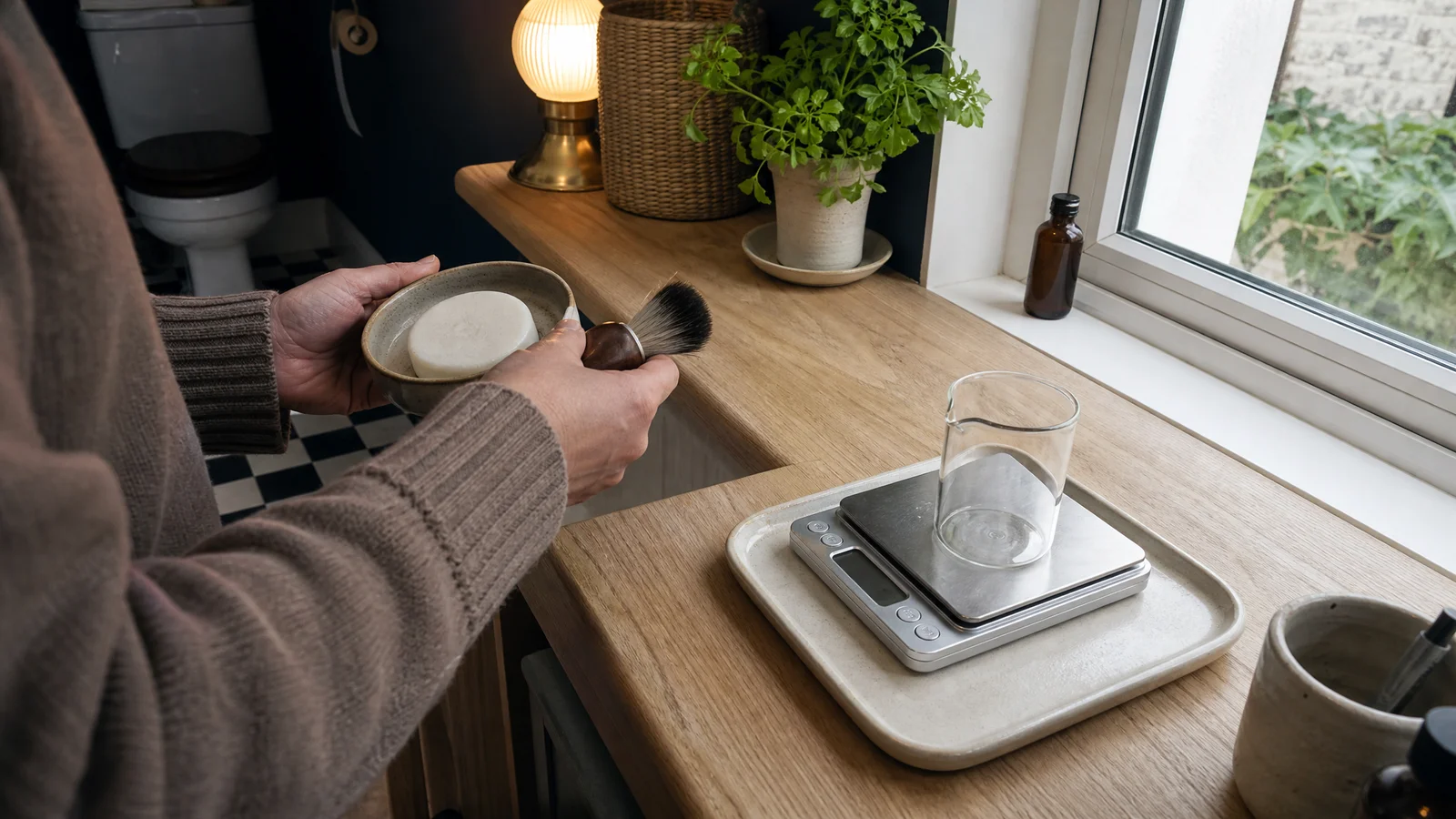
The arithmetic for a 100 g jar at the ceiling is 100 x 0.005 = 0.50 g, and the batch on our published certificate has a relative density of 1.183, so that is 0.50 / 1.183 = 0.42 mL, only a few drops. Any companion fragrance oil you add counts inside the remaining 99.5 g, and it has its own limits to check with its supplier. Drop counts drift from bottle to bottle, so a scale with 0.01 g resolution is worth having.
Making it and dialing it in
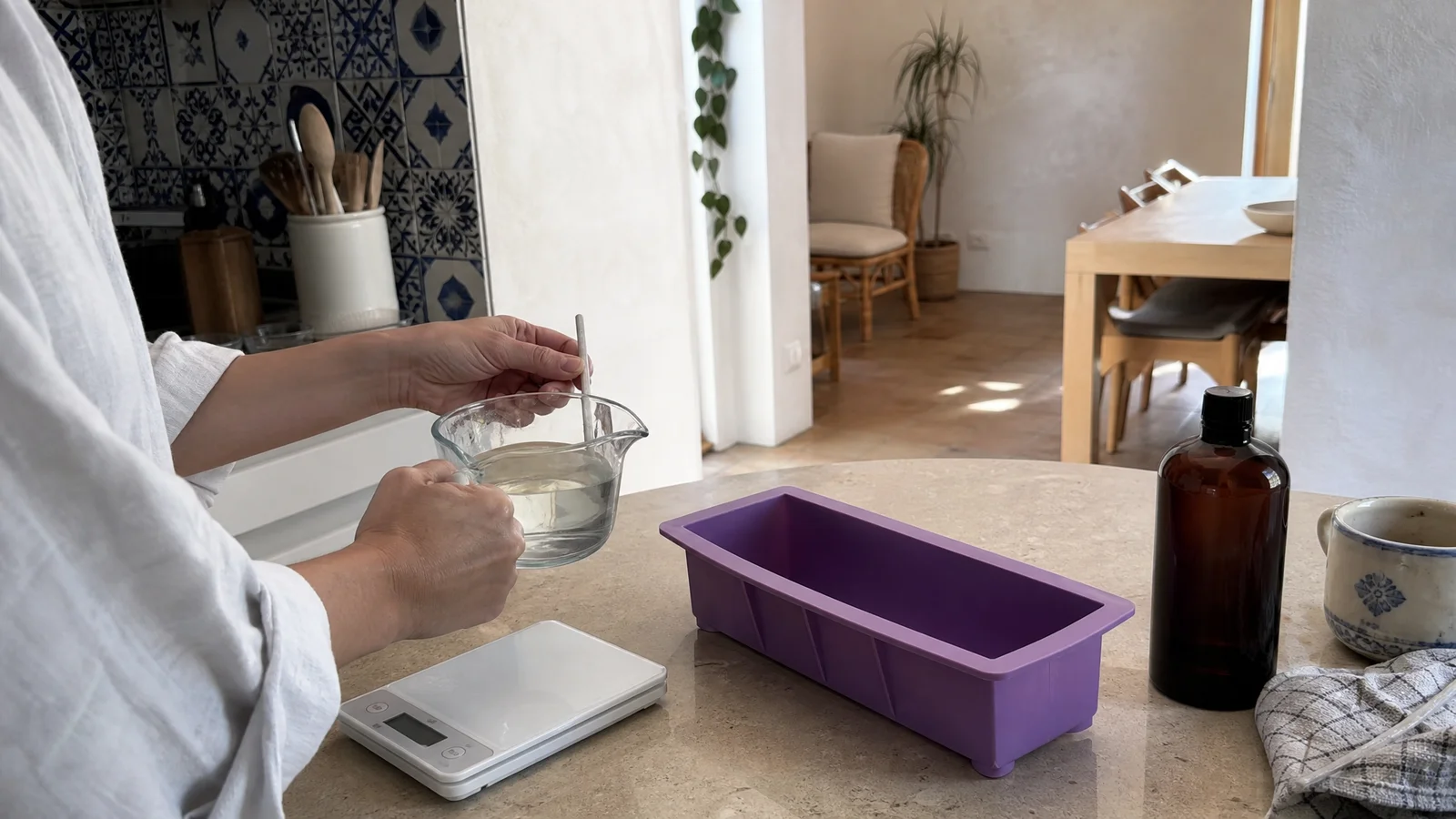
- Weigh the base into a narrow-necked glass jar, add the birch by weight, stir, and leave it overnight. If it looks cloudy or beaded, the oil has not dissolved, so change the base or lower the birch rather than adding more.
- Add reeds that fill the neck without crowding, and note how many you used.
- Weigh the jar on day 0 and then once a week. Weight lost divided by days gives grams per day, which is a handy way to see how fast the jar is working.
- Smell it from about two meters away. If the room is quiet, add a reed or flip the reeds once. If it feels strong, remove a few reeds or step down to 0.25%.
Here is a ceiling you can compute. A jar losing 1.0 g a day at 0.5% can release at most 0.005 g of birch a day, and likely less. That is an upper bound from arithmetic, not an air measurement, but it shows why a small jar scents a small room and nothing more.
What the first week feels like
A reed diffuser is slow. Do not judge it in the first hour, or even the first day. The scent builds as the reeds draw up the liquid, and the best test is to leave the room for a while and walk back in. If you notice a cool, sweet woodsy note at the doorway, it is working. If you only smell it with your nose at the jar, give it a little longer before you change anything.
Where the jar lives
Put it high, out of reach and away from where anyone might knock it. Poison Control notes that reed diffuser liquid must be kept out of the reach of children. Birch oil is dangerous to swallow, and as little as about 4 mL of methyl salicylate is cited in the toxicology literature as potentially fatal to a child (HSDB via PubChem), and a 100 g jar at 0.5% holds 0.42 mL of oil, so a spill and a curious toddler are the scenario to design around. The Merck Veterinary Manual says passive diffusers do not emit droplets the way active ones do, though birch and wintergreen oils can cause aspirin toxicosis in pets if they get at the liquid (Merck Veterinary Manual). If a pet or child can reach the spot, the winter diffuser is the wrong project.
Keep it out of nurseries, and ask a physician or pharmacist first if anyone at home is pregnant, takes blood thinners or is sensitive to aspirin. For a spill, wash skin with soap and water, rinse eyes with water, and call Poison Help at 1-800-222-1222 after any swallowing.
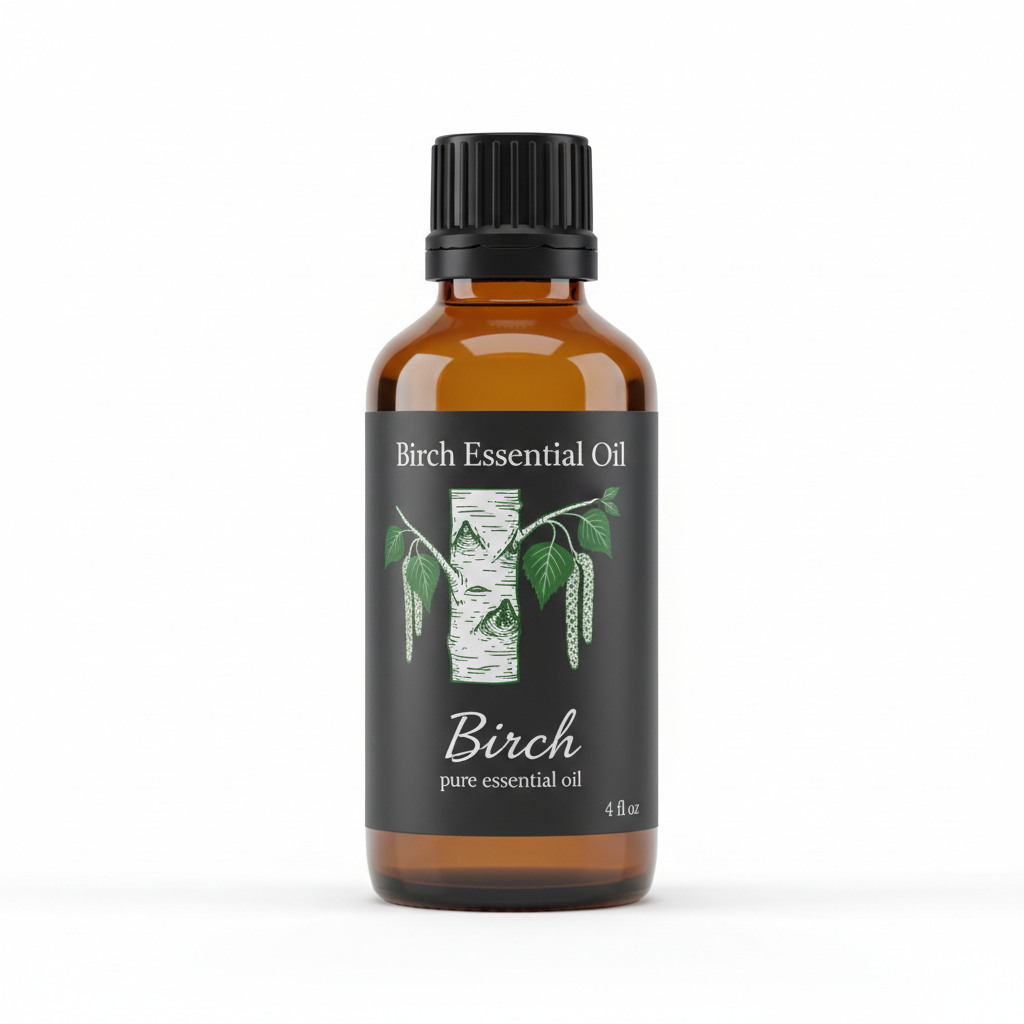
Birch Essential Oil
Birch Essential Oil from our own shop, in sizes from 1 oz to bulk.
From $17.99
Shop Now →Sources & Further Reading
- Dosoky NS, Poudel A, Satyal P, 2022. Plants 11(16):2132. pmc.ncbi.nlm.nih.gov
- PubChem, Methyl salicylate (CID 4133). pubchem.ncbi.nlm.nih.gov
- HSDB, Methyl salicylate human toxicity (via PubChem). pubchem.ncbi.nlm.nih.gov
- Regulation (EU) 2023/1545, Annex III entry 324. lawplayer.com
- Poison Control, Essential oils. poison.org
- Merck Veterinary Manual, Toxicoses From Essential Oils in Animals. merckvetmanual.com