Birch Oil in a Simmer Pot: Why We Say Skip It
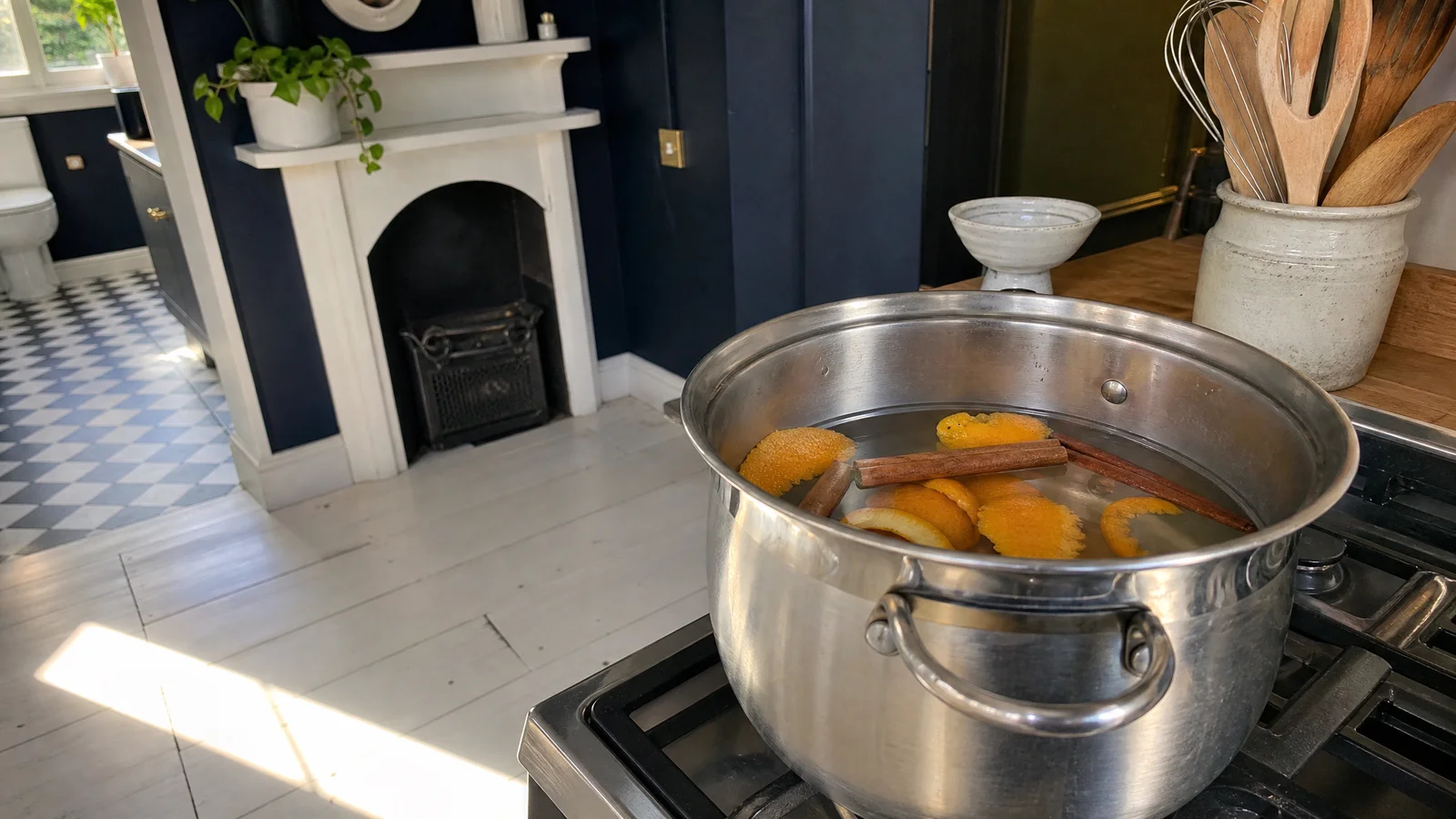
A pot of orange peel and cinnamon barely simmering on the stove is one of the nicest ways to make a kitchen smell like winter. It is natural to wonder whether a few drops of birch oil would make it smell like a cabin, too. We would keep the oil out of that pot, and the reasons say a lot about what kind of oil birch is.
What a simmer pot actually does
A simmer pot is a tiny still. Water warms, steam rises, and the steam carries aromatic molecules into the room. With peel and spices that is the whole charm. With birch it means moving a concentrated material into the air with no control over how much leaves the pot. Methyl salicylate, which is 93% to 99.8% of authentic sweet birch oil (Dosoky et al., 2022), boils at about 220 to 224 C and has a vapor pressure of 0.0343 mmHg at 25 C (PubChem), so it travels readily with steam. NOAA's CAMEO Chemicals data sheet lists methyl salicylate as harmful by swallowing, inhalation or skin absorption, with vapor or mist that irritates the eyes and airways (NOAA CAMEO Chemicals). Nobody has published a simmer-pot dose for birch, so we do not offer one.
It is also a food pot
The other reason is the pot itself. It is a cooking vessel that a child can reach and a person can sip from, and our oil is an external aroma material, never for internal use. In the toxicology literature, as little as 4 mL of methyl salicylate has been cited as potentially fatal in children (HSDB via PubChem), and US rules require child-resistant packaging for household liquids over 5% methyl salicylate (16 CFR 1700.14). Some arithmetic shows how small the margins are. At roughly 0.05 mL a drop, 3 drops in a liter of water is about 0.15 mL, or around 0.18 g of oil, which works out to roughly three-quarters of a drop in each 240 mL cup if it mixed evenly. Poison Control's advice for homes with young children is to lock essential oils away (Poison Control), and a bottle on the counter beside a steaming pot is the opposite picture.
Pets matter here as well. The Merck Veterinary Manual says wintergreen and birch oils can produce aspirin toxicosis in animals (Merck Veterinary Manual), and a pot that spends hours on the stove is a long exposure for a household with a cat, dog or bird.
Getting the same cozy feeling another way
- A food-only simmer pot. Orange peel, cinnamon sticks, cloves and a few cranberries in water give you the stovetop ritual with ingredients that belong in a kitchen. Keep an eye on the water level and never leave it unattended.
- A diffuser, used sparingly. If you want birch in the air, a small ultrasonic diffuser used briefly with good ventilation is far more controllable than a pot. Our room-size guide to diffusing birch works through the numbers, and the winter diffuser blends show what to pair it with.
- A candle with a trace of birch. Birch is a lovely accent in a candle, and our candle making guide covers loads in grams.
- A sachet for a closet or locker. A single drop per small bag is a gentle start, as in our sachet guide.
The food-only version, done well
A good simmer pot is all about the pieces. Strips of orange peel, a few cinnamon sticks, whole cloves, a handful of cranberries and a bay leaf or two will fill a kitchen with warmth. Use plenty of water, keep the heat low enough that it barely bubbles, and top it up before it gets shallow. Slices of apple and a little ginger make a cozier, sweeter version, and rosemary or a sprig of fir from the garden gives it a woodsy edge, as long as you know the plant is safe to simmer.
Setting the mood in other ways
Winter scent is more than what is in the air. Low lamps, a blanket on the sofa, a candle on the table and the window left open a crack for the cold do a lot of the work. If you want birch in the picture, a candle with a trace of it sits happily alongside a food-only pot, with the oil sealed in wax and the pot left to the kitchen.
If a recipe elsewhere tells you to add birch or wintergreen oil to a simmering pot, our advice is to skip that line. And if anyone has swallowed oil from a bottle or a pot, call Poison Help at 1-800-222-1222, call 911 if they collapse or struggle to breathe, and do not induce vomiting.
Birch is at its best as an accent in places you can measure and control.
Birch Essential Oil
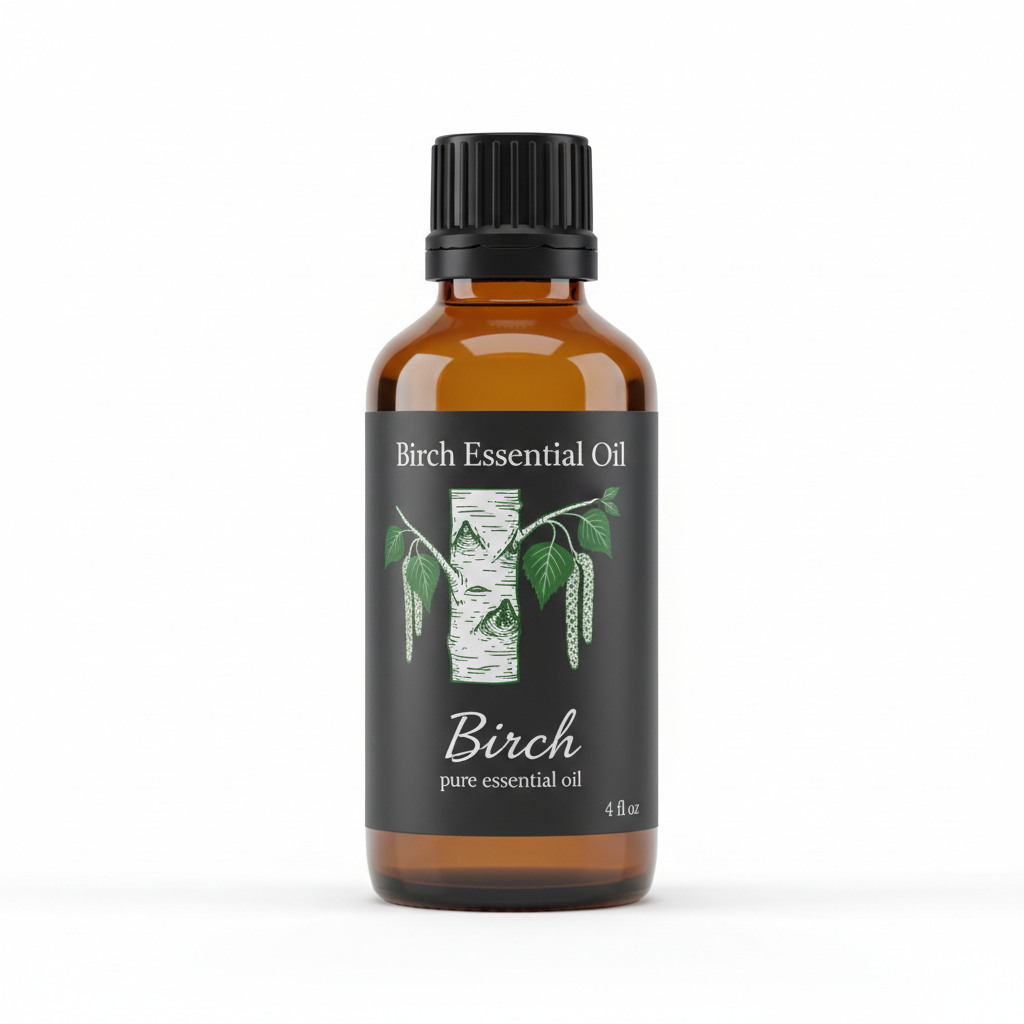
Birch Essential Oil from our own shop, in sizes from 1 oz to bulk.
From $17.99
Shop Now →Sources & Further Reading
- Dosoky NS, Poudel A, Satyal P, 2022. Plants 11(16):2132. pmc.ncbi.nlm.nih.gov
- PubChem, Methyl salicylate (CID 4133). pubchem.ncbi.nlm.nih.gov
- NOAA CAMEO Chemicals, Methyl salicylate. cameochemicals.noaa.gov
- HSDB, Methyl salicylate human toxicity (via PubChem). pubchem.ncbi.nlm.nih.gov
- 16 CFR 1700.14, Substances requiring special packaging. law.cornell.edu
- Poison Control, Essential oils. poison.org
- Merck Veterinary Manual, Toxicoses From Essential Oils in Animals. merckvetmanual.com