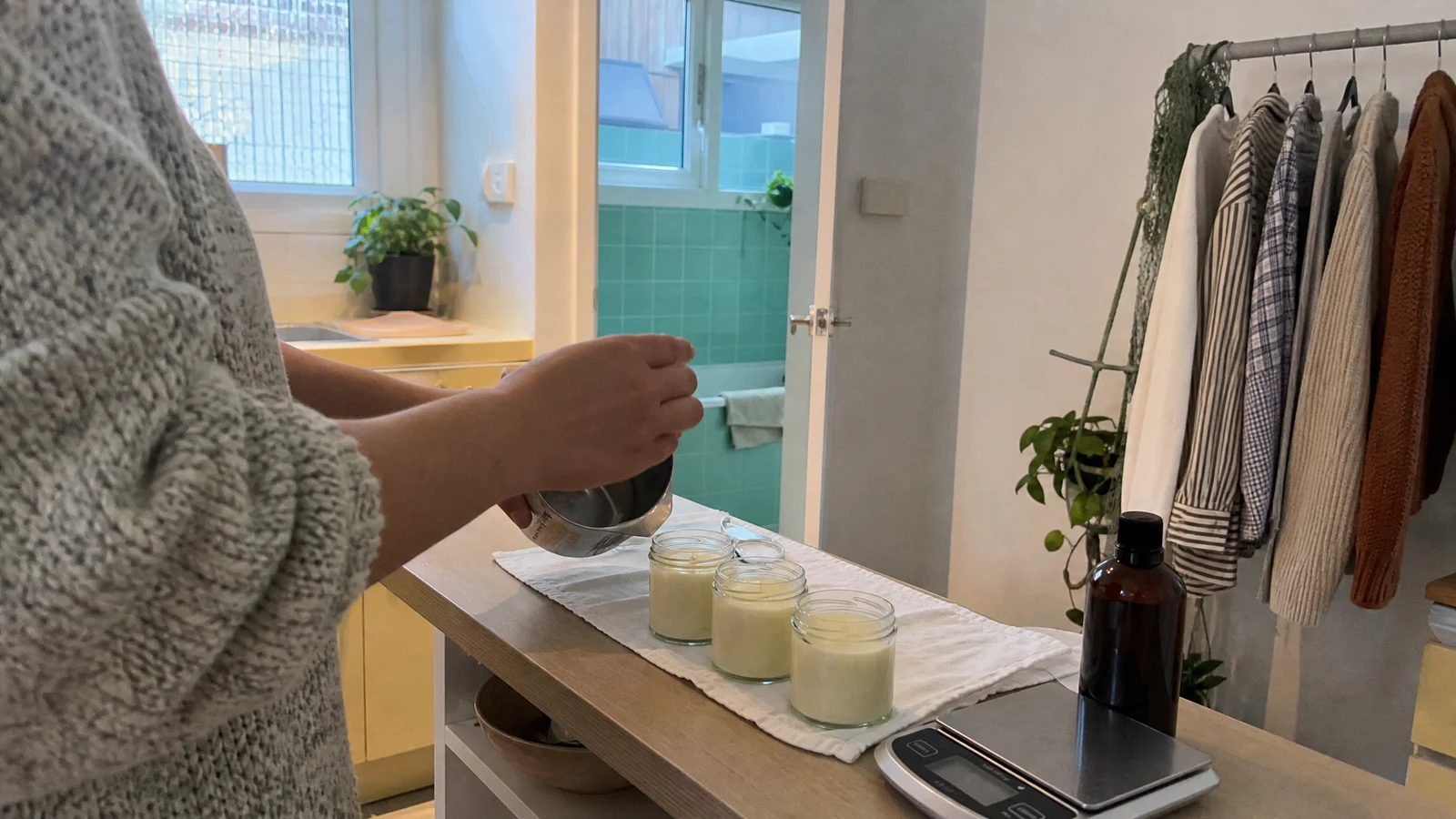
How to Make Birch Candles: Wax, Load and Wick
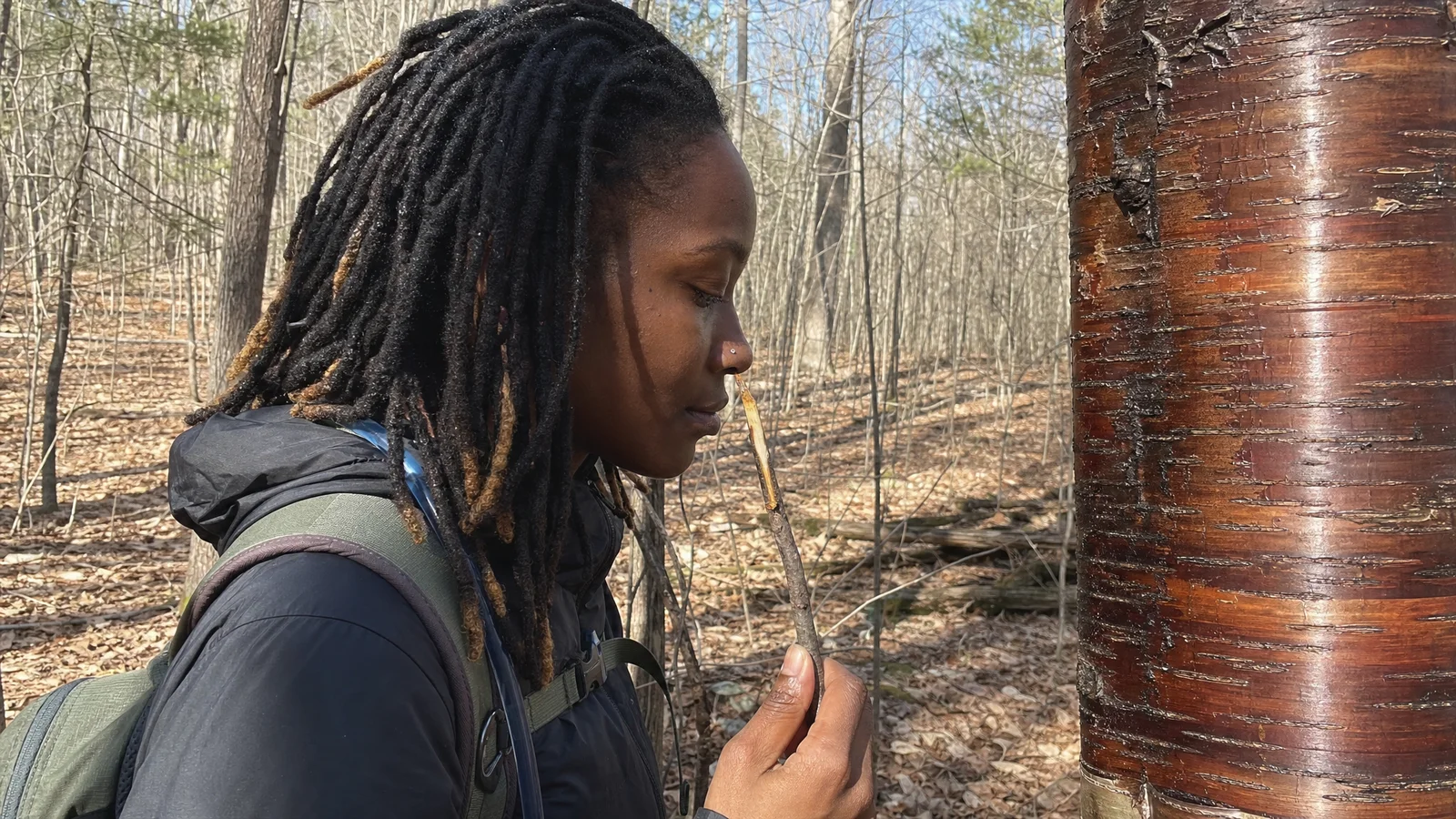
A good birch candle smells like a cold morning at a cabin, with a sweet wintergreen edge that makes people ask what it is. It is also a candle that asks you to be a little precise. Sweet birch is nearly all one molecule, so the trick is using very little of it, weighing it carefully and letting the rest of your fragrance carry the woods.
Is birch the right oil for this candle?
In a 2022 analysis of 21 authentic Betula lenta oils, methyl salicylate made up 93.24% to 99.84% of the oil (Dosoky, Poudel and Satyal, Plants, 2022). That is the root beer and wintergreen note, and it is why birch is memorable. ScenTree files methyl salicylate as a heart note and says a very low dilution is enough to detect it (ScenTree). Reasoning from that, birch is the right choice when you want that wintergreen-meets-woods character to be the point of the candle, and it works best as an accent over a rounder woody base. If you want a fragrance that behaves identically in every wax at a high load, a birch fragrance oil is a different tool for that job.
Choose a wax, then read its data sheet
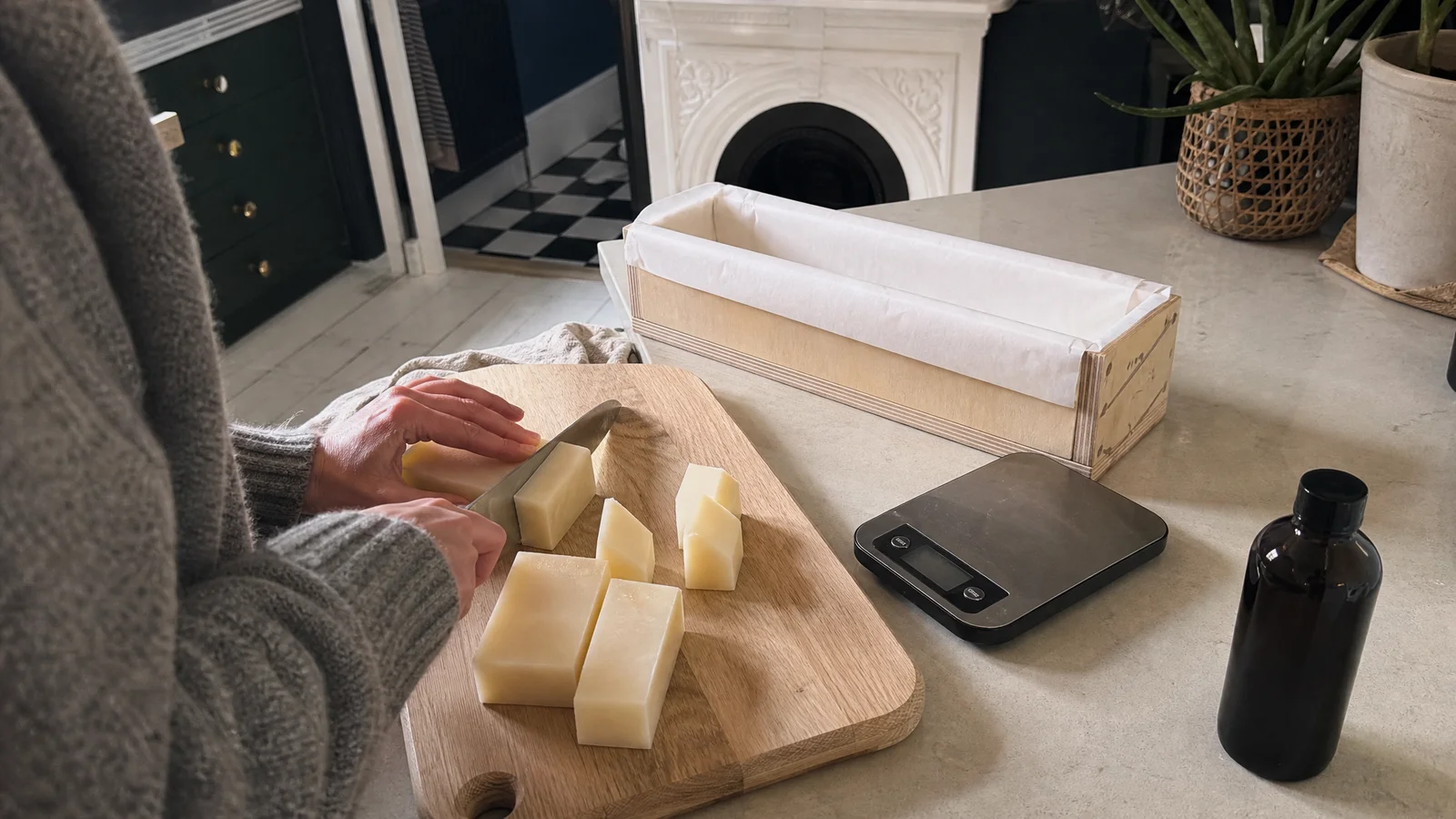
Wax makers publish melt, pour and cure temperatures plus a recommended total fragrance load, and that sheet should win over any forum rule of thumb. We compare options in our wax guide. We do not sell wax, wicks or containers, so you will find them at a candle supply shop.
Set the load as a small ladder
Total fragrance loads from wax suppliers describe a whole blend, and birch is only a slice of it. Candle Science, for example, advises wicking up one or two sizes once fragrance passes about 1 oz per pound of wax, around 6% (Candle Science). Our recommendation is to keep birch itself to a fraction of one percent of the wax weight and let fir, cedarwood, vanilla or spruce supply the rest.
A sensible way to find your level is a three-rung ladder in one vessel, one wax and one wick. For an 8 oz (227 g) wax fill, these are worked out from simple arithmetic:
- 0.25% birch: about 0.57 g.
- 0.5% birch: about 1.13 g.
- 1% birch: about 2.27 g.
The batch on our published Certificate of Analysis has a relative density of 1.183, so 1.13 g is a little under 1 mL, around 19 drops by the usual 20-drops-to-the-mL convention (drop size varies, so a scale is better). Weigh both oil and wax. Our per-candle article follows the same sums.
Wick for the whole system
The wick is the engine of throw. Candle Science describes sooting as too much fuel, meaning wax plus fragrance plus dye, being pulled up the wick, and recommends testing two or three wicks from the same series in your vessel. Our wick guide walks through the steps, and if a finished candle is quiet, our weak scent throw fixes go through the likely causes in order.
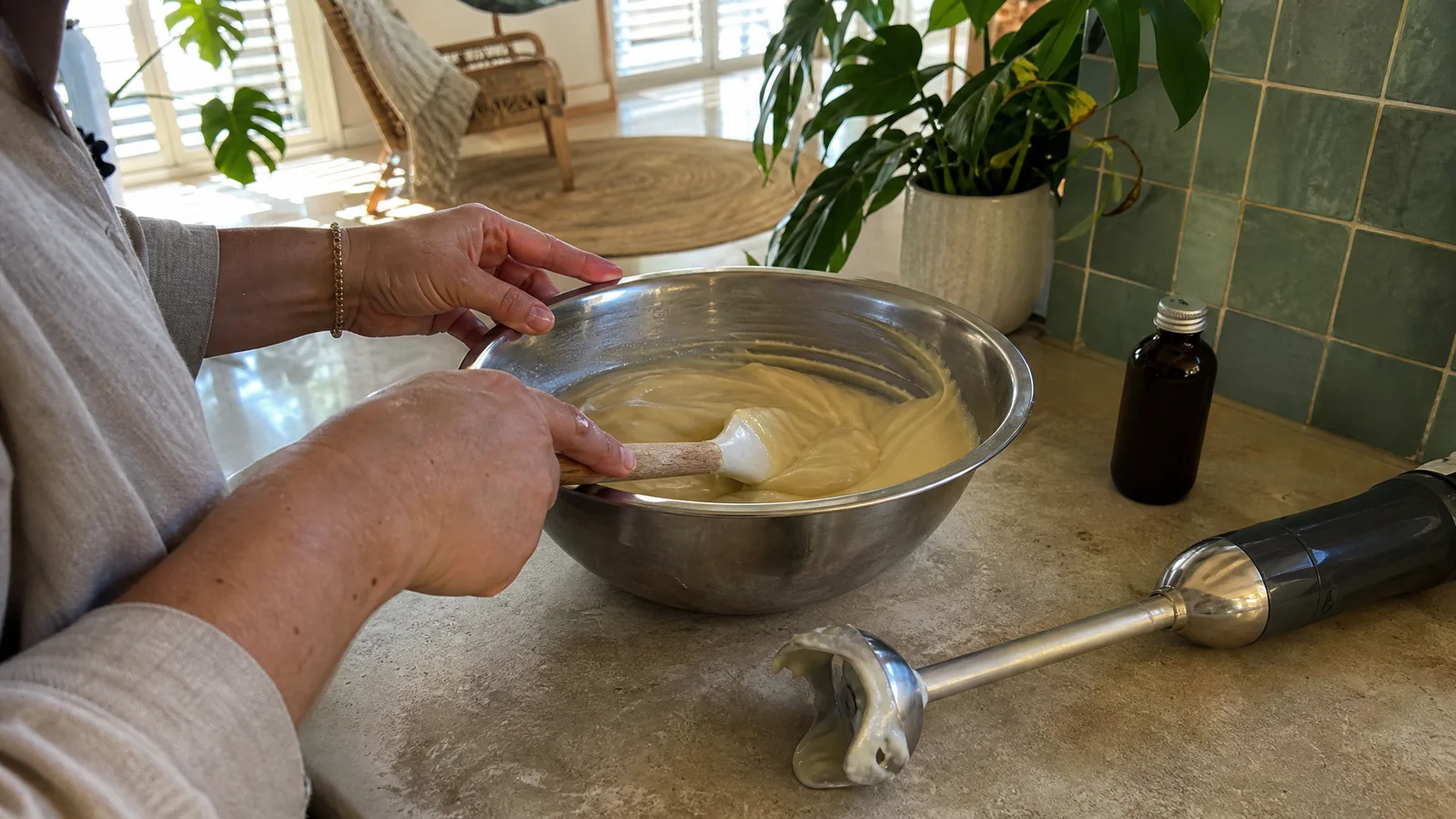
Methyl salicylate has a closed-cup flash point of about 96 to 101 C (PubChem), so stir the oil in after the wax has come down from its hottest point and follow your wax maker's temperatures. Let the candle cure as the wax sheet says, then burn-test it in the vessel you plan to sell. If you sell candles, a candle compliance consultant can confirm labeling and safety standards for your market.
A word on the first pour
Treat the first candle as a conversation with the oil, not a finished product. Pour it, let it sit, and then check it again over a few days, noticing how the unlit candle smells when you lift the lid and how the room feels a few minutes after you light it. Birch tends to announce itself early, so what you are listening for is whether it fades into the woods or keeps shouting. Write that down while it is fresh.
Sample, pilot, bulk
The order that spends the least before you know what you have:
- Sample. A 1 oz bottle measured by volume weighs about 35 g (29.57 mL at 1.183 g/mL). At 0.5% it scents about 30 candles of the 8 oz size, plenty for the whole ladder in small vessels. See our bottle size guide.
- Pilot. Once one rung burns the way you want at your selling size, a larger bottle takes you through a run.
- Bulk. Move up only once your pilot candles set up and burn well twice running. Our bulk page and wholesale page cover larger sizes, and orders ship in one to two business days, with bulk sizes sometimes needing extra handling.
What to keep in mind
Undiluted birch is strong. Methyl salicylate vapor and mist are described as irritating to eyes and airways by NOAA's CAMEO Chemicals (NOAA CAMEO), so ventilate while you pour. We do not recommend birch for a nursery or a pet's room, or for anyone who is pregnant to handle in the pour; a physician can advise about your situation. Our dilution chart covers handling in more detail.
The Certificate of Analysis we publish for one batch gives relative density, refractive index and optical rotation, and states that the batch complies with pharmacopoeia standards for Betula lenta. If you need a methyl salicylate figure or GC-MS for your lot, ask us in writing through our contact page. See how to read a birch oil lab report for what to ask any supplier.
Birch rewards a maker who keeps a burn log. Start with the small ladder, note what each rung does, and scale only what has earned it.
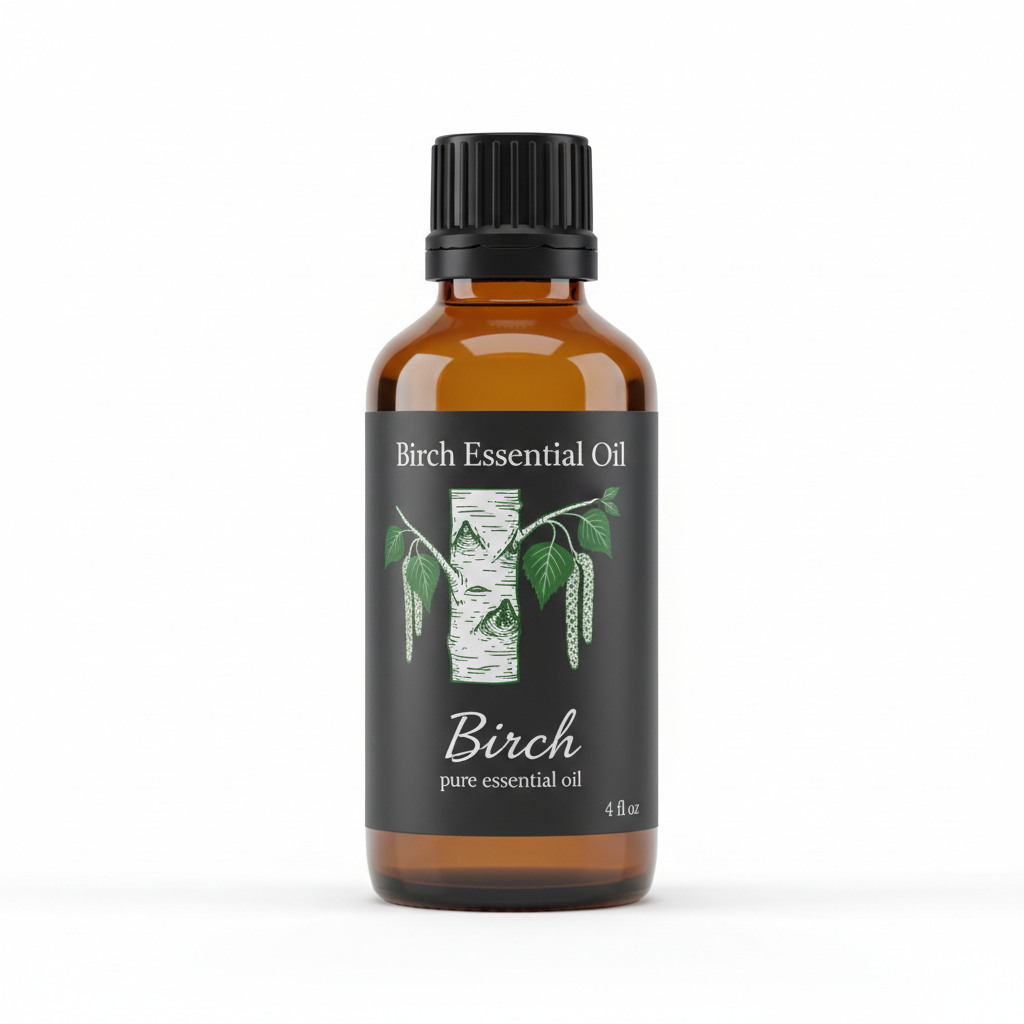
Birch Essential Oil
Birch Essential Oil from our own shop, in sizes from 1 oz to bulk.
From $17.99
Shop Now →Sources & Further Reading
- Dosoky NS, Poudel A, Satyal P, 2022. Plants 11(16):2132. pmc.ncbi.nlm.nih.gov/articles/PMC9412571
- ScenTree. Methyl salicylate. scentree.co
- Candle Science. Wicking container candles. candlescience.com
- National Library of Medicine. PubChem, Methyl salicylate (CID 4133). pubchem.ncbi.nlm.nih.gov
- NOAA CAMEO Chemicals. Methyl salicylate. cameochemicals.noaa.gov