Betula Lenta: The Sweet Birch Tree Behind the Oil
Scratch a twig of sweet birch and it smells of wintergreen. That small trick is the reason the tree has been tied to this oil for generations. Betula lenta, also called black, cherry or mahogany birch, is not a rare tree, but it is a slow, thin-barked, sun-loving one, and that shapes everything about the oil made from it.
Where it grows
The USDA Forest Service's Silvics manual calls sweet birch "primarily a tree of the northeastern United States." Its range runs from southern Maine west to eastern Ohio and south through the Appalachians to northern Alabama and Georgia. It grows from near sea level on the New England coast up to about 1,220 to 1,370 m in the southern Appalachians, and does best on moist, well-drained, north- or east-facing slopes (Lamson, 1990).
How common it feels depends on where you stand. Northern Woodlands notes it grows best in the southern Appalachians and is uncommon in northern New England (Barlow, 2008). Both are true, since where a tree is most abundant and where it grows best are different questions. If you want to find one, our guide to identifying sweet birch is the place to start, and a regional flora will confirm what grows near you.
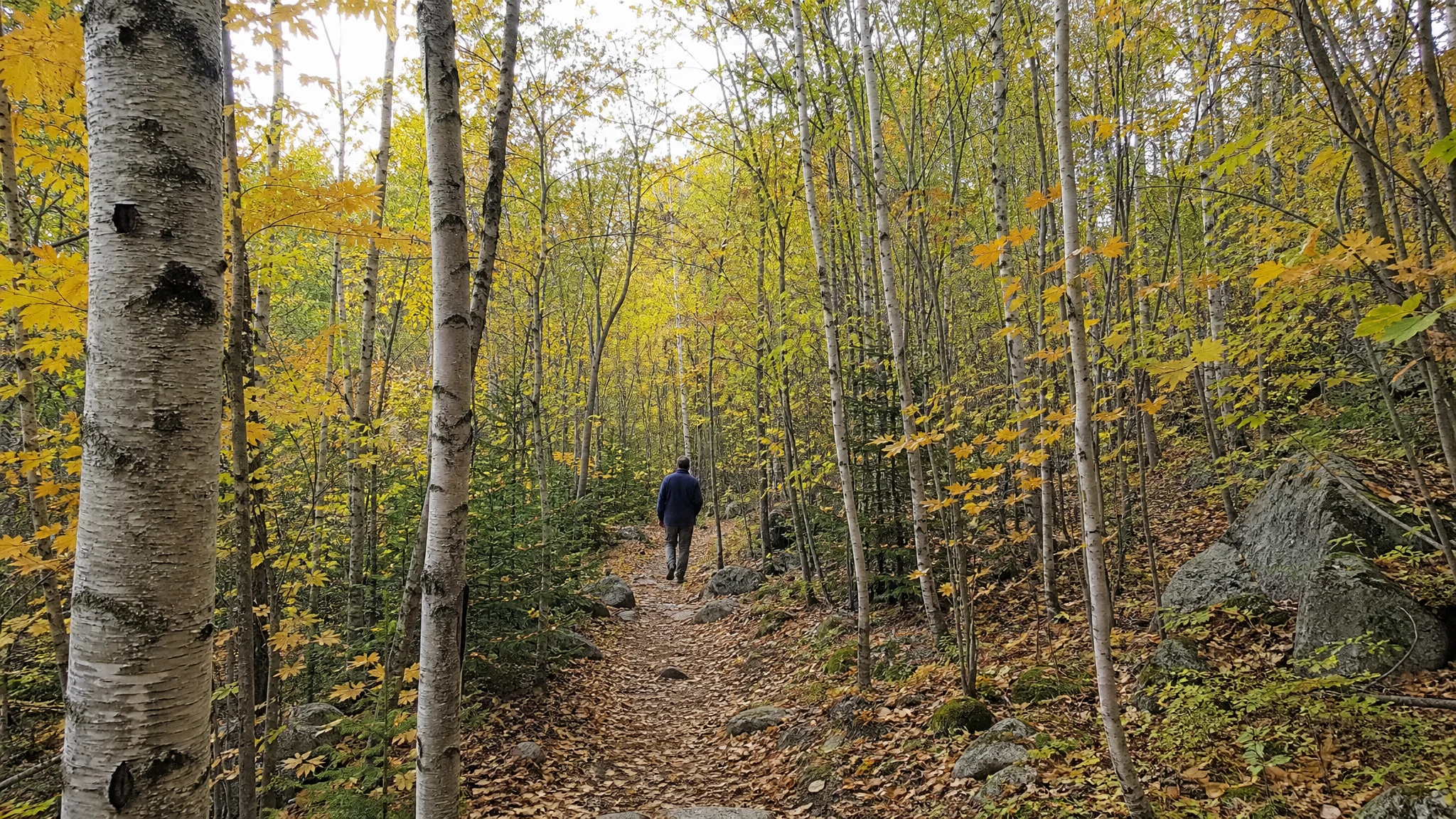
Meeting the tree on a walk
The best way to understand this oil is to go and sniff a twig. Pick up a fallen one rather than breaking a living branch, bend it until the bark splits, and hold it under your nose. The smell is cool and sweet, a bit like a mint candy rolled in old wood, and it is surprisingly strong for something so small. It fades after a minute, then comes back when you bend the twig again.
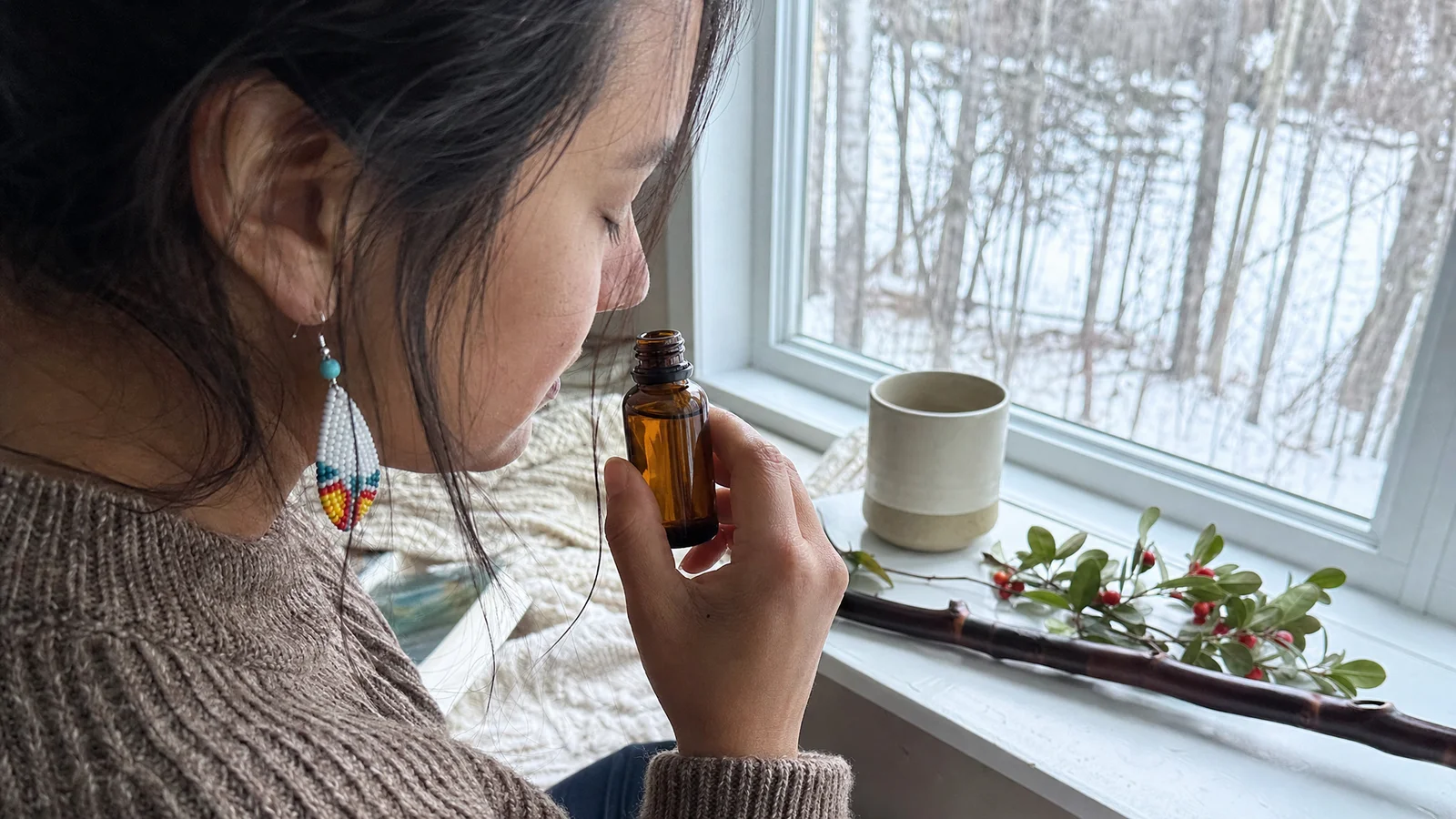
Do this once and the bottle on your desk makes more sense. Our oil is far more concentrated than a twig will ever be, so open it slowly, keep it a hand's width from your face and waft the scent toward you instead of breathing it straight in.
A patient tree
On an average site, sweet birch takes about 20 years to reach 10 cm across at breast height and about 80 years to reach 25 cm. It starts seeding around age 40. The bark is extremely thin, so ground fires damage it easily, and it is shade-intolerant. Those facts are worth remembering whenever someone calls birch "abundant." Bark is the oil's raw material, and a tree that needs decades to reach modest size is not a crop in the way a lavender field is. How harvesting can be done responsibly is a question about particular stands and methods, which our piece on sustainable birch harvesting takes up.
A colonist of open ground
Because it wants light, sweet birch moves in quickly when a forest opens up. At the Arnold Arboretum in Massachusetts, black birch made up 75% of stems over 1 cm about ten years after hemlocks killed by woolly adelgid were removed (Orwig and Del Tredici, 2016). It is tempting to read that as plenty of birch and so plenty of oil, but a thicket of ten-year-old saplings is not a stand of trees with bark worth distilling. Abundance describes the forest. It says nothing about who harvests, where or how much.
Why we keep coming back to it
Most essential oils begin on another continent, in plants most of us will never see. Sweet birch is different, because the tree belongs to the eastern woodlands, and plenty of people have already smelled a scratched twig on a hike without knowing there was an oil behind it. We like an ingredient with a story you can check with your own nose, and that is a large part of why we sell it.
From tree to bottle
The wintergreen scent is not unique to this tree. Wintergreen oil comes from a small evergreen shrub, and the aroma molecule, methyl salicylate, is the same in both. The 2022 study of 21 sweet birch oils distilled from Pennsylvania bark found 93.24 to 99.84% methyl salicylate, and it identified four trace compounds that appeared in the birch oils but in none of the 27 commercial products it bought online (Dosoky, Poudel and Satyal, 2022). A species name on a label is only as good as the analysis behind it.
The Certificate of Analysis we publish for one batch names Betula lenta and lists density, refractive index and optical rotation. If you need GC-MS or origin documentation for a product you plan to label, ask us in writing through the contact page and we will point you to what is available for your lot. White birch species such as Betula pendula are different trees with a different oil, which we compare in white birch vs sweet birch.
One practical note belongs with the pleasant tree profile. The same methyl salicylate means the oil is not something to taste or swallow, and the Tisserand Institute advises against sweet birch oil for children of any age, in pregnancy and with blood-thinning medication (Tisserand Institute). Our methyl salicylate explainer goes further, and for twigs in the woods, a sniff is all you need.
If you want the bigger picture of what it is, start with what birch essential oil is.
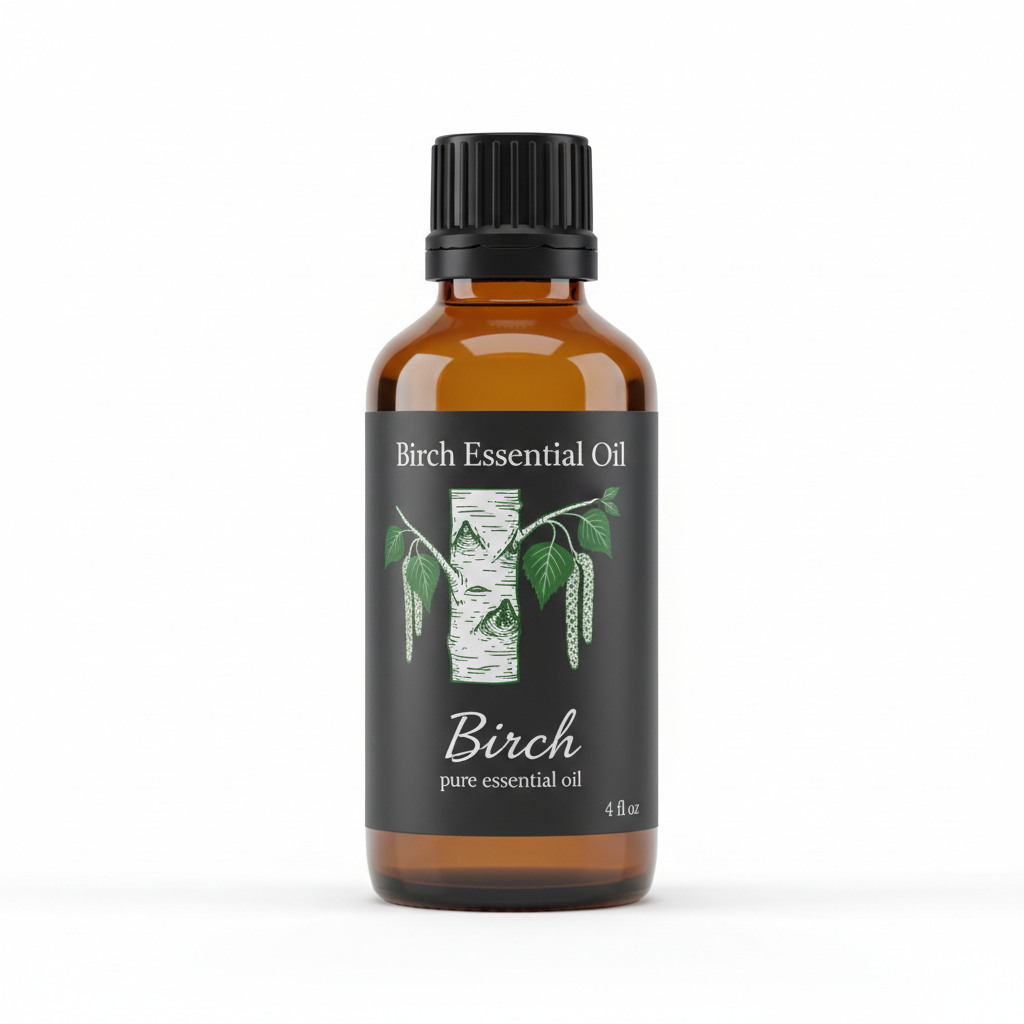
Birch Essential Oil
Birch Essential Oil from our own shop, in sizes from 1 oz to bulk.
From $17.99
Shop Now →Sources & Further Reading
- Lamson NI, 1990. Sweet Birch (Betula lenta L.). Silvics of North America, USDA Forest Service.
- Barlow V, 2008. Black Birch (Betula lenta). Northern Woodlands.
- Orwig D, Del Tredici P, 2016. Black birch after hemlock removal, Arnold Arboretum. Harvard Forest Symposium.
- Dosoky NS, Poudel A, Satyal P, 2022. Plants 11(16):2132.
- Tisserand Institute. Methyl Salicylate (Essential Oil Constituents in Food, Part 5).