White Birch vs Sweet Birch Oil: Which Is in the Bottle?
A bottle labeled "birch oil" and nothing else could hold at least three different things: a wintergreen-scented oil from sweet birch bark, a green, resinous oil from white birch buds, or a smoky tar from a different process altogether. They share a genus and almost nothing else, so it pays to know which one you want.
Read the label in three steps
Check the Latin name, the plant part and the method. Those three facts sort nearly every birch product into one of three bins.
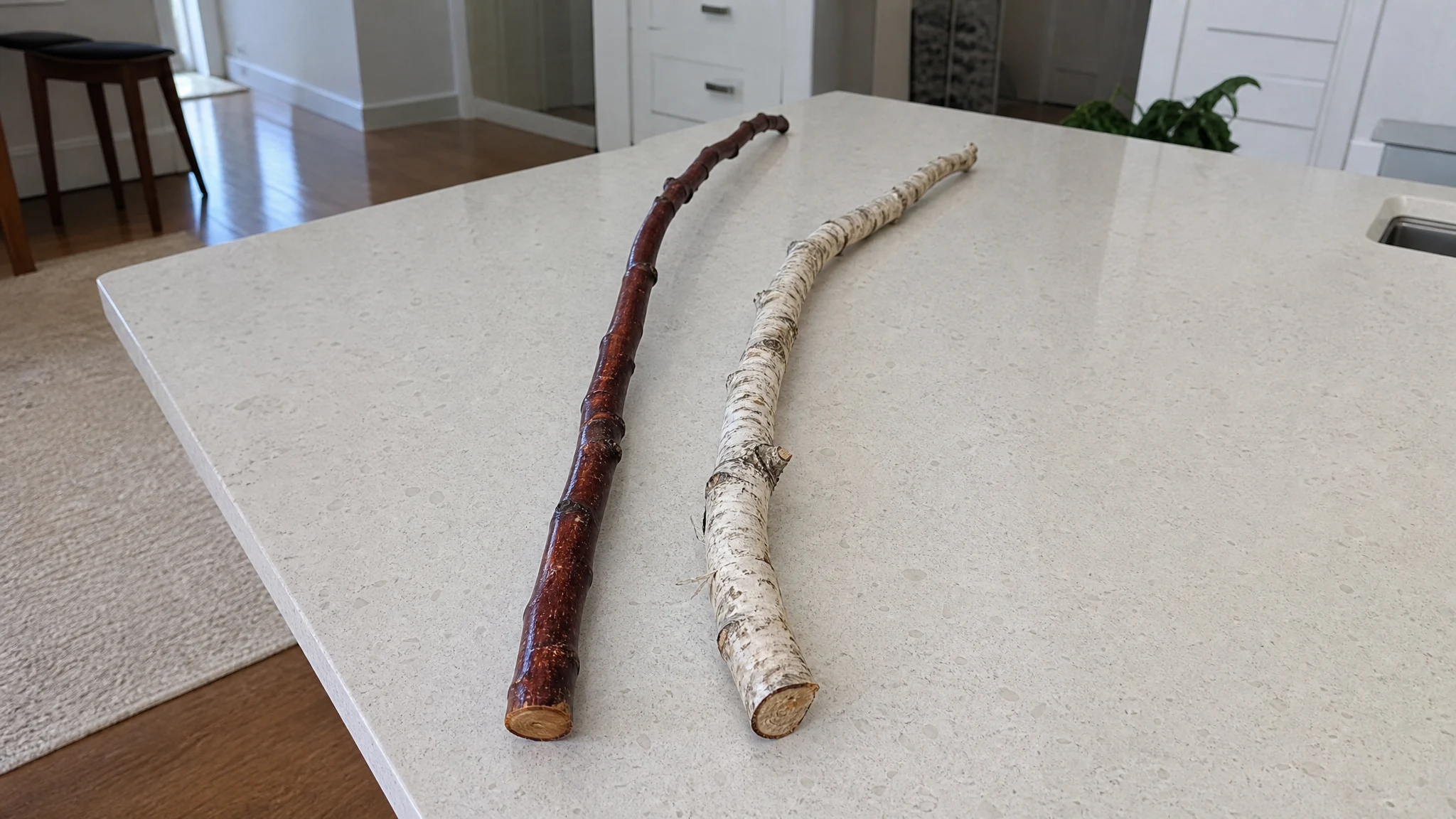
- Sweet birch, Betula lenta, distilled from bark. This is the root beer and wintergreen oil, and it is what we sell. The Certificate of Analysis we publish for one batch names Betula lenta.
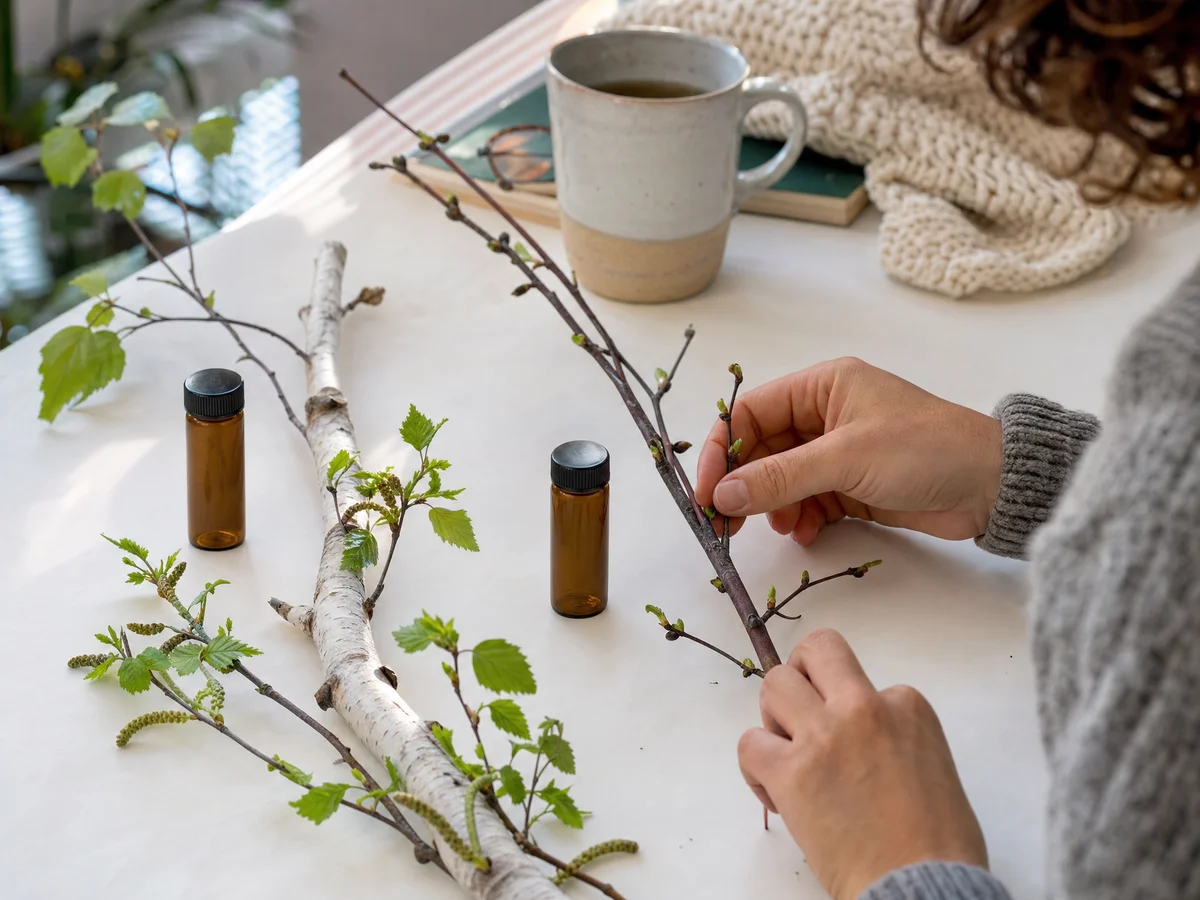
- White birch, usually Betula pendula (silver birch), distilled from buds or leaves. A different, plant-like oil built on different molecules.
- Birch tar, made by heating bark or wood without air. This is neither of the others. See our birch tar post and tar soap versus sweet birch soap.
Old texts are just as loose with the names. The 1911 British Pharmaceutical Codex describes a birch oil "prepared in Russia by the destructive distillation of the wood and bark of Betula alba," which is a tar, not a distilled oil (BPC 1911, via Henriette's Herbal). A "Betula alba oil" can mean quite different things, so we look for the process on any birch product page.
Product pages tend to be friendly rather than technical, so be patient with them. A name like "birch oil" is often shorthand, and the Latin name, the plant part and the method are the details that tell you what you are really getting.
What is actually in each
Sweet birch is a one-molecule story. A 2022 study analyzed 21 authentic Betula lenta oils from Pennsylvania and found methyl salicylate at 93.24% to 99.84%, with yields of only 0.07% to 0.1% from the bark (Dosoky, Poudel and Satyal, Plants, 2022). That low yield is part of why genuine sweet birch oil is precious.
White birch buds go another way. In a study of Betula pendula buds collected near Regensburg, Germany, the main components were sesquiterpene hydrocarbons such as alpha-copaene, germacrene D and delta-cadinene, each around 10% to 18% depending on the distillation method, and the authors noted that earlier studies had found something quite different (Demirci and colleagues, 2004). In plain terms, a white birch oil is not a fixed recipe; it shifts with the sample, the plant part and the method.
What it means for you
For scent, the cool, candy-like winter woods note comes from methyl salicylate, which dominates sweet birch. Reasoning from the composition, a sesquiterpene-rich bud oil would not deliver that note. Our smell post describes what ours is like.
For safety, the sweet birch cautions are well documented. The Tisserand Institute lists a recommended topical maximum of 2.5% and advises against use in children, in pregnancy and with blood thinners such as aspirin or warfarin (Tisserand Institute). Those statements belong to methyl salicylate oils and cannot be carried over to white birch in either direction, so do not assume a white birch oil is "milder." Ask for its safety data sheet. See our pregnancy and children post for the sweet birch side.
For labeling, a candle or soap sold as containing "birch" names a specific material, and a buyer or regulator may ask which one. Keep the supplier's botanical name and plant part on file.
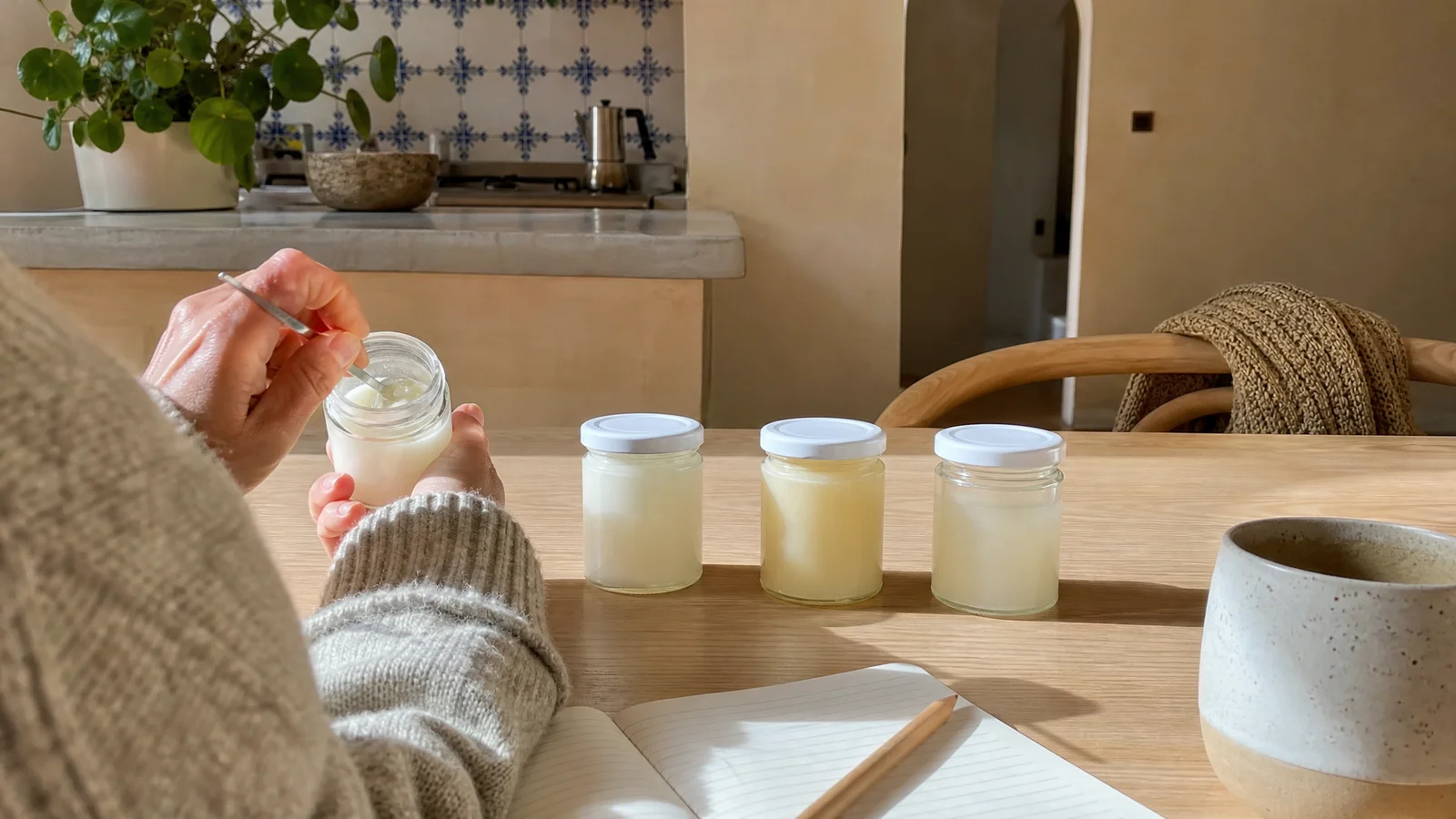
If you ever have both on hand, put each on its own paper blotter and smell them side by side. You will notice the difference at once: one leans cool and sweet like candy, the other leans green and plant-like. It is a tidy way to learn the two by nose, and you do not need any chemistry to do it.
Which one should you want?
- A root beer or wintergreen top note for a candle or room scent: sweet birch, in small amounts. Start with our candle guide and dilution chart.
- A green, buddy, resinous plant note: that points to white birch bud oil, which we do not sell. Ask a supplier for a sample and a safety sheet.
- Smoke and leather: you want birch tar, a different material altogether.
- Certainty about what you bought: ask for a GC-MS report for your lot. In the 2022 survey, none of 27 commercial birch oils bought online carried the authors' four markers of authentic birch, and their methyl salicylate ranged from 56.71% to 99.9%. A density figure alone will not settle the question, which is why our buying checklist suggests asking.
One more habit worth having is to write what a bottle is directly on it: the botanical name, the plant part and the date it arrived. Names get shortened on product pages, and a label that says only "birch" is not much help months later. A strip of tape and a pen solve it.
The Certificate of Analysis we publish for one batch lists density, refractive index and optical rotation, and names Betula lenta. If you need the methyl salicylate figure or GC-MS for your lot, ask us in writing through our contact page.
Sweet birch is a good oil that is not for everyone: it is not for use on children or pets, in pregnancy or breastfeeding, or by anyone on anticoagulants or sensitive to aspirin. A pharmacist, physician or midwife can address your own situation.
Birch Essential Oil
Birch Essential Oil from our own shop, in sizes from 1 oz to bulk.
From $17.99
Shop Now →Sources & Further Reading
- Dosoky NS, Poudel A, Satyal P, 2022. Plants 11(16):2132. pmc.ncbi.nlm.nih.gov/articles/PMC9412571
- Demirci B et al., 2004. Evid Based Complement Alternat Med 1(3):301-303. pmc.ncbi.nlm.nih.gov/articles/PMC538512
- Tisserand Institute. Methyl Salicylate (Essential Oil Constituents in Food, Part 5). tisserandinstitute.org
- British Pharmaceutical Codex 1911, Oleum Rusci. henriettes-herb.com