Birch Fragrance Oil vs Essential Oil: Which to Use?
The word "essential" or "fragrance" on a bottle matters less than what you can find out about what is inside. A birch essential oil is one plant material. A birch fragrance oil is a formulated blend, and its recipe may legally stay private. For a maker, the useful question is which documents come with the bottle.
For candles and room scents
Either product can give you that cool, wintergreen-like birch note, and the choice turns on what you can verify. With a sweet birch essential oil the main component is known: methyl salicylate made up 93% to 99.8% of 21 authentic oils analysed in a 2022 study (Dosoky et al., Plants, 2022). That makes safety planning straightforward, because the rules for methyl salicylate are the rules for the oil. The Tisserand Institute advises against sweet birch in children, in pregnancy and with blood thinners (Tisserand Institute).
A fragrance oil is different. The US FDA describes fragrance formulas as complex mixtures and notes they are among the cosmetic components most likely to be trade secrets, which is why a label may simply say "fragrance" (FDA). A "birch" fragrance oil might contain methyl salicylate, might contain none, or might be a smoky tar-style accord. The seller's safety data sheet is the place to find out. We sell sweet birch essential oil only, so we cannot speak for any particular fragrance oil.
How they feel in the hand
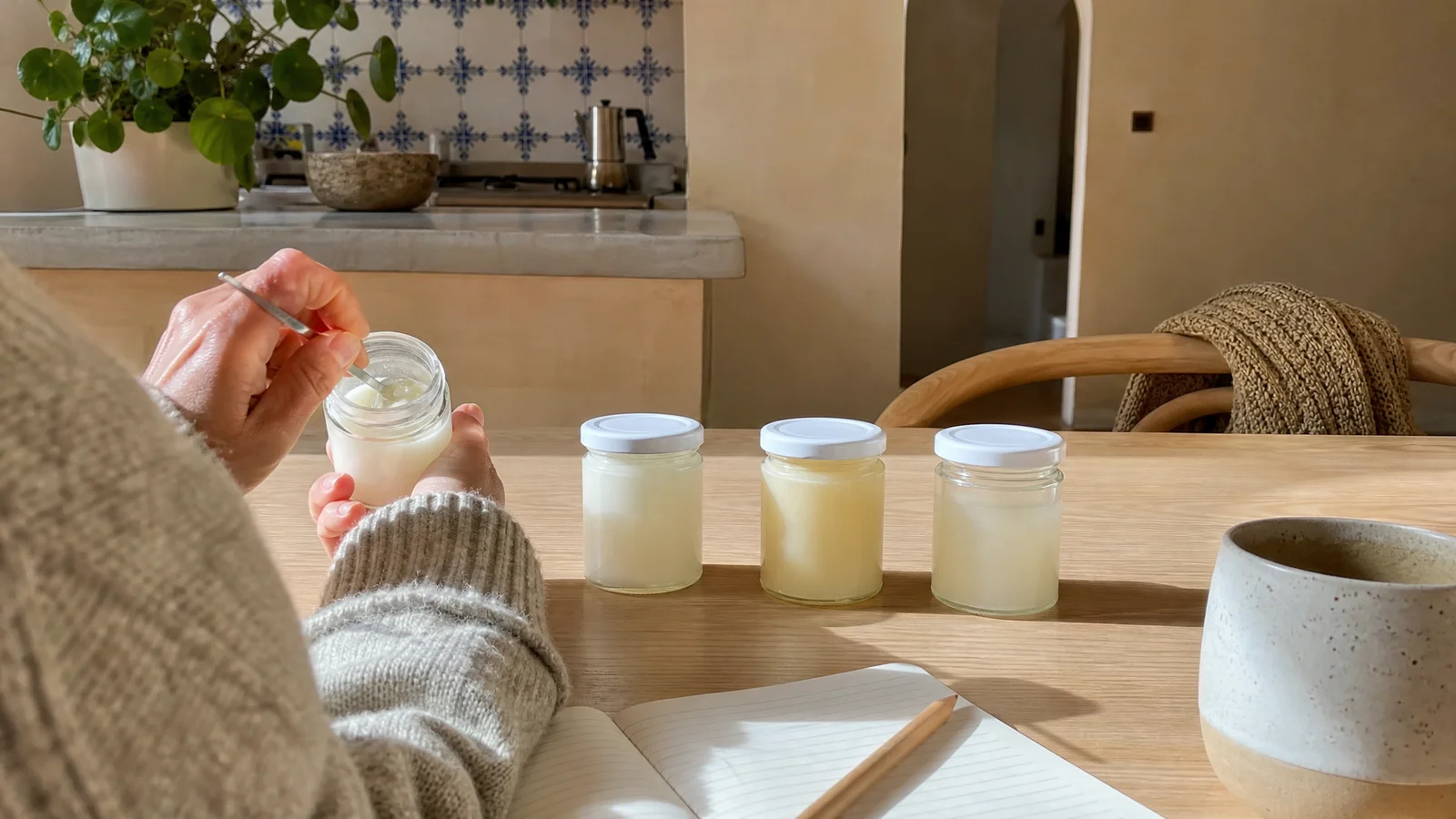
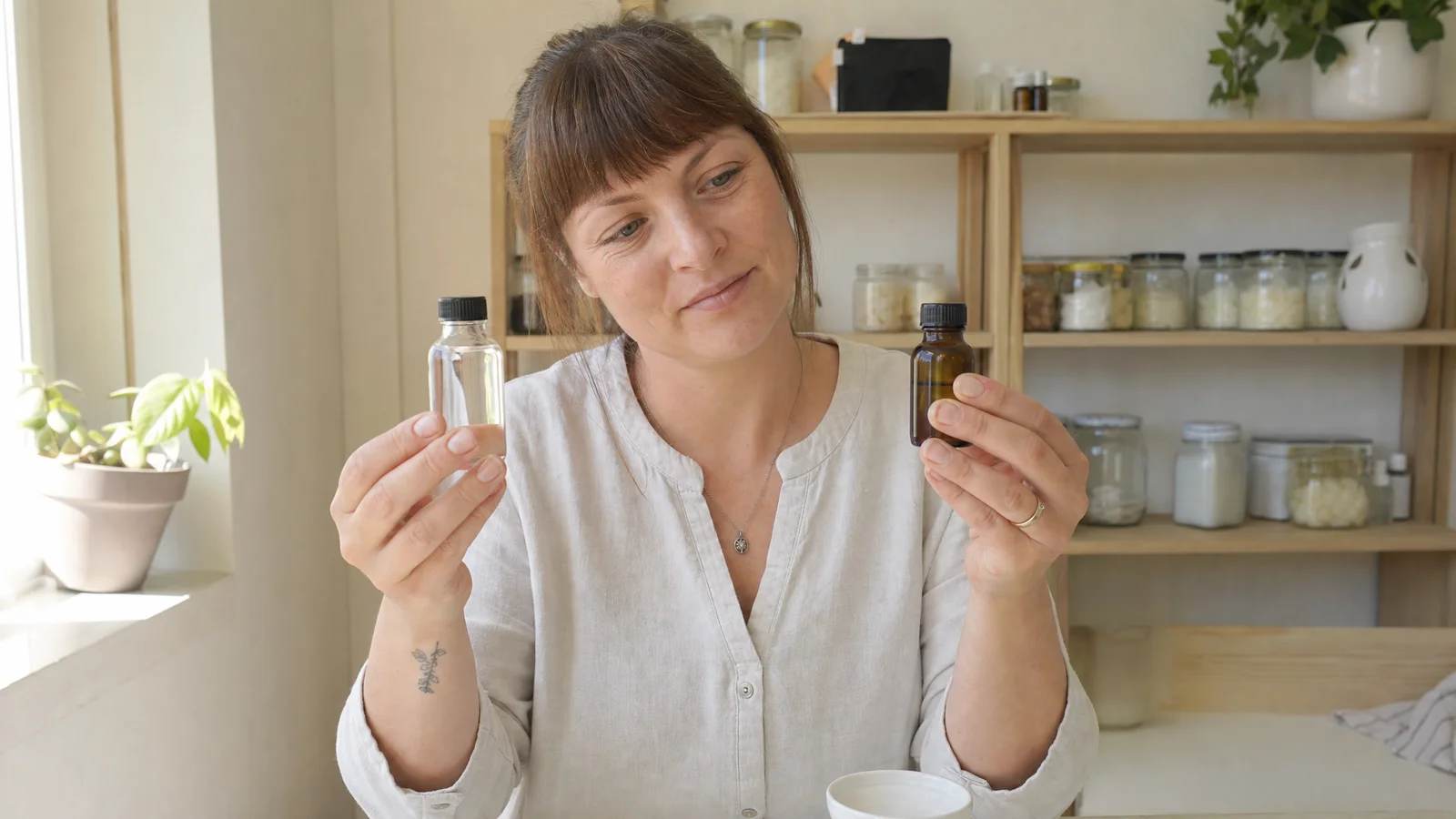
Put a drop of each on separate blotter strips and give them a few minutes. A sweet birch essential oil tends to smell like one thing, bright and cool and quite direct, with a woody candy character that does not change much from start to finish. A fragrance oil is more likely to be built like a little perfume, with a top, a middle and a drydown, and it may add notes like smoke, vanilla or fresh snow to the idea of birch. Neither is wrong. They are different things to want.
That is the honest way to choose: decide what you want the finished candle or room scent to say, and then pick the material that says it most clearly.
For soap and skin products
Here a fragrance oil can be the easier path, and the reason is paperwork rather than aroma. Fragrance oils sold to makers often arrive with usage rates for each product type. Birch essential oil comes with a narrower path: our shop guidance for skin use is 0.5% to 2% in a carrier with a patch test first, and we advise dilutions far lighter than you would use for citrus or lavender, with no use on children or during pregnancy or breastfeeding. For products you sell, remember that European cosmetic rules cap methyl salicylate at 0.06% in leave-on skin products (Regulation (EU) 2023/1545). Our suggestion is to follow the stricter figure for wherever you sell, and to ask a cosmetic chemist about anything leave-on. Our soap guide, dilution chart and guide to selling birch soap go into detail.
When the label says "essential oil" or "natural"
If you want to put those words on your own product, you want a verified essential oil, because US law has no definition of "essential oil" and does not distinguish natural from synthetic ingredients (FDA). The word on the bottle is the seller's claim, so the documents carry the weight.
An honest fragrance oil beats a vague essential oil
This is where we push back gently on the idea that essential is always the "real" choice. The same 2022 team bought 27 commercial "birch" oils from US online sellers: none had the four trace compounds found in their authentic oils, methyl salicylate ranged from 56.7% to 99.9%, and some carried markers of wintergreen or synthetic methyl salicylate. It is a small, one-time sample, but it shows that a bottle labelled essential oil can behave like something else. A fragrance oil that is openly synthetic, with a data sheet and use rates, can be a more transparent product than a vaguely labelled essential oil.
Checking has limits too. In work on wintergreen, researchers found that methyl salicylate made from aspirin did not carry the synthetic marker, so they suggest adding chiral GC-MS and carbon-14 analysis when origin truly matters (Ojha et al., Plants, 2022).
Questions to ask any seller
Whichever product you pick, a short list of questions saves a lot of trouble later.
- Can I see the safety data sheet for this exact product?
- Is it an essential oil, a fragrance oil or a blend of the two?
- What usage rate is suggested for the kind of project I am making?
- Is there a lot number or a batch date on the bottle?
A seller who answers these plainly is a seller worth keeping. We try to hold ourselves to the same standard.
What we can offer
We sell one sweet birch essential oil, neat. The Certificate of Analysis we publish for one batch names Betula lenta and lists density 1.183, refractive index 1.537 and optical rotation "optically inactive". If your product needs a methyl salicylate figure or GC-MS for your lot, ask us through the contact page before ordering. Our lab report guide explains what to ask any seller.
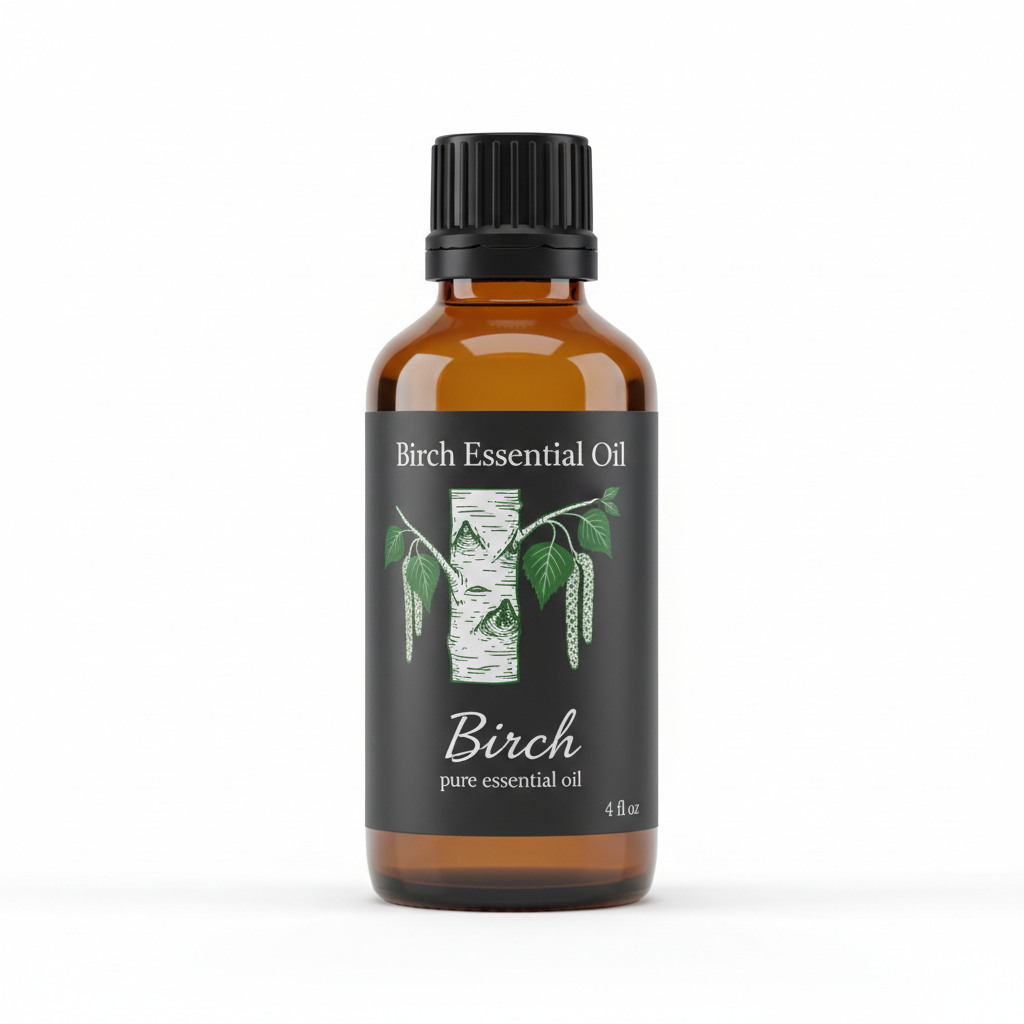
Birch Essential Oil
Birch Essential Oil from our own shop, in sizes from 1 oz to bulk.
From $17.99
Shop Now →Sources & Further Reading
- Dosoky NS, Poudel A, Satyal P, 2022. Authentication and Market Survey of Sweet Birch Essential Oil. Plants 11(16):2132. pmc.ncbi.nlm.nih.gov/PMC9412571
- Ojha PK et al., 2022. Plants 11(8):1090. pmc.ncbi.nlm.nih.gov/PMC9030118
- Tisserand Institute. Methyl salicylate. tisserandinstitute.org
- US FDA. Fragrances in Cosmetics. fda.gov
- Regulation (EU) 2023/1545, Annex III entry 324 (text mirror). lawplayer.com