Best Diffuser for Birch Oil: Ultrasonic or Nebulizer?
Sweet birch is not an oil that rewards a heavy hand, and the diffuser you pick decides how heavy that hand ends up being. For birch, our recommendation is a small water-based ultrasonic unit with a low dose. A nebulizer, which puts undiluted oil straight into the air, is better left for gentler oils.
How the two types work
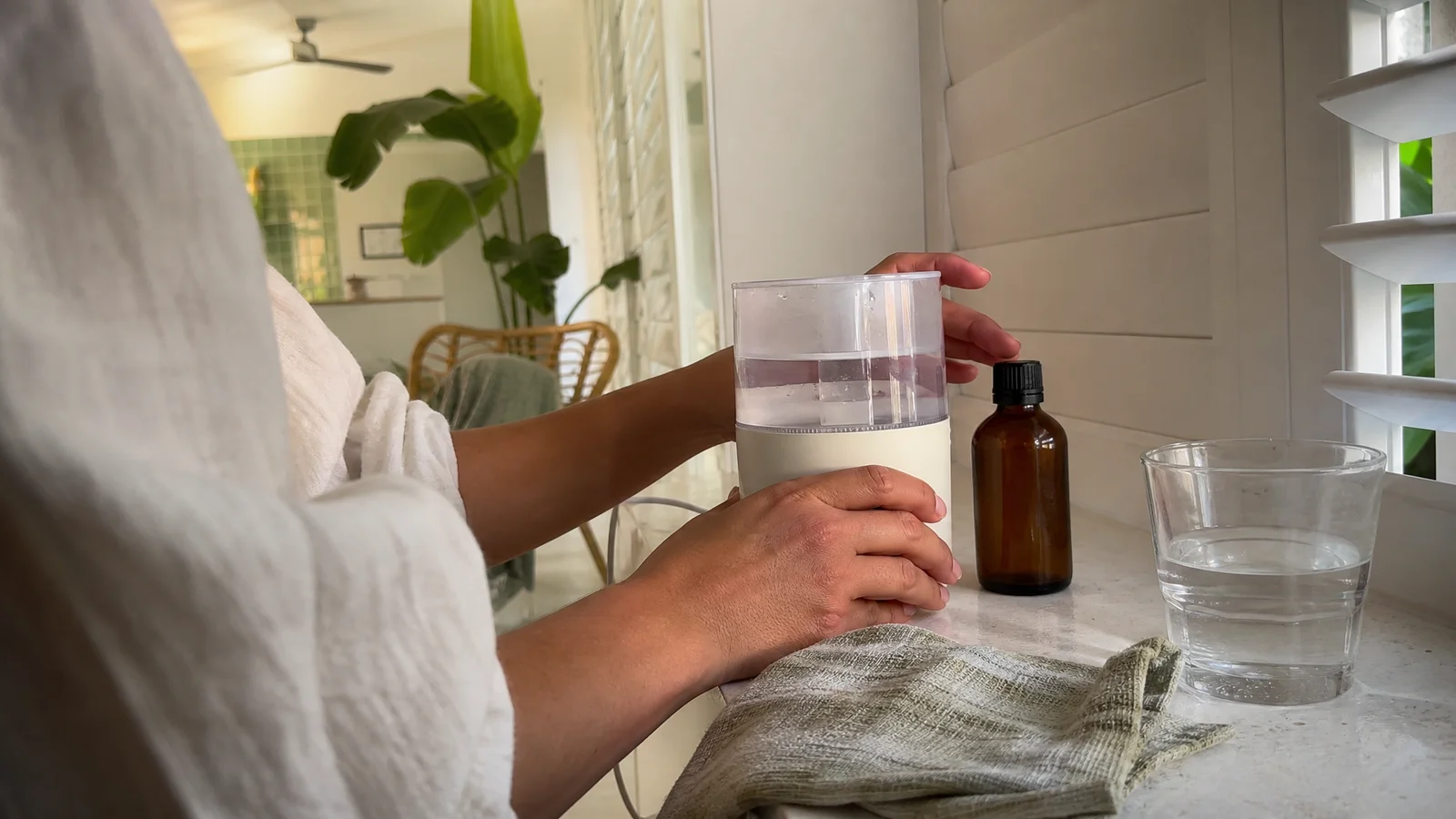
An ultrasonic diffuser vibrates a tank of water into a fine mist and carries a few drops of floating oil along with it. One popular unit's product page, for example, suggests 2 to 4 drops of oil in the water (MUJI ultrasonic aroma diffuser). A nebulizer has no water tank; it atomizes the oil itself. Reasoning from those two designs, a nebulizer has nothing to dilute the oil, so for the same running time it can move more oil into the air than an ultrasonic unit with a few drops floating in a tank.
That matters because the Merck Veterinary Manual notes that active diffusers, whether nebulizing or ultrasonic, emit microdroplets of oil, while passive devices such as reed diffusers do not, and it lists birch and wintergreen among the oils that can cause aspirin-type toxicosis in animals (Merck Veterinary Manual). NOAA's CAMEO Chemicals describes methyl salicylate vapor and mist as irritating to eyes and airways (NOAA CAMEO). Taken together, the sensible aim is the lowest-intensity way to scent a room.
A small habit that helps: the water
In a chamber study of ultrasonic diffusers, using tap water instead of deionized water gave about five times the particle output for eucalyptus oil (Schwartz-Narbonne, Du and Siegel, Indoor Air, 2021). Birch was not one of the oils in that study, but the lesson carries over neatly: part of what a diffuser puts into the air is the water, so distilled or deionized water is a free upgrade.
Our order of play
- Check the household first. The ASPCA's professional site advises against diffusing essential oils in a home with birds (ASPCA Pro). If there are cats, a pet with breathing trouble, young children, anyone who is pregnant, or anyone sensitive to aspirin or on an anticoagulant, birch is better left out of the diffuser. Our pet article and dilution chart explain why.
- Choose ultrasonic. A unit with a visible fill line and an automatic shut-off is ideal.
- Dose low. Stay at the bottom of the maker's range, and use the smaller numbers in our room-size guide.
- Run short sessions in a ventilated room. The Merck Manual suggests short runs, ventilation afterward and keeping animals out of the room.
- Keep the bottle locked away. A neat oil within a child's or pet's reach is a bigger exposure than any mist, so store it capped, cool, dark and high.
What a good session feels like
Start the diffuser, then leave the room for ten minutes. When you come back in, stop at the door and take one ordinary breath. Birch should feel like a cool, sweet whisper at the edge of the room, not a blast. If it fills your nose, the dose was too high, or the room too small, and next time you can trim a drop or shorten the run. A good session is one where a guest walks in and says it smells nice, without being able to say why.
Notice the room as well as the scent. Closed doors and still air make the same drops feel stronger, and a cracked window makes them feel gentler. Learning your own rooms is half of choosing a diffuser.
Plastics and housekeeping
Methyl salicylate is an ester, and some esters can soften some plastics. Before you commit a favorite diffuser, send the maker a quick note asking whether the unit is rated for an ester-rich oil. If the tank is clear plastic, keep an eye out for cloudiness, tackiness or crazing in the first few uses, and wipe the tank out between sessions.
Cleaning and caring for the unit
A diffuser works best when it is clean. After each session, pour out any leftover water, wipe the tank with a soft cloth and let it air dry. Do not switch oils without a good wipe, since a lingering note of the last scent will muddy the next one. A small soft brush or cotton swab helps with the corners. If the unit has a mist outlet, keep it clear and dry, and follow the maker's own cleaning notes.
Where our oil fits
We sell our sweet birch neat, in amber glass from 1 oz up to bulk. For diffusing, the 1 oz bottle goes a long way at a few drops per session, and the bulk sizes make little sense for a diffuser. Shelf life is typically 2 to 3 years when the bottle is kept tightly capped in a cool, dark place. If your home includes the households listed above, a different scent for that room is the honest answer, and diffusers themselves are something to buy from a home goods or aromatherapy supplier. For ideas that keep birch a small share of a mix, try our winter diffuser blends or the birch and eucalyptus comparison.
Questions about a pet belong with your veterinarian; questions about a person, with a physician or pharmacist, or Poison Help at 1-800-222-1222 after any swallowing.
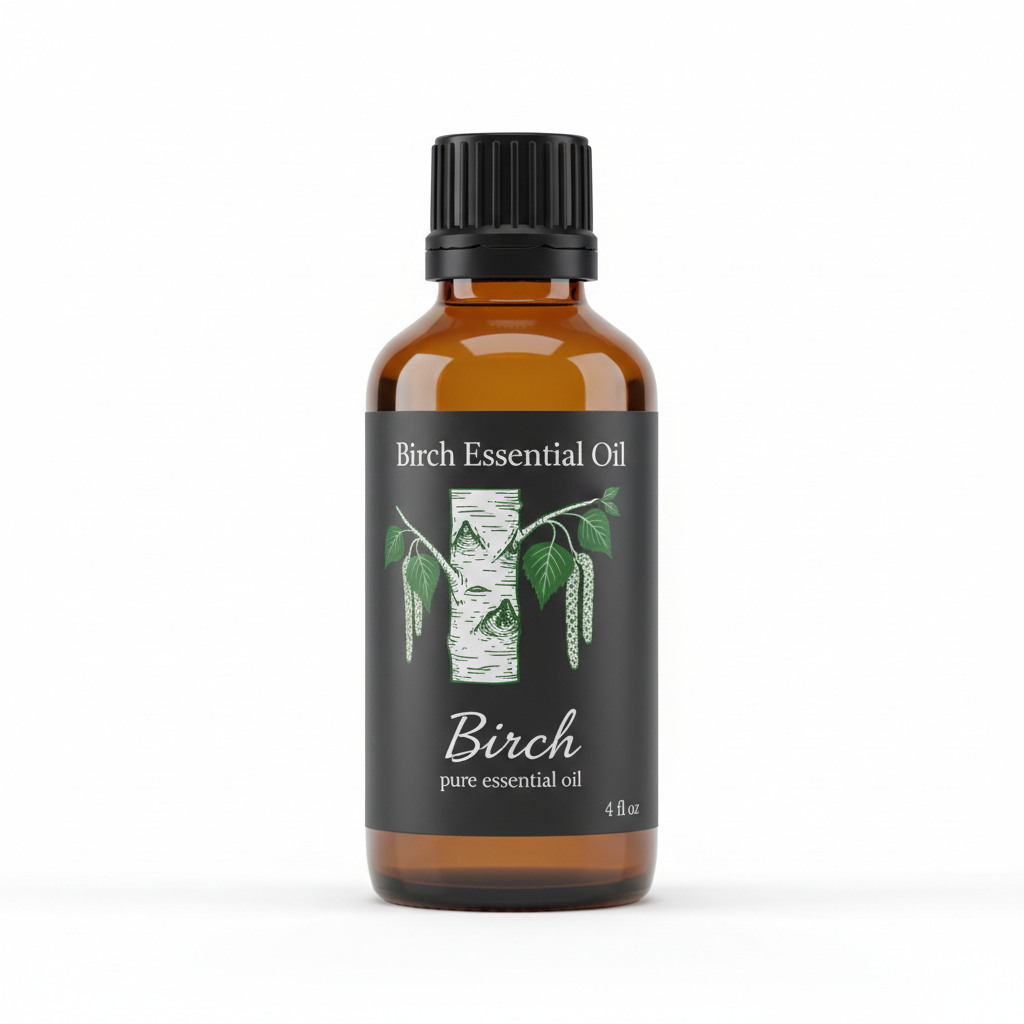
Birch Essential Oil
Birch Essential Oil from our own shop, in sizes from 1 oz to bulk.
From $17.99
Shop Now →Sources & Further Reading
- Schwartz-Narbonne H, Du B, Siegel JA, 2021. Indoor Air. doi.org/10.1111/ina.12845
- Merck Veterinary Manual. Toxicoses From Essential Oils in Animals. merckvetmanual.com
- NOAA CAMEO Chemicals. Methyl salicylate. cameochemicals.noaa.gov
- ASPCA Pro. Essential oil diffusers and birds. aspcapro.org
- MUJI. Ultrasonic aroma diffuser. muji.us