Birch vs Cedarwood: Which Wood Belongs in Your Blend?
Fall blends often start with the same question: birch or cedarwood for the woody base? It is a slightly tricky question, because the two oils are not really competing. Cedarwood is the quiet floor of a blend. Sweet birch is the loud, sweet, wintergreen-edged heart that sits on top of it.
Why birch is not a base note
Most of what you smell in sweet birch oil comes from one molecule, methyl salicylate. ScenTree, a perfumery materials reference, files it as a "Heart" material and notes that a very low dilution is enough to detect its impact (ScenTree, Methyl salicylate). In a 2022 analysis of 21 authentic sweet birch oils, methyl salicylate made up between 93% and nearly 100% of each one (Dosoky, Poudel and Satyal, Plants, 2022). So birch is close to a single, very recognisable note, with very little supporting cast.
Cedarwood is the opposite sort of oil. ScenTree lists cedrol, a main molecule in cedarwood, as a base note with a dry, sawdust-like character (ScenTree, Cedrol). Reasoning from that, cedarwood gives a blend its spread of dry woody warmth and its staying power, while birch gives it a bright accent. Double the cedarwood and you get more wood. Double the birch and you get more wintergreen, quickly followed by nothing else.
Start from the finished scent
The easiest way to decide is to imagine the room, candle or soap after an hour, not at the first sniff.
- A cabin or lodge. Build on cedarwood, add a little fir or pine from a craft supplier if you like, and use birch as a spark. The woods are the point; the wintergreen is the wink.
- Root beer or wintergreen candy. Let birch lead and give it a soft support. The vanilla side of that scent is worked through in our vanilla and birch post.
- Cold and clean. Neither oil alone gets you there. Birch and eucalyptus is the better pairing to explore.
- Barbershop or leather. Birch is a small accent over a cedar-and-moss frame, as in our barbershop worksheet. Smoky leather itself comes from birch tar, a different material that we do not sell.
Side by side on a blotter
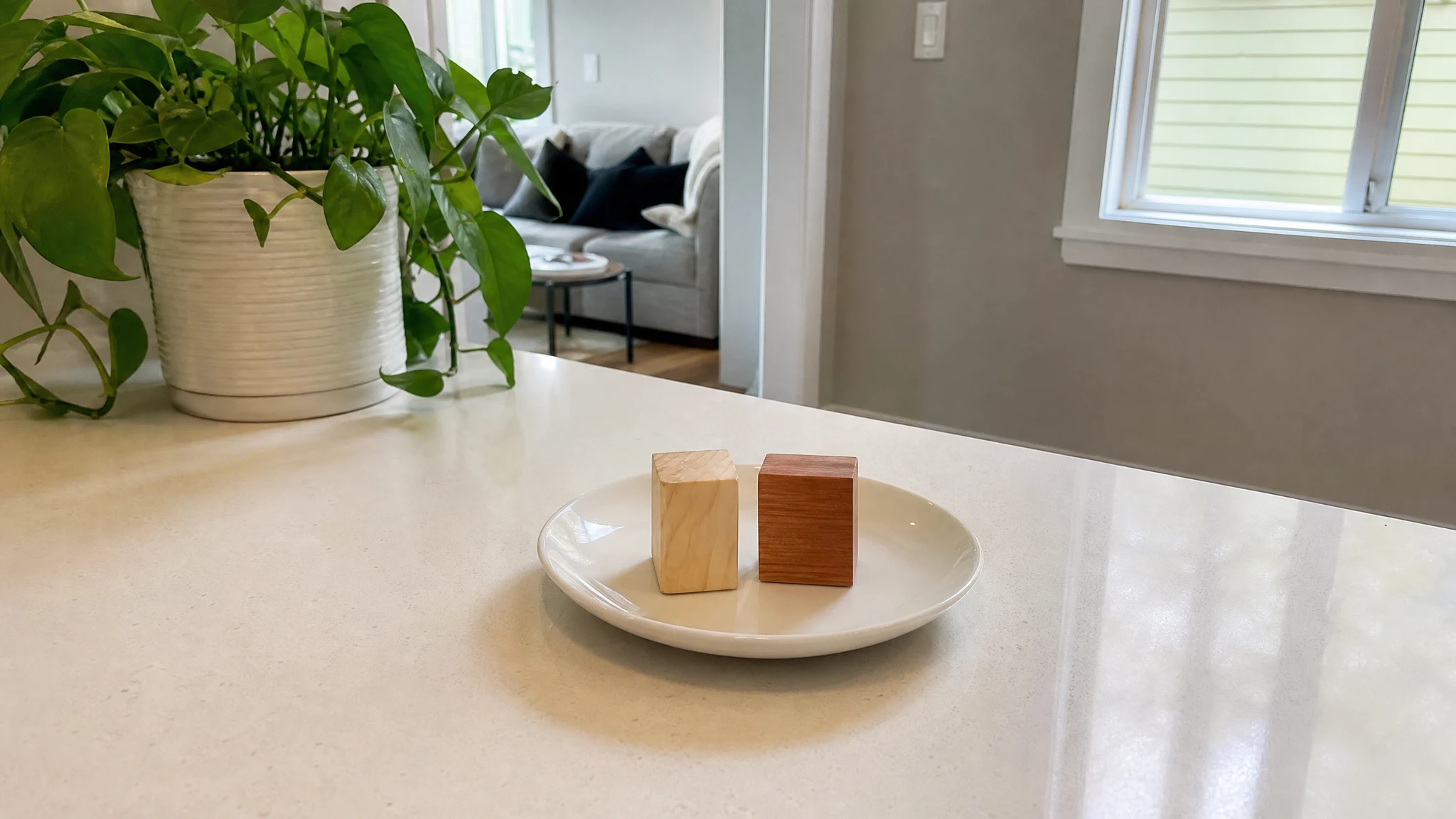
Put a strip with cedarwood next to a strip with a trace of birch and smell them one at a time. Cedarwood is dry and calm, a bit like a freshly sharpened pencil or a closet lined with wood. Birch jumps out at you: bright, sweet and unmistakable. Now smell a blend of both. You will notice that the cedar makes the birch feel more grown up, while the birch gives the cedar a reason to be noticed.
It is worth doing this once before you plan a batch, because it teaches your nose what each oil brings. Cedarwood fills the room; birch decorates it.
Choosing for the season
If you are scenting a space for autumn, cedarwood in front with a trace of birch feels like a stack of firewood by a door. For deep winter, let the birch step up a little so the blend feels cold and clear. Neither choice is wrong, and you can make a small trial of each before you decide.
Ratios that keep birch in its place
These are starting formulations built from the sources above and simple arithmetic, with cedarwood standing in for the woody remainder of the blend. Percentages are by weight of the fragrance blend.
- Woods first, birch as a hint: 1% birch, 99% cedarwood and other woods.
- A clear wintergreen edge: 2% birch, 98% woods.
- Birch leads, cedar supports: 4% birch, 96% woods.
At a 5% fragrance load in a candle, even the 4% row means only about 0.2 g of birch in 100 g of product. That is hundredths of a gram, so either use a scale that reads to 0.001 g or mix a 1% stock solution of birch in a neutral carrier and weigh the stock instead. Your wax or base maker's data sheet sets the real ceiling for total fragrance.
If the blend is going on skin
Candles, reed diffusers and room sprays are not cosmetics, so cosmetic limits do not govern them; your base's fragrance load and your nose do. Skin is a different matter, and the numbers are much lower than the usual 2% rule of thumb. Regulation (EU) 2023/1545 sets methyl salicylate at 0.06% of the finished product in leave-on skin products, 0.6% in hydroalcoholic fragrances, and keeps it out of preparations for children under 6 (text mirror of the Regulation). The Tisserand Institute lists a recommended topical maximum of 2.5% for sweet birch and advises against it in children, in pregnancy and with blood thinners such as aspirin or warfarin (Tisserand Institute).
Our own guidance for general skin use is 0.5% to 2% in a carrier oil after a patch test. Where a published limit is lower than that, we recommend following the lower one, and our dilution chart shows the arithmetic. At a 5% fragrance load, a leave-on product reaches the EU figure when birch is only about 1.2% of the blend, so the 2% and 4% rows above are for candles and room scents, not skin.
Two habits that help
Do not try to hide birch under cedar. Cedar is quiet and birch is detectable at tiny amounts, so the fix for a blend that shouts wintergreen is less birch, and our dose ladder shows how to step down. And judge a blend after it has rested and your nose has had a break, because birch is at its loudest in the first ten seconds.
If the exact composition matters for your product, ask us in writing through the contact page for the report for your lot.
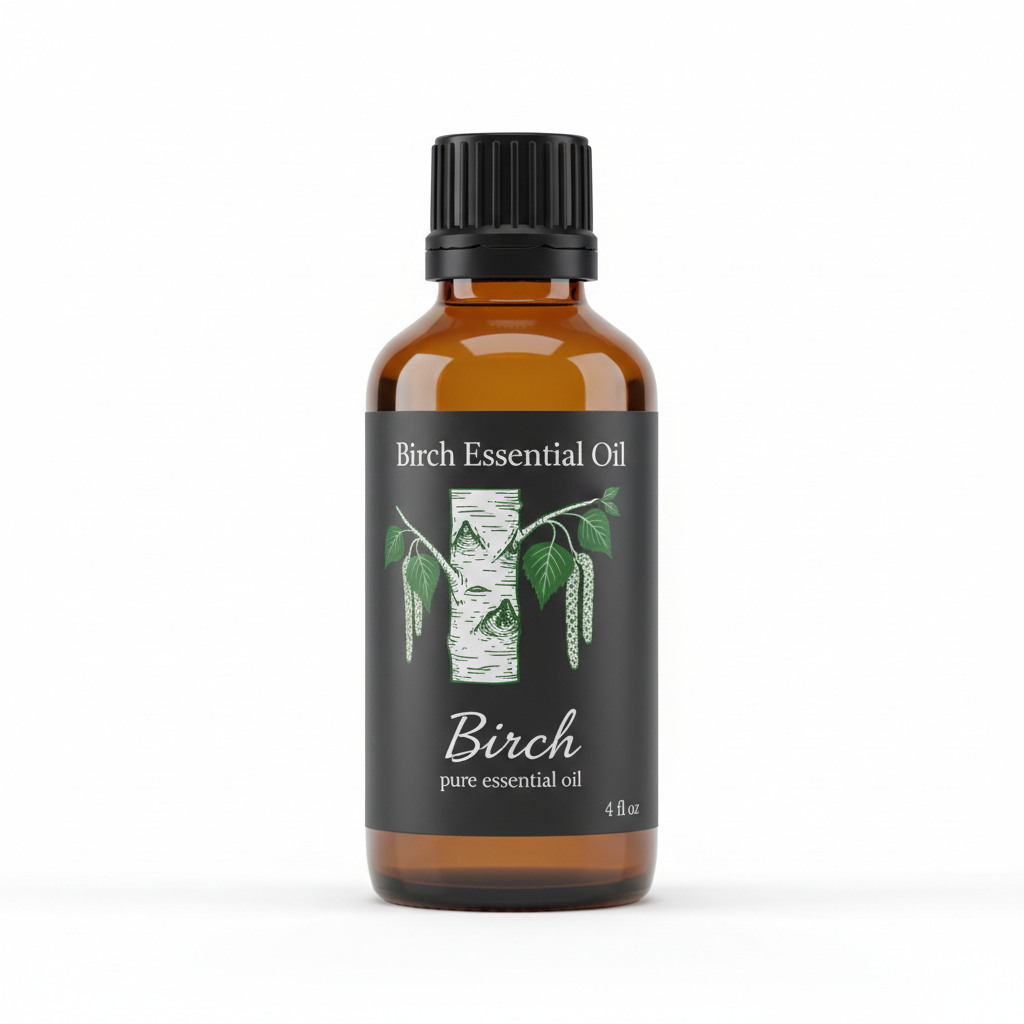
Birch Essential Oil
Birch Essential Oil from our own shop, in sizes from 1 oz to bulk.
From $17.99
Shop Now →Sources & Further Reading
- Dosoky NS, Poudel A, Satyal P, 2022. Authentication and Market Survey of Sweet Birch (Betula lenta L.) Essential Oil. Plants 11(16):2132. pmc.ncbi.nlm.nih.gov/articles/PMC9412571
- ScenTree. Methyl salicylate. scentree.co
- ScenTree. Cedrol. scentree.co
- Regulation (EU) 2023/1545, Annex III entry 324 (text mirror). lawplayer.com
- Tisserand Institute. Methyl Salicylate: Essential Oil Constituents in Food Part 5. tisserandinstitute.org