Birch Too Strong in Your Blend? How to Tame It
You build a woodsy blend, add birch for that cool, sweet snap, and suddenly it is all anyone smells. The instinct is to cover it with something sweeter. A better fix is to find the dose where birch stops leading and starts supporting, and a small set of weighed vials will show you exactly where that is.
Is birch too loud, or is the rest too quiet?
Before you touch a dropper, sort out which one you have.
- Smell a control made of everything except birch. If the control is already thin, the frame is weak and the birch is not the problem.
- Wait about twenty minutes before judging. ScenTree classes methyl salicylate as a heart note, so a blotter smelled at ten seconds tells you about the top of the blend, not where birch settles.
- Rest your nose. If you have been sniffing for several minutes and keep adding birch because it seems to have faded, step away and come back later.
If the control is fine and birch still leads after twenty minutes with a rested nose, birch is simply too loud. Read on.
Why this oil bosses a blend
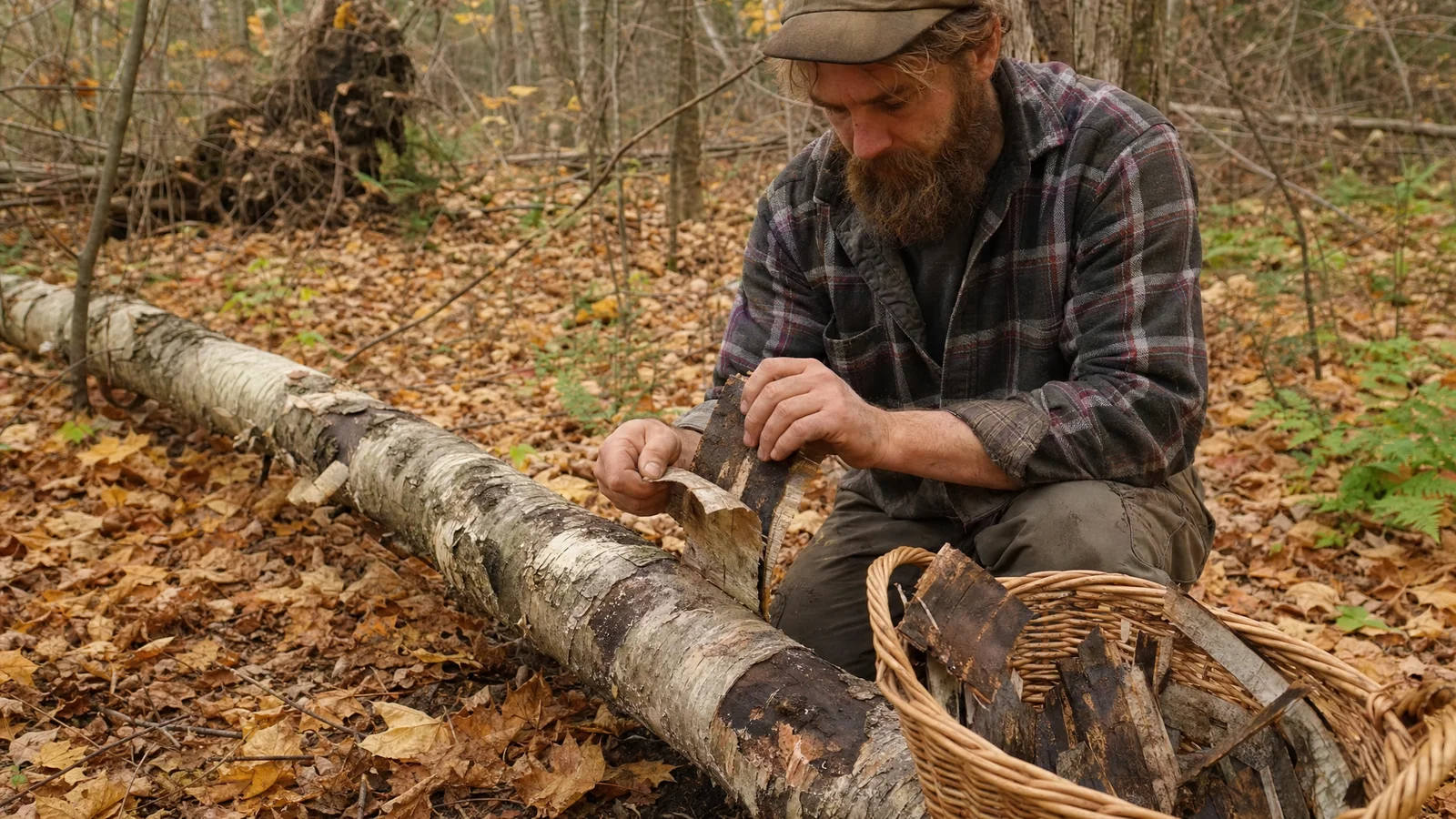
Authentic sweet birch oil is 93 to 99.8 percent methyl salicylate in the one market study that measured it, so there is no gentle, diluted character hiding in the bottle. ScenTree adds that a very low dilution in a fragrance is enough to detect its impact. We describe our oil as a dominant note and say a trace is enough to flavor a whole blend, and that is simply what this molecule does. Dose is the lever, and pairing comes second; our post on blending birch with conifers, citrus and mint covers that side.
Know your ceiling first
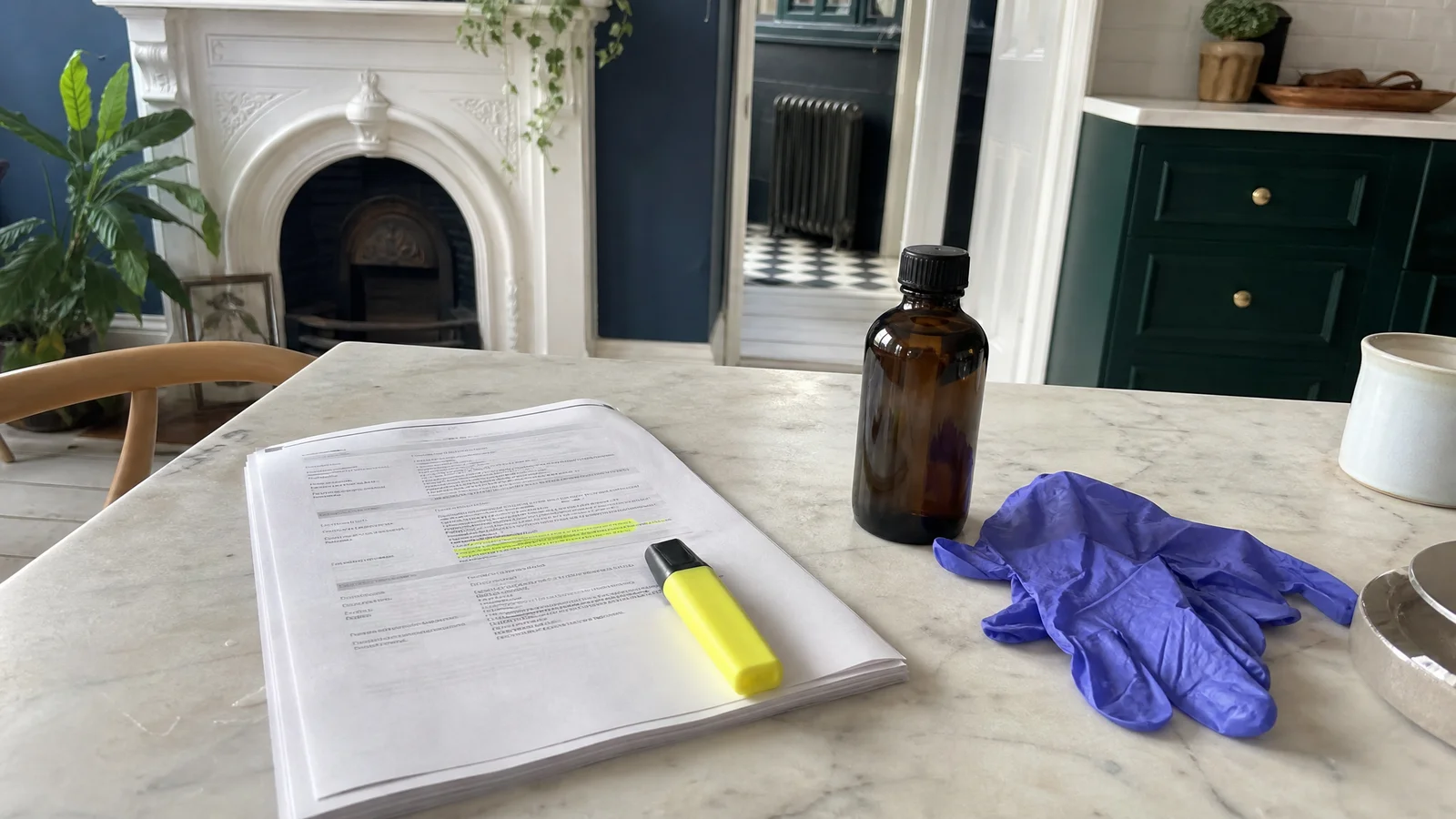
The top rung of your ladder is the most that is allowed or sensible for what you are making, and nothing goes above it. For a skin product you sell, the numbers that exist come from cosmetic law. EU Regulation 2023/1545 sets methyl salicylate at 0.06% in leave-on and rinse-off skin products and 0.6% in hydroalcoholic fragrance and hand wash. In the US we found no numeric cosmetic cap. The Tisserand Institute gives a topical maximum of 2.5% for sweet birch, about forty times the EU skin figure, so for anything you sell, we would anchor to the lower one. Our dilution chart lays out the caps by use. Candles and room scents are not skin products, so there the ceiling is your fragrance load and your wax supplier's guidance.
Building the ladder
Weigh everything in grams. Droppers are too coarse at these doses. The numbers below assume the oil is all methyl salicylate, the conservative end of the range.
- Make a 10% stock: 1.00 g of birch oil into 9.00 g of the diluent your finished product uses. For a 0.06% ceiling, make a 1% stock by mixing 1.00 g of that 10% stock into 9.00 g more diluent.
- Prepare your base blend, everything except birch, in a quantity big enough for every vial.
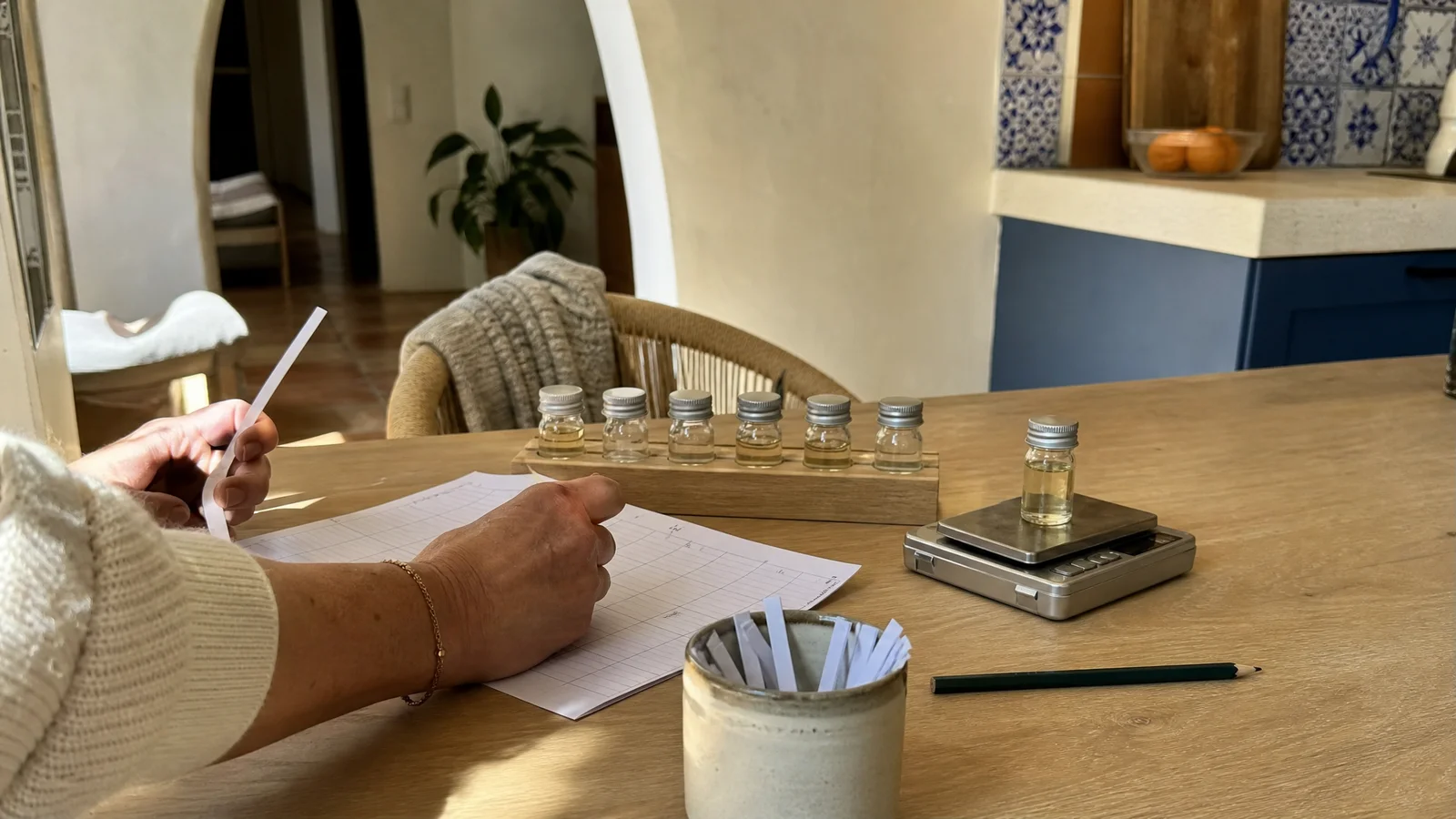
- Set out six vials at 20.00 g each. Weigh the stock into each first, then top up with base blend to 20.00 g. Vial 0 gets plain diluent instead of stock, so the diluent is not a variable.
| Rung | Share of ceiling | Stock per 20 g vial | Birch in blend, 0.6% ceiling |
|---|---|---|---|
| 0 | Control | 0 g (1.20 g plain diluent) | 0% |
| 1 | 10% | 0.12 g | 0.06% |
| 2 | 25% | 0.30 g | 0.15% |
| 3 | 50% | 0.60 g | 0.30% |
| 4 | 75% | 0.90 g | 0.45% |
| 5 | 100% | 1.20 g | 0.60% |
For a 0.06% ceiling, use the 1% stock and the same weights, and every percentage in the last column drops tenfold. A check on the math: 1.20 g of 10% stock is 0.12 g of oil, and 0.12 g in 20.00 g is 0.6%. If your scale only reads to 0.1 g, make 100 g vials and multiply every weight by five.
Running it
Ask a friend to label the vials with random codes and keep the key, so your expectations cannot steer you. Dip a blotter in each, then smell at about twenty minutes, again at an hour, and again the next day. Do not smell more than six in one sitting. For each blotter, jot down whether birch is recognizable, whether it is the first thing you notice, and whether the other ingredients still come through. Unblind and find the first rung where birch is named first. Our rule of thumb, which comes from reasoning rather than a standard, is to choose the rung just below that one and recheck it the next day with a fresh nose.
Keep the winning vial, capped, labeled and out of reach. Once you know your rung, it becomes a reference you can sniff whenever you start a new blend, a quick reminder of how little birch is plenty.
If the ladder does not fix it
- Still loud at rung 1: birch may not suit this blend. Our comparison of fragrance oil and essential oil sets out the options.
- Too quiet at the ceiling: you cannot raise it for a skin product, so strengthen the supporting notes or let birch be a small accent.
- Tempted to mask it: lowering the dose works better than piling on sweetness.
- Tempted to add wintergreen: that is the same compound again, counted against the same ceiling.
A few cautions for the bench
Do not make test vials for skin use if you are pregnant or breastfeeding, take anticoagulants or are sensitive to aspirin, and never for children. Label the 10% stock, cap it, keep it from children and pets, and never taste it. Blotter work needs no skin contact. The EU's scientific committee calls methyl salicylate a weak skin sensitiser and an eye irritant, which is one more reason to keep the work on paper. If you are formulating something to sell, a cosmetic chemist can sign off on the safety file.
Questions are welcome on the contact page.
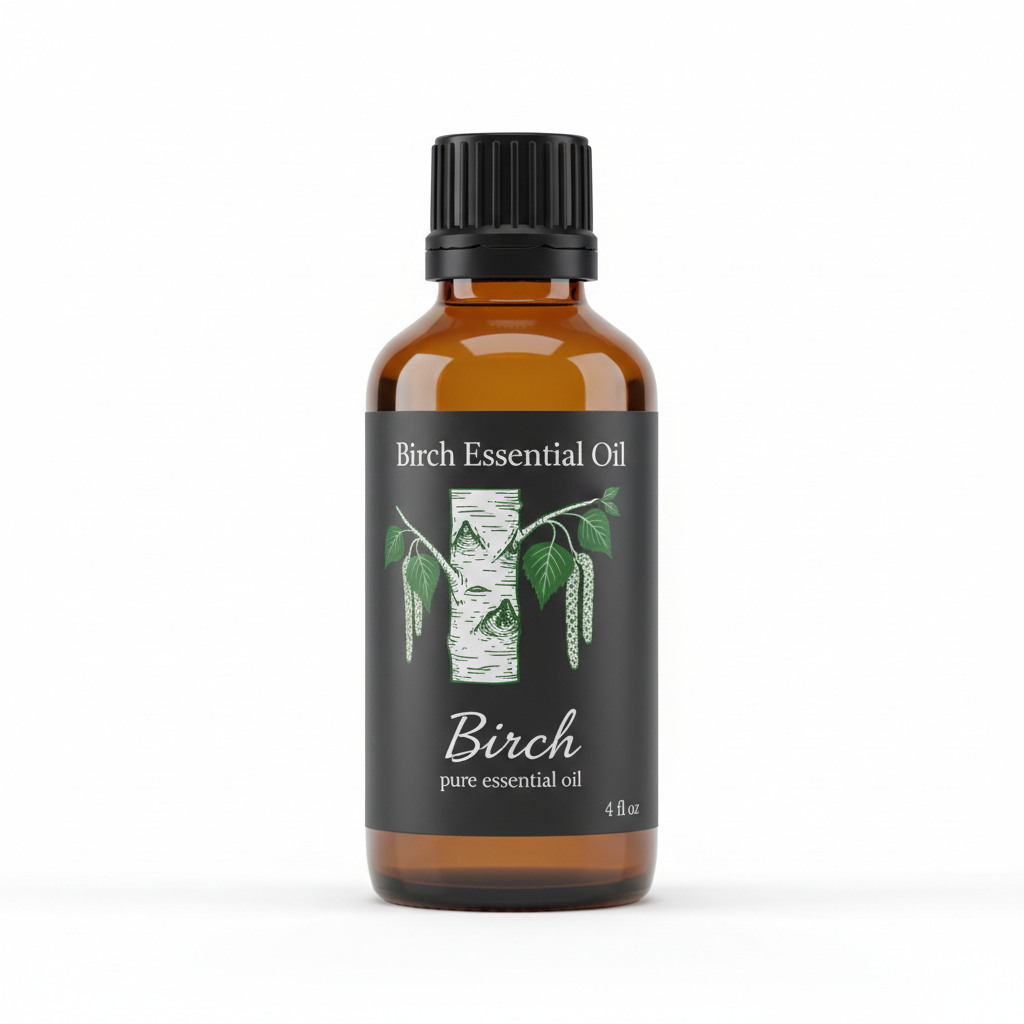
Birch Essential Oil
Birch Essential Oil from our own shop, in sizes from 1 oz to bulk.
From $17.99
Shop Now →Sources & Further Reading
- ScenTree, Methyl salicylate. scentree.co/en/Methyl_salicylate.html
- Dosoky NS, Poudel A, Satyal P, 2022. Authentication and Market Survey of Sweet Birch (Betula lenta L.) Essential Oil. Plants 11(16):2132. pmc.ncbi.nlm.nih.gov/articles/PMC9412571
- European Commission, 2023. Regulation (EU) 2023/1545, Annex III entry 324 (text mirror). lawplayer.com/eu/act/32023R1545
- Tisserand Institute, Methyl Salicylate (Essential Oil Constituents in Food, Part 5). tisserandinstitute.org
- European Commission SCCS, 2021. Opinion on methyl salicylate, SCCS/1633/21. health.ec.europa.eu