Does Birch Oil Make Soap Trace Fast? What the Sources Say
Every soap maker has a story about a batter that turned to pudding the moment the fragrance went in. So when a strong wintergreen-smelling oil like birch comes up, the question follows: will it rush the pour? The honest answer from the soap-making sources is that birch is not on the list of usual suspects, and the chemistry gives a reason to relax.
Who the suppliers actually blame
Soap Index points at eugenol and cinnamaldehyde, meaning clove and cinnamon oils, plus vanillin-heavy fragrance oils and some floral fragrance oils such as rose and jasmine (Soap Index). The Soapery names clove and cinnamon too (The Soapery). Wholesale Supplies Plus says seizing, ricing and discoloration come from heat and the fragrance itself, and that browning comes from vanillin (Wholesale Supplies Plus). Wintergreen, birch and methyl salicylate do not appear on any of those lists. As for colour, a trade database describes methyl salicylate as non-discoloring in most media (Good Scents Company), which is not a soap test but fits the picture.
What lye does to methyl salicylate
There is one real chemical reason to ask. Methyl salicylate is an ester, and PubChem records that alkalis break it down into methanol and a salicylate (PubChem). A teaching lab shows the reaction with hot 6 M sodium hydroxide (Reed College), which is a long way from a cool cold-process batter. So how much lye could it use up? Take a tiny, skin-appropriate amount of birch: 0.6 g in a batch that weighs about 1 kg, which is 0.06%. At 152.15 g/mol that is about 0.004 mol, and even if every molecule consumed one sodium hydroxide, the loss would be roughly 0.16 g of lye. A 500 g oil batch uses on the order of 70 g of lye with a few percent superfat as a cushion, so the worst case is about 0.2% of the lye. That is arithmetic, not a measurement, but it says birch at these levels cannot knock the lye balance off.
Flash point and scent: a side myth
Soap makers sometimes worry that gel-phase heat burns scent away because an oil has a low flash point. Modern Soapmaking explains that gel phase can reach 160 to 200 F or higher and that flash point is a transport and storage safety figure, not the temperature at which scent leaves the bar; its example is eucalyptus, flash point near 118 to 120 F and still a strong soap scent (Modern Soapmaking). Sources disagree on methyl salicylate's own figure, from 75 C at ScenTree to 96 C closed cup at PubChem, so neither tells you how much fragrance a finished bar keeps. Expect a gentle scent from a bar and judge it after cure.
What to expect at the bench
Birch is a thin, free-flowing liquid, so it stirs in without any fuss. As it goes into the batter you will notice the room fill with sweet winter woods and a hint of root beer, and it can seem strong enough to worry you. Resist the urge to add more. The batter always smells louder than the finished bar, and a bar that has cured for several weeks carries a quieter, softer version of that first burst.
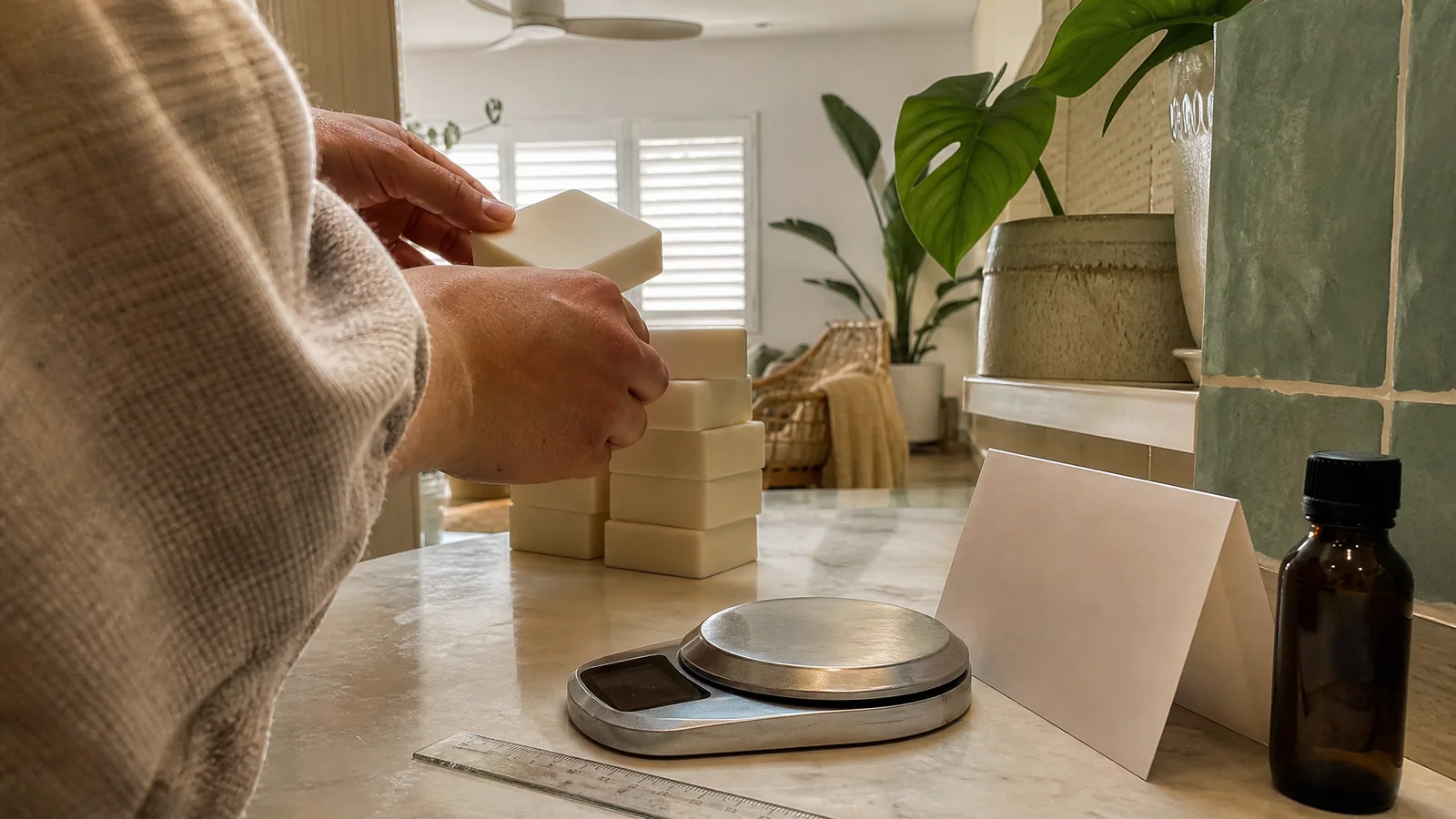
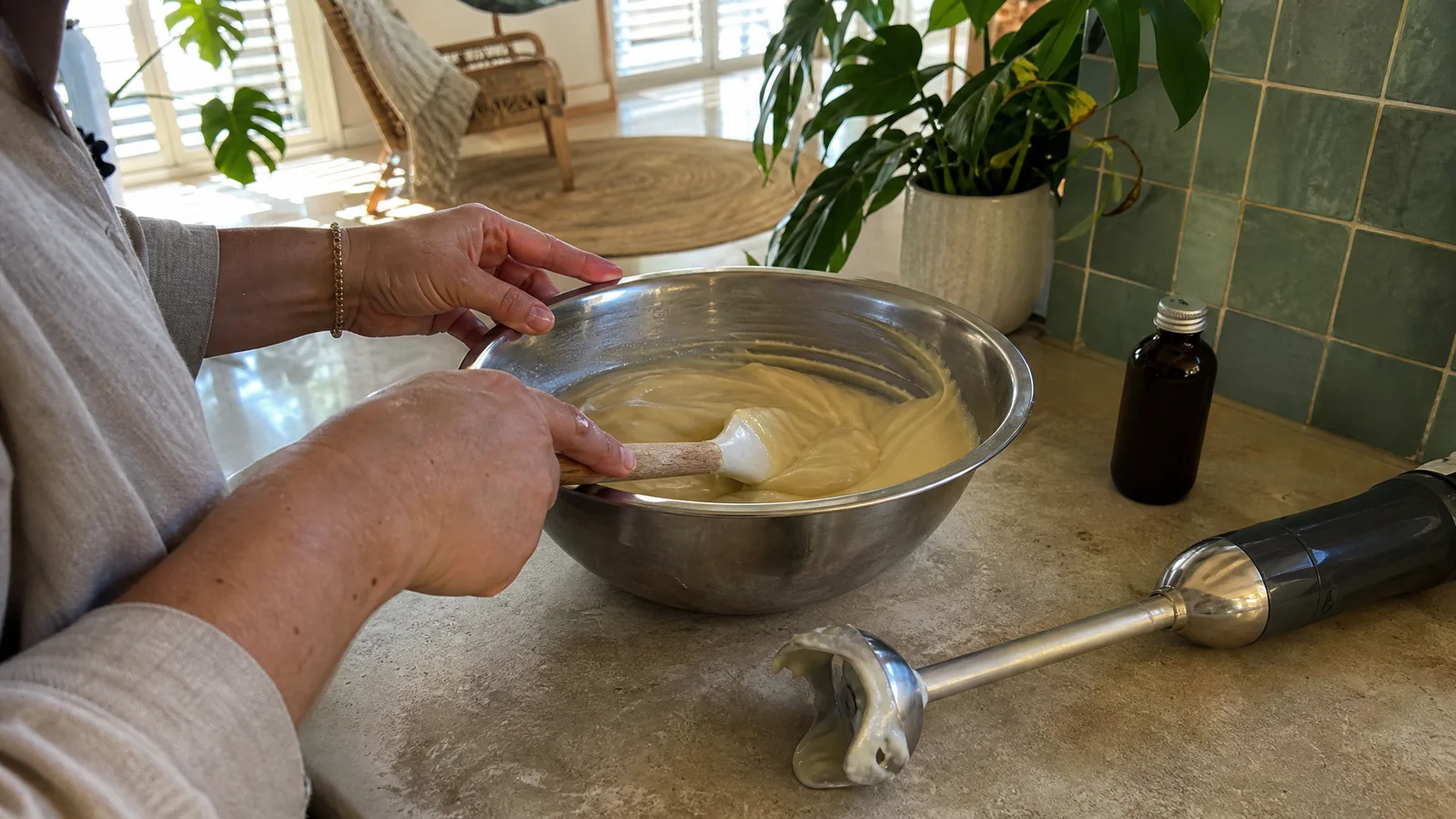
Weigh the oil, stir by hand, pour, and write down what you did. If the batter behaves differently from usual, you will then have a clear record of the temperature, the rest of the blend and the blending time to look through.
If your batter seized, check in this order
- The rest of the blend. Clove, cinnamon, cassia, vanillin-based fragrance oils or a floral in the same jar are much better suspects.
- Temperature. Heat speeds every one of these reactions. Soap Index suggests soaping around 70 to 80 F with fast fragrances.
- The lye calculation. Wholesale Supplies Plus lists an inaccurate calculation among the common causes of fast thickening (Wholesale Supplies Plus).
- How hard you blended. A stick blender run to thick trace before the oil goes in leaves no working time; stirring the oil in by hand costs nothing.
A fair split-batch comparison
If you would like to see for yourself, make one plain batch and, at light trace, split it into two equal containers. Stir your planned birch amount into one and the same weight of olive oil into the other so both get the same liquid, mix each by hand for the same time, and compare thickness five minutes later. Photograph both bars at 24 hours, a week and four weeks. One pair of bars is one data point, so repeat it on another day before deciding anything.
Amounts matter on the skin side too. Birch in soap is tightly limited in cosmetic law, so check the dilution chart before you choose a rate. For everything else about the craft, see our soap making guide, and the melt and pour version skips lye altogether. Questions are welcome through the contact page.
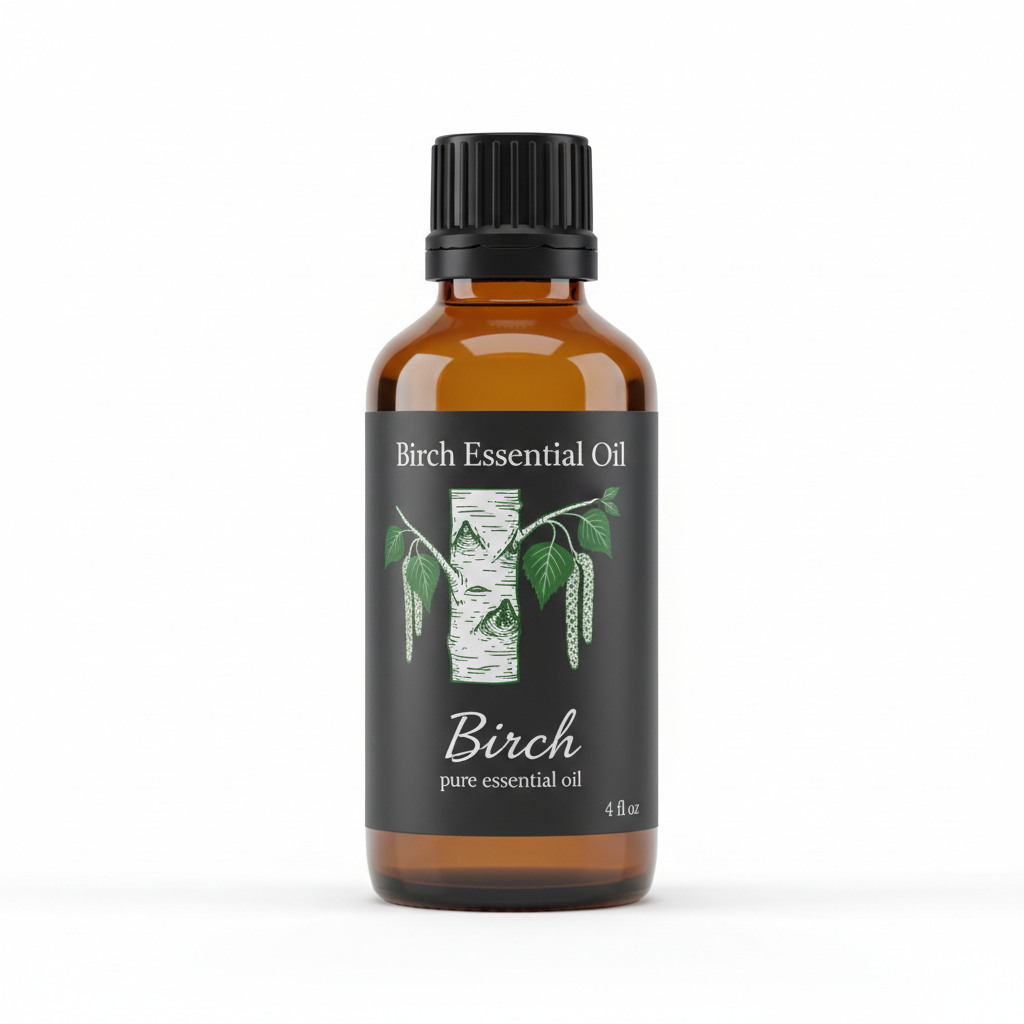
Birch Essential Oil
Birch Essential Oil from our own shop, in sizes from 1 oz to bulk.
From $17.99
Shop Now →Sources & Further Reading
- Soap Index. Fragrance and Essential Oils: Usage Rates. soapindex.com
- The Soapery. Essential Oils for Soap Making. thesoapery.co.uk
- Wholesale Supplies Plus. Tips for dealing with fast fragrances in cold process soap. wholesalesuppliesplus.com; Saponification: how soap actually works. wholesalesuppliesplus.com
- The Good Scents Company. Methyl salicylate. thegoodscentscompany.com
- Modern Soapmaking. Using essential oils in soapmaking. modernsoapmaking.com
- National Library of Medicine. PubChem, Methyl salicylate (CID 4133). pubchem.ncbi.nlm.nih.gov
- Reed College Chemistry 201/202 Lab Reference Manual. Saponification of methyl salicylate. blogs.reed.edu
- ScenTree. Methyl salicylate. scentree.co