Selling Birch Soap: Labels, IFRA and Soap vs Cosmetic
You have a birch soap you are proud of, and now someone wants to buy it. Suddenly there are questions: is it "soap" or a "cosmetic," what goes on the label, and where is the IFRA number for the oil? The answers are friendlier than you might expect, with one big exception for birch, and we will walk through them. This is a general explainer, not legal advice.
Soap or cosmetic?
FDA draws the line narrowly. A product counts as soap only when most of its nonvolatile matter is an alkali salt of fatty acids, the cleansing comes from those compounds, and it is labeled, sold and represented solely as soap. True soap is regulated by the Consumer Product Safety Commission. A cleansing product that misses any of those tests is a cosmetic, regulated by FDA.
The deciding factor is often your claims rather than your chemistry. FDA judges intended use from your labeling, website and advertising, and says an aromatherapy-style claim about sleep or mood turns a fragrance into a drug. A birch bar sold as a muscle soak is making a drug claim, whatever the oil's reputation. So describe the scent, the lather and the look, and leave the claims out. Plant origin does not change any of this. If your bar is for shaving or carries extra skin-care wording, a regulatory consultant can tell you which side of the line it lands on.
A good habit while you work this out is to describe your bar the way you would tell a friend about it. "Cool, sweet, woodsy, with a rich creamy lather" is a perfectly good product description, and it has the advantage of being exactly what a person will notice when they use it. The moment a description starts to sound like a benefit, stop and rewrite it.
What the label needs
- Identity, maker's name and place of business, and net quantity. Required on consumer products under the Fair Packaging and Labeling Act, whether the product is soap or a cosmetic.
- Ingredient list (cosmetics). In descending order of predominance, and "fragrance" may stand for the scent.
- MoCRA duties (cosmetics). The Modernization of Cosmetics Regulation Act of 2022 added adverse-event reporting, safety substantiation and, unless you qualify for the small-business exemption, registration, listing and good manufacturing practice rules. FDA's page explains the exemptions.
- Hazard labeling. The Federal Hazardous Substances Act can apply to consumer products that are toxic or strong sensitizers. Whether your bar needs it is a question for your consultant.
Why IFRA will not give you a number
This is the part that surprises people. ScenTree reports that methyl salicylate, the compound that makes up nearly all of sweet birch oil, has no IFRA Standard as of the 51st Amendment, so there is no IFRA category limit to look up. (Check ifrafragrance.org for the current amendment before you rely on that.) The only birch entry is for birch tar, a different, smoky material.
An IFRA certificate is also not issued by IFRA. It is a document written by the fragrance supplier, and IFRA takes no responsibility for it. For a single essential oil, any methyl salicylate limit printed on one would be that supplier's own.
What does set limits is cosmetic law elsewhere. In the EU, entry 324 of Regulation 2023/1545 allows 0.06% methyl salicylate in rinse-off skin products and 0.6% in hand wash, and bars it from products for children under 6. Put that beside a normal soap scent rate. A common starting point is 0.7 oz of fragrance per pound of base oils, which is about 4.4% of the oil weight. Even if the oils were only half of the batter, that is about 2.2%, some 36 times the EU rinse-off figure. So birch is not an oil to dose like a fragrance oil; it wants to be used by weight and in trace amounts. Our dilution chart and shaving soap post show the arithmetic. We found no numeric US cosmetic cap, so a conservative EU-style ceiling is a sensible anchor for anything you sell.
Paperwork you can ask for
- Certificate of analysis. We publish one, for one batch, giving appearance, a relative density of 1.183, a refractive index of 1.537, and an optically inactive oil. It is consistent with methyl salicylate oil, but physical constants alone cannot separate natural from synthetic, so for anything deeper, ask us in writing through the contact page for what is available for your lot.
- Safety data sheet. Our post on reading a birch oil SDS shows what to expect from any supplier.
- Lot reference. Our bottles carry a still date, a fill date and a lot reference, which helps you tie a batch of soap to a bottle.
Our lab report guide explains how to read each field.
Small touches that make a bar feel finished
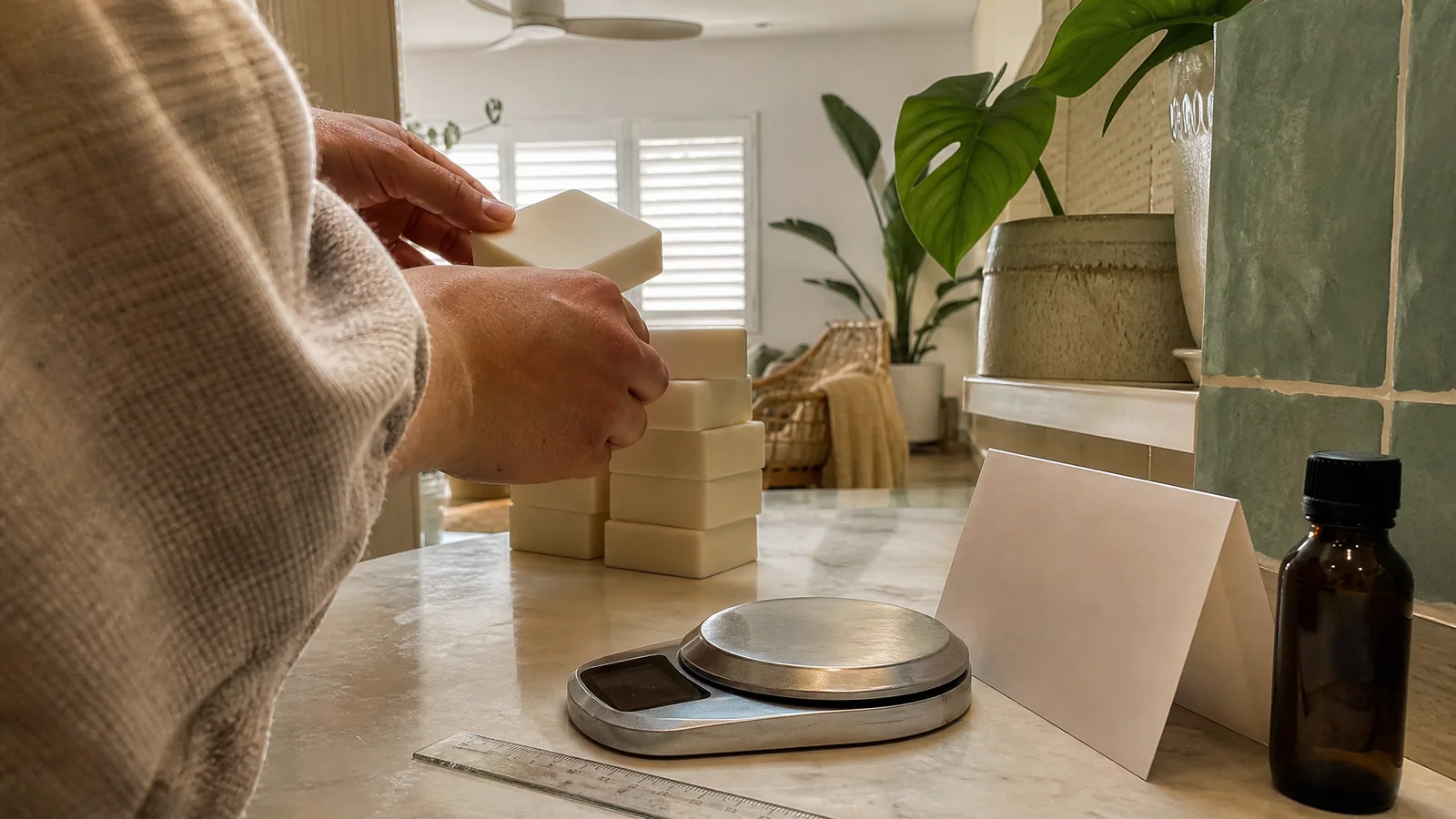
Once the paperwork is sorted, the fun part is how the bar presents. Birch smells so distinctive that a simple wrapper often looks best: a paper band with the name, a line about the scent and the ingredient list, with nothing busy competing with the aroma. Let the bars cure well before you wrap them and keep them somewhere cool. Whoever picks one up at a market table will notice the cool, sweet snap before they read a word.
Before you finalize anything
Rules depend on your formula, your claims, your markets and your size, and they keep moving, with FDA's pending fragrance-allergen rule one example. A regulatory consultant or attorney who handles cosmetic and consumer-product law can confirm your obligations, and a cosmetic chemist can build the safety file.
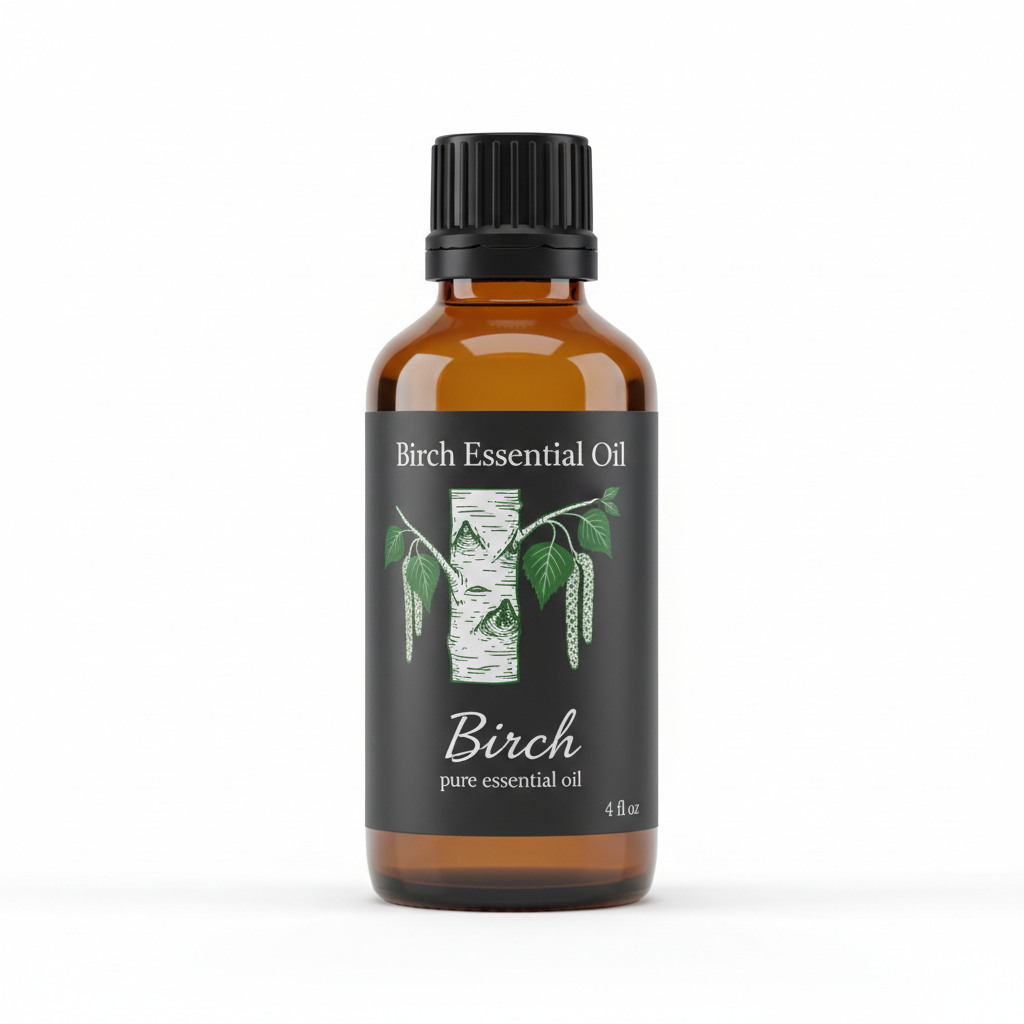
Birch Essential Oil
Birch Essential Oil from our own shop, in sizes from 1 oz to bulk.
From $17.99
Shop Now →Sources & Further Reading
- US FDA. Is It a Cosmetic, a Drug, or Both? (Or Is It Soap?). fda.gov
- US FDA. Modernization of Cosmetics Regulation Act of 2022 (MoCRA). fda.gov/cosmetics
- ScenTree, Methyl salicylate. scentree.co/en/Methyl_salicylate.html
- European Commission, 2023. Regulation (EU) 2023/1545, Annex III entry 324 (text mirror). lawplayer.com/eu/act/32023R1545
- US Code, 15 U.S.C. 1453, Fair Packaging and Labeling Act. law.cornell.edu/uscode/text/15/1453
- IFRA, 2023. Guidance for the use of IFRA Standards (51st Amendment). ifrafragrance.org
- Soap Index, Fragrance and Essential Oils: usage rates. soapindex.com