Birch Candle Weak Scent Throw: What to Check First
Birch is one of the easiest scents to smell. Methyl salicylate, which makes up nearly all of sweet birch oil, has an odor threshold of around 40 parts per billion in water (Leffingwell, odor thresholds). So when a birch candle smells faint, the oil is rarely the culprit. Something is keeping it from leaving the wax, and the fixes below run from cheapest check to biggest change.
First, decide which throw is weak
Cold throw is the smell of the unlit candle and hot throw is the smell of the burning one, and they fail for different reasons. Score each from 0 to 5 at the same distance in the same closed room. Fine cold throw with a weak burn points to the wick and melt pool. Weak on both usually points to how much oil went in, or to testing too early.
Smell it the way a customer would
Before you change anything, set up a fair test. Use the same room each time, close the door, and give your nose a break first, because a nose that has just smelled ten candles will tell you nothing. Walk in from the hallway, stand a few steps from the candle and take one ordinary breath. That first breath is what a customer or a guest gets, and it matters more than the strong sniff you take with your face over the jar.
If you are testing a few candles at once, sniff a jar of coffee beans or the crook of your sleeve between them. It sounds like a party trick, but it genuinely helps you stop one scent bleeding into the next.
Check 1: weigh the oil you actually added
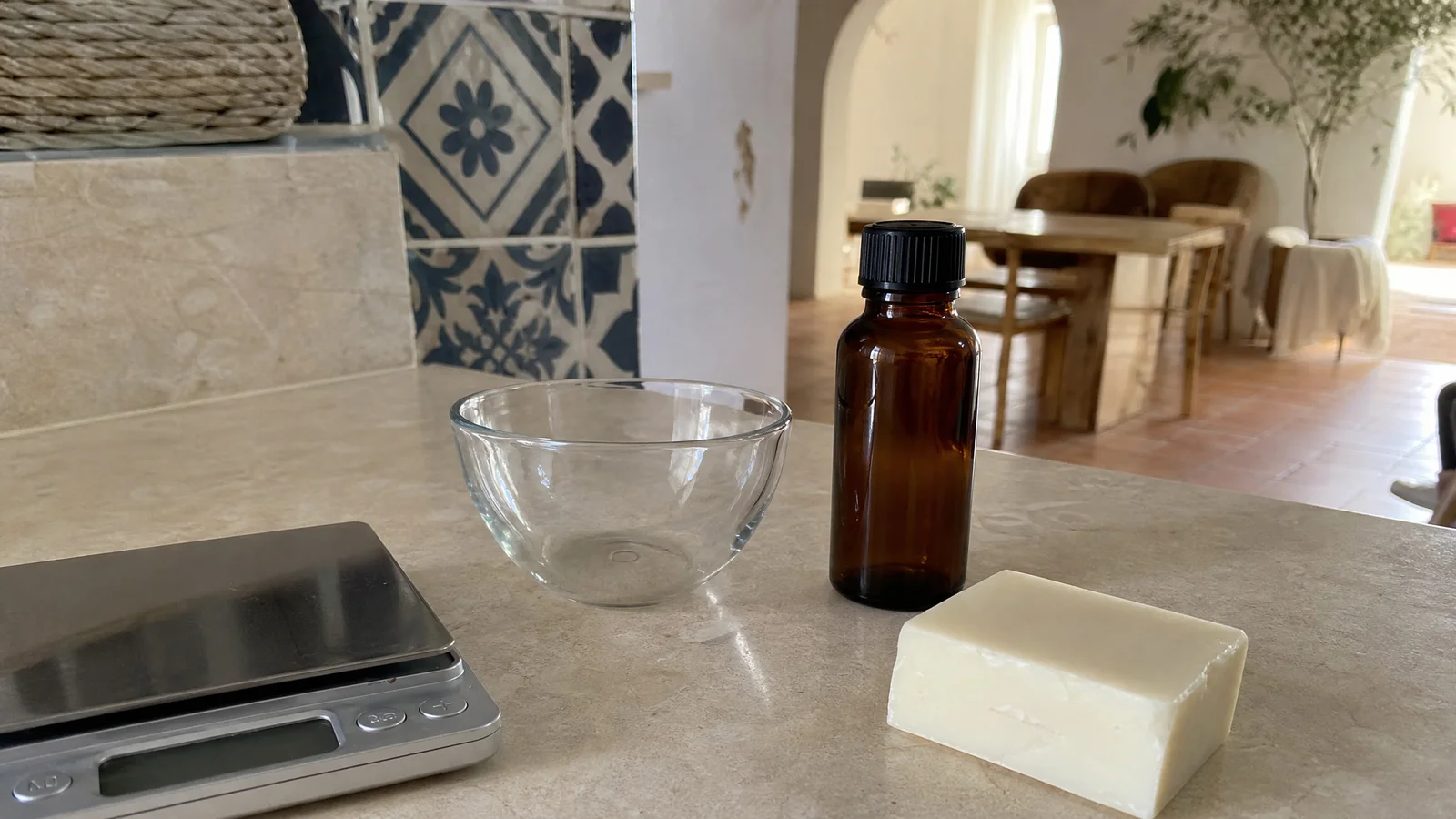
Drop counts and volume measures drift. At 4% of a 227 g wax fill the oil weighs 9.1 g; at 2% it is 4.5 g. If you meant 2%, the candle may simply be quiet by design, and the easy move is one step up your load ladder with everything else unchanged (our candle guide has the ladder). Stay inside your wax maker's total fragrance limit, and remember that extra fuel in the form of oil is a known cause of sooting.
Check 2: give it time to cure
Many faint candles are smelled on day one. AFI, a candle-supplies maker, lists typical cure times of 3 to 5 days for paraffin, about a week for parasoy blends and 1 to 2 weeks for 100% soy, and says testing too soon gives a misleading picture (AFI USA). Score at day 2, day 7 and day 14. If the number climbs, cure was the answer. AFI also lists adding fragrance too hot or too cool and poor stirring among the causes, so check your pour temperature against your wax sheet.
Check 3: look at the melt pool
This is the usual winner. A well-wicked container candle melts wax from edge to edge, with a pool roughly 1/4 to 3/4 inch deep (Candle Science). A narrow pool means too little warm wax to release scent. Methyl salicylate boils near 222 C and its vapor pressure is only about 0.034 mmHg at 25 C (PubChem), so it leaves the wax slowly and rewards a wide, warm pool. Candle Science also suggests wicking up one or two sizes when fragrance goes past about an ounce per pound of wax. Our wick guide walks through it.
Check 4: try a different wax
Wax and oil pairings behave differently, and some oils bleed or frost in one wax and sit happily in another. If the same oil in the same vessel throws better in a second wax, you have your answer; the wax comparison sets up that side-by-side.
Check 5: the age of the oil
PubChem records methyl salicylate as sensitive to light and heat, and a sunny workshop shelf supplies both. We bottle in amber glass with a still date, fill date and lot reference, and our guidance is to keep it tightly capped, cool and dark, where it typically lasts 2 to 3 years. If your bottle has sat open or warm, compare it against a fresher one in a small test pour.
Check 6: ask us for lot paperwork
If everything above checks out and the scent still seems off, ask us in writing through the contact page for the report on your lot. The Certificate of Analysis we publish for one batch lists density, refractive index and optical rotation, and our lab-report guide explains what to request from any supplier if you need more.
Keep a throw log
The fastest way out of a weak-throw puzzle is a page of notes. Give every test candle a number and write down the wax, the wick, the oil in grams, the pour date and the scores at each stage. After three candles you will have a pattern, and after six you will probably know the answer. Most of the time it is something small, like a wick one size too timid or a candle smelled on the day it was poured.
Birch rewards patience. It is a scent with plenty of presence, so when it seems to disappear, it is almost always hiding behind a fixable problem rather than gone.
Quick map
- Weak cold and hot: oil weight, then cure time.
- Cold fine, hot weak: melt pool and wick.
- Fine in the test jar, weak in the sales vessel: the vessel is wider, so re-wick.
- Frosting or bleeding as you raise load: you have reached the wax's limit, so stop raising it.
One more thing that is about comfort, not scent: if a burning candle gives you a headache or irritates your eyes or throat, put it out, since NOAA describes the vapor of methyl salicylate as irritating to eyes and airways (NOAA CAMEO Chemicals). Change one thing at a time and write down the score each time; most candles come right at check 2 or check 3.
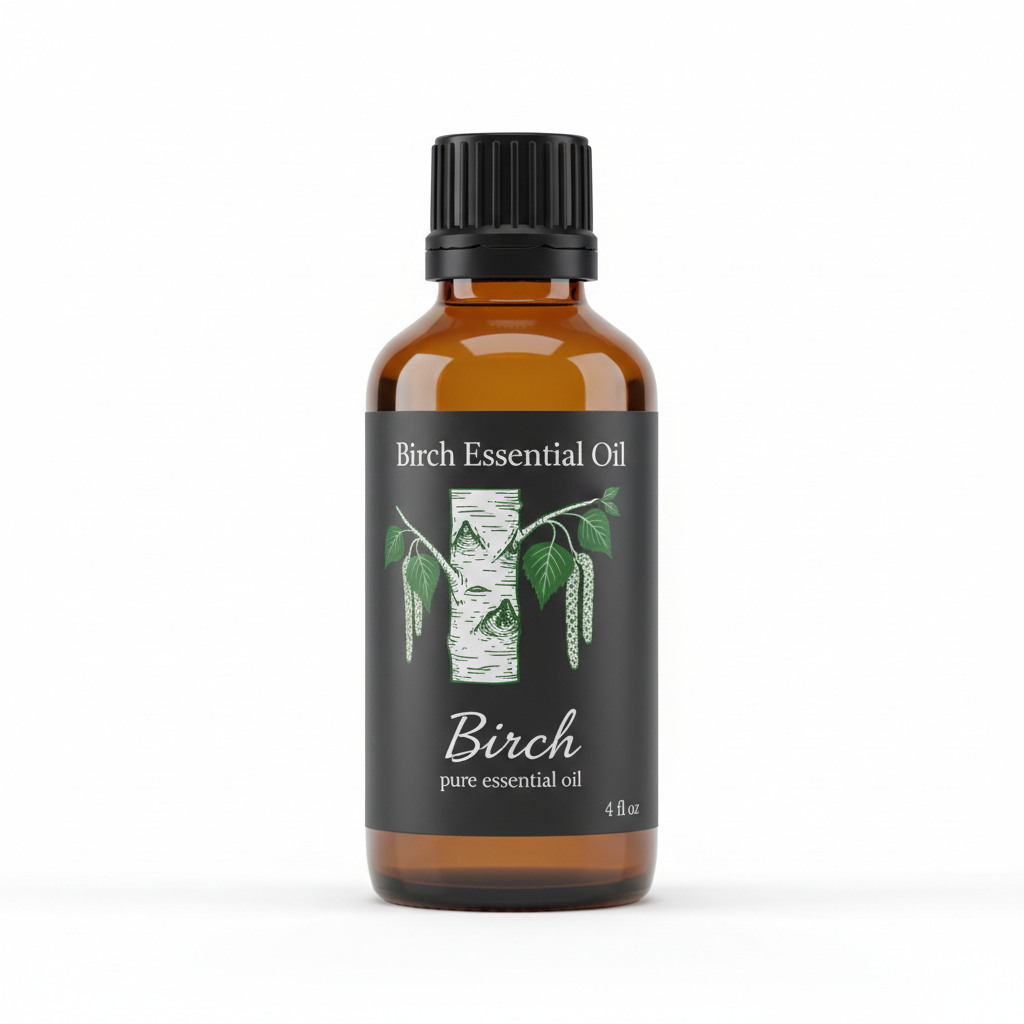
Birch Essential Oil
Birch Essential Oil from our own shop, in sizes from 1 oz to bulk.
From $17.99
Shop Now →Sources & Further Reading
- Leffingwell and Associates. Odor Thresholds (compiled literature values). leffingwell.com
- AFI USA. Why your candle scent isn't strong enough. afi-usa.com
- Candle Science. Wicking container candles. candlescience.com
- National Library of Medicine. PubChem, Methyl salicylate (CID 4133). pubchem.ncbi.nlm.nih.gov
- NOAA. CAMEO Chemicals datasheet, methyl salicylate. cameochemicals.noaa.gov