White Birch Scent: What the Candle Label Really Means
A candle says "white birch" and you picture pale bark, cold air and clean linen. Then you lift the lid and get wintergreen, or campfire smoke, or something that smells like neither. The word "birch" on a label covers at least three very different things, and knowing which one you are holding saves a lot of disappointment.
Three things called birch
Sweet birch oil is what we sell: one sweet birch oil, and the batch on the Certificate of Analysis we publish names Betula lenta. It is almost entirely methyl salicylate, 93.24 to 99.84% in the 21 authentic oils measured in a 2022 analysis of authentic sweet birch oils. We describe ours as intensely sweet, cool and wintergreen-like, with a woody, candy-shop character. It is a lovely, loud scent, but it is wintergreen with wood around it, not pale bark.
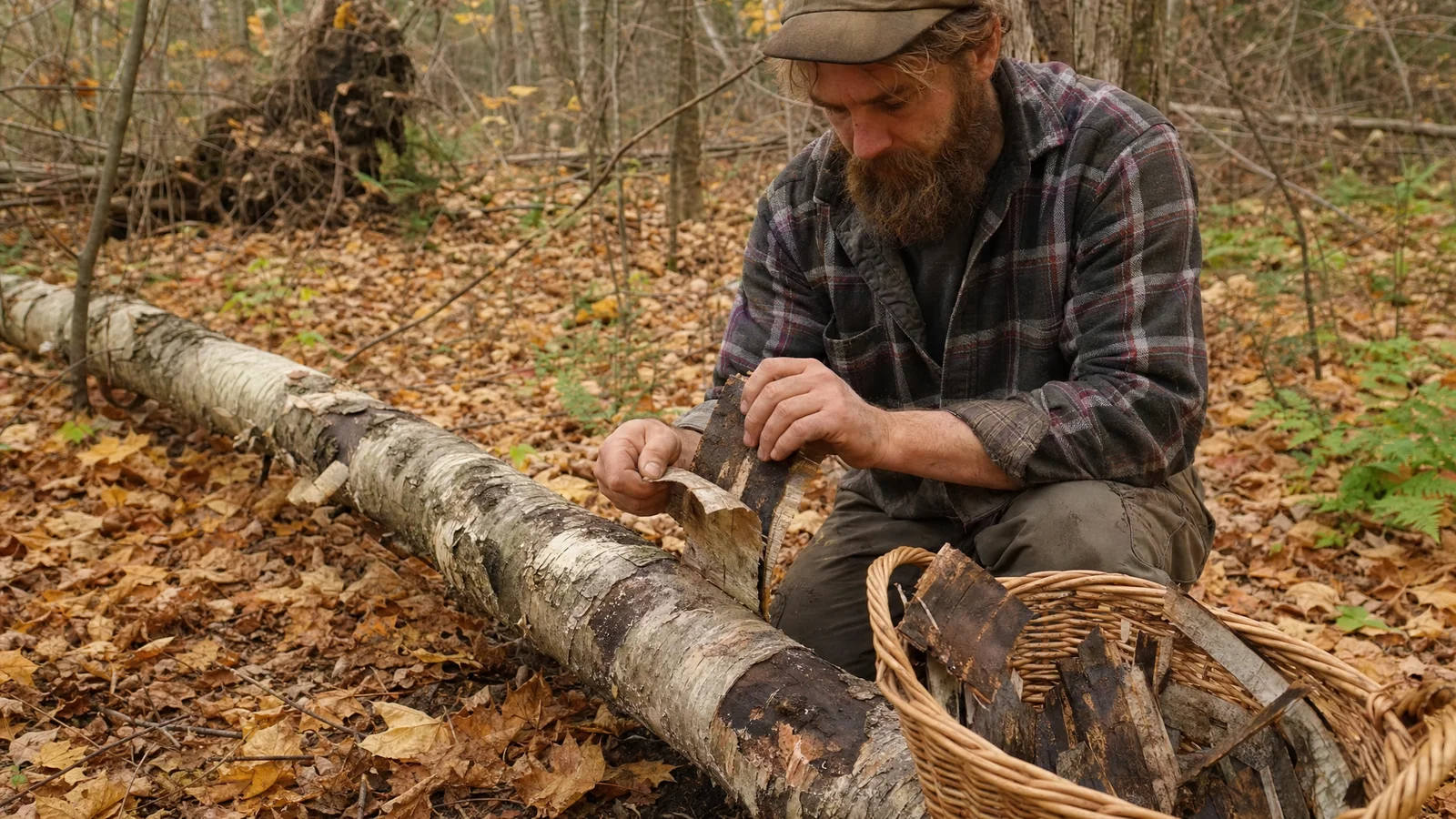
White birch, the tree, is a different species. A published analysis of Betula pendula buds from Germany found an oil led by woody sesquiterpenes such as alpha-copaene and germacrene D, not methyl salicylate (Demirci et al., 2004). That is one sample from one place, so it cannot tell you how a commercial "white birch" product smells. It does show that the tree itself does not smell of wintergreen.
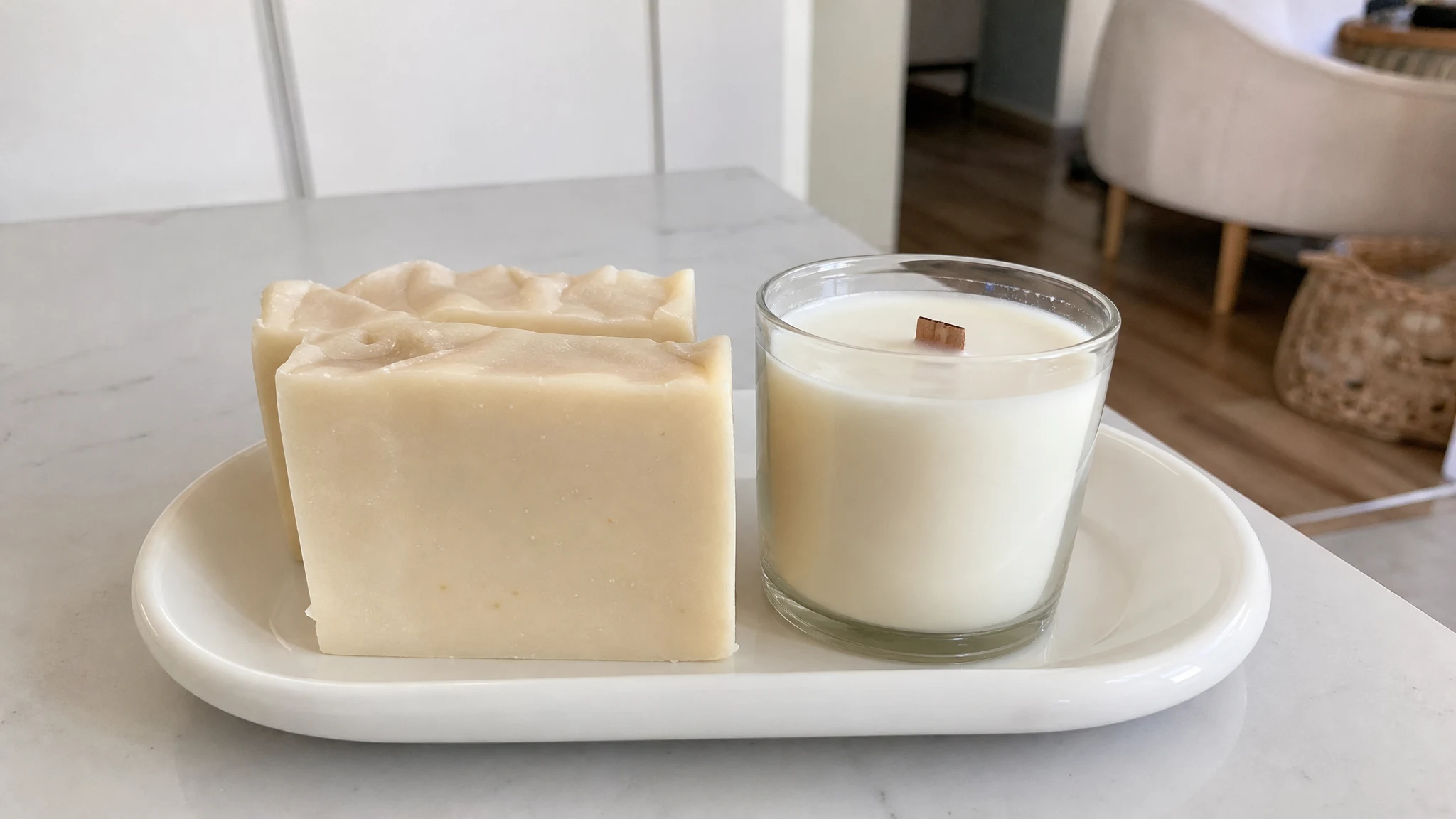
A compounded birch fragrance is where most "white birch" and "birch wood" candle and soap scents live. The FDA notes that fragrance ingredients can be listed simply as "Fragrance," that formulas are commonly trade secrets, and that "essential oil" has no regulatory definition (FDA). So the name tells you what the perfumer was aiming for and very little about what is inside. If you plan to sell what you make, ask the supplier for the safety data sheet. Our comparison of birch fragrance oil and birch essential oil goes through that choice.
If you only have a moment at the shelf, there is a simple way to sort a label: sniff the unlit candle. A cool, sweet wintergreen snap suggests birch oil or something close to it, a dry, woody sweetness suggests a compounded wood fragrance, and smoke suggests tar. It is not a lab test, just a quick way to start asking the right question about what you are holding.
Why a pinch of sweet birch will not make a white birch scent
It is tempting to take a pale-wood idea, add a touch of sweet birch oil and call it birch. Reasoning from the numbers, the touch has to be tiny. Methyl salicylate is a heart-note material, and ScenTree says a very low dilution is enough to notice it, so a little pushes the whole blend toward wintergreen.
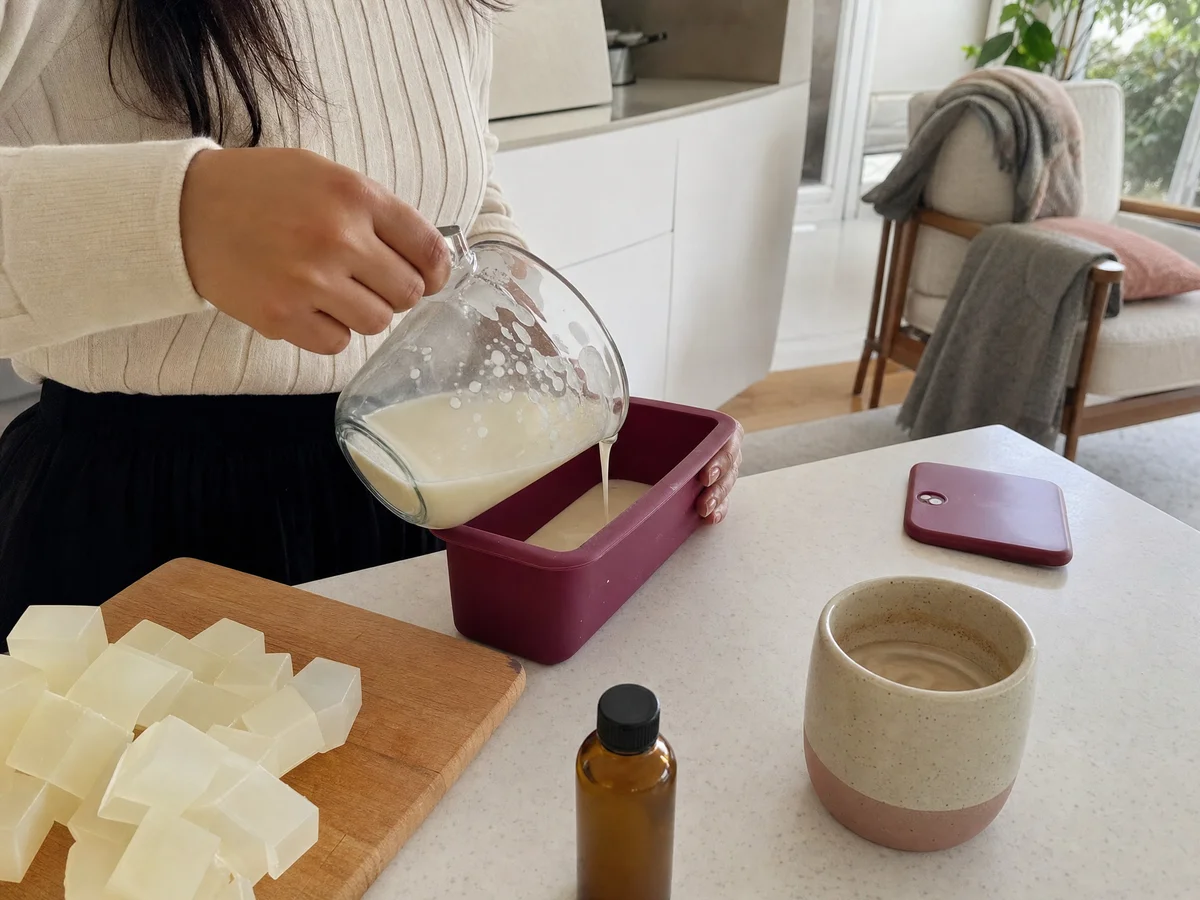
Skin products add a ceiling. EU Regulation 2023/1545 allows 0.06% methyl salicylate in leave-on skin products and in rinse-off products other than hand wash (Annex III entry 324). With the 1.183 density on our certificate and a rough 0.05 ml per drop (about 59 mg), 100 g of soap at that cap holds roughly one drop of oil. The Tisserand Institute gives a higher topical maximum for sweet birch (2.5%) and our own dilution guidance is 0.5% to 2%, so sources differ. For anything that touches skin, we recommend following the strictest. Our soap guide works through the numbers.
Our position, then: treat sweet birch as the garnish of a birch accord rather than its body.
Sketching the body of a birch wood scent
Here are the roles, not a recipe, so you can substitute from your own supplier.
- A dry cedar backbone. Virginia cedarwood oil carries roughly 16 to 25% cedrol, which Premiere Peau describes as a fixative and volume builder rather than a headline note. That staying power is what keeps a pale-wood scent from vanishing. We put the two side by side in birch vs cedarwood.
- A woody base from a fragrance supplier. Materials such as Iso E Super and Vertofix are described by ScenTree (Iso E Super, Vertofix) as base-volatility woods that add a violet or leather nuance and tenacity. They are not essential oils and we do not sell them, so read the supplier's allergen and IFRA information before putting them in skin products.
- A thread of sweet birch. A trace on top gives the cool, slightly sweet lift a cedar and amber base lacks.
- Smoke, from a different material. The campfire side of "birch" comes from birch tar, a separate oil. Our birch tar soap vs sweet birch soap post explains the difference.
Judge it on blotter strips, not in a candle. Smell them at ten minutes, an hour and the next morning. The heart-note wintergreen should fade while the base woods stay. If wintergreen is still the first thing you smell the next day, the birch share is too high for a pale-wood scent.
Think about the mood you want as well as the chemistry. Pale-wood scents usually feel airy and a little cold, like a cabin in winter with the windows open. If that is the picture, aim your blend there and let the birch be a hint rather than the headline.
Candles, soap and labels
Candle performance is a wax and wick question, covered in our posts on wax choice and weak scent throw. Whatever you make, do a small batch and smell it after cure before scaling up. If you sell it, remember the EU entry above requires declaring methyl salicylate above 0.001% in leave-on products, and our post on selling birch soap covers the FDA and IFRA side.

If what you picture is clean birch bark in snow, a compounded fragrance from a candle-supplies seller is the better tool.
Birch Essential Oil
Birch Essential Oil from our own shop, in sizes from 1 oz to bulk.
From $17.99
Shop Now →Sources & Further Reading
- Dosoky NS, Poudel A, Satyal P, 2022. Plants 11(16):2132.
- Demirci B et al., 2004. Betula pendula bud oil. Evid Based Complement Alternat Med 1(3):301-303.
- U.S. FDA. Fragrances in Cosmetics.
- ScenTree. Methyl salicylate.
- Regulation (EU) 2023/1545, Annex III entry 324 (text mirror).
- Tisserand Institute. Methyl Salicylate (Essential Oil Constituents in Food, Part 5).
- Premiere Peau. Cedrol (glossary).
- ScenTree. Iso E Super.
- ScenTree. Vertofix.