Birch Tar Soap or Sweet Birch Soap: Which Do You Want?
A bar of birch tar soap smells of a campfire. A bar of sweet birch soap smells of wintergreen and root beer. They share the word "birch" and almost nothing else, and mixing them up leads to a very surprising bar of soap.
Two materials, two processes
Sweet birch oil is distilled from the bark and fine twigs of Betula lenta, and it is almost all methyl salicylate: 93% to 99.8% across 21 authentic samples in a 2022 survey (Dosoky et al., Plants, 2022). Birch tar oil is a different thing altogether. It comes from destructive distillation, heating birch wood or bark without air, and the old British Pharmaceutical Codex describes the rectified oil as chiefly guaiacol and cresol (BPC 1911). Our guide to birch tar oil tells that story. The two share no major compounds, and that is why they smell and behave so differently.
| Sweet birch oil | Birch tar oil | |
|---|---|---|
| How it is made | Distillation of bark and twigs | Dry heating of wood or bark without air |
| Main chemistry | Methyl salicylate | Guaiacol, cresol and related phenols |
| Aroma | Sweet, cool, wintergreen-like | Smoky, leathery |
Different materials, different rules
For sweet birch the number to know is a cosmetic limit. European rules set methyl salicylate at 0.06% in rinse-off skin products such as soap (Regulation (EU) 2023/1545, Annex III entry 324), with a lower ceiling again for lip products. Put in kitchen terms, 0.06% of a 500 g batch is 0.3 g, which is about a quarter of a milliliter, or five drops by the usual 20-drops-to-the-milliliter convention. That is very little oil, which is exactly how birch works best. If you sell soap, follow the stricter figure for your market.
Birch tar is a separate material with its own safety documents. A supplier should be able to give you the tree's Latin name, whether the oil is rectified, and its safety and IFRA paperwork. We do not sell tar, so we cannot recommend a source, and a regulatory consultant who knows your market is the right person to ask. Do not carry numbers from one oil to the other, because they come from different chemistry.
Picturing the finished bar
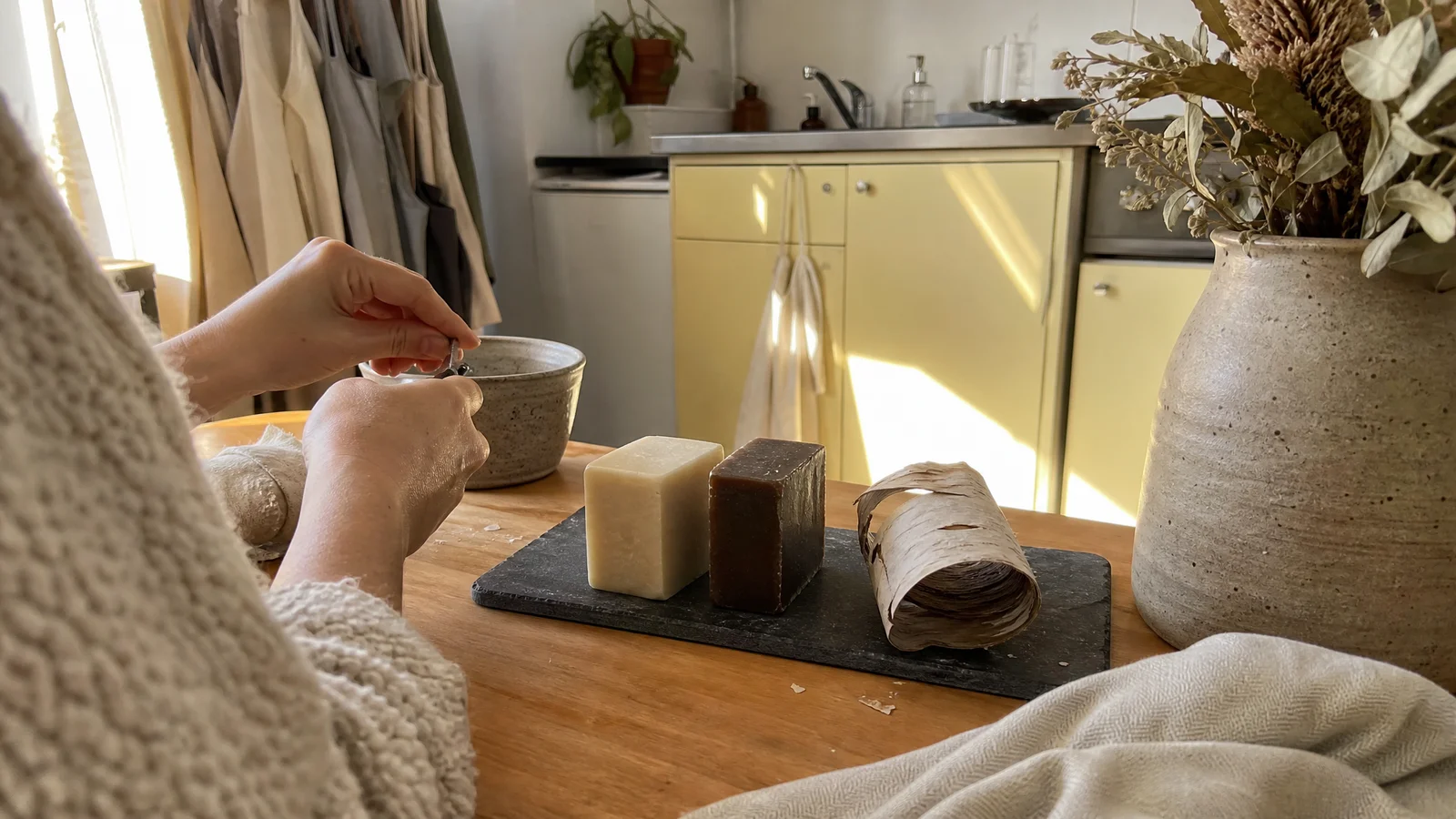
Imagine two bars on a shelf. One is a pale, creamy bar that, when you lift it to your nose, smells of cool winter woods with a hint of sweet root beer. It is tidy and bright, and the scent is gentle because you used so little. The other is dark and earthy and smells of smoke, like a campfire that has burned down to embers. Both are lovely, but they are not the same pleasure, and a soap labeled only "birch" could be either one.
Which scent do you want?
This is the easiest way to choose. For a bar that smells of crisp winter woods, a trace of sweet birch is enough, and our soap making guide and melt and pour birch soap article show how it behaves. For a smoky, leathery bar, tar is the material, and our perfumery piece covers that scent. Keep the two apart: do not blend them to get both notes without checking each limit separately.
Reading a recipe or a listing
When you find a recipe, look at the words around "birch". Wintergreen, root beer, candy and cool point to sweet birch. Smoke, leather, campfire and tar point to the other material. If a listing uses both sets of words, ask the seller which one is in the bottle before you pour anything.
Naming your bars honestly
If you make soap for friends, say what the bar smells like in plain words, such as "winter woods" or "wintergreen-like", and avoid calling a sweet birch bar a tar soap. It sets the right expectation, and the person unwrapping it will not be surprised. A small first batch is a good idea too: make a few bars, cure them as your base maker advises, and smell them side by side before you commit a whole pot.
Telling them apart on the bench
Sweet birch oil is denser than water. The batch on our published certificate has a relative density of 1.183, a refractive index of 1.537 and reads optically inactive. Sweet birch is a clear to pale liquid with a wintergreen-like aroma, which is a very different thing from a smoky tar. Those certificate lines identify the liquid as methyl salicylate but do not settle where it came from, and our lab report guide explains why. If you need more, ask us for the report for your lot through the contact page.
For the difference between white birch and sweet birch, read two trees, two very different oils.
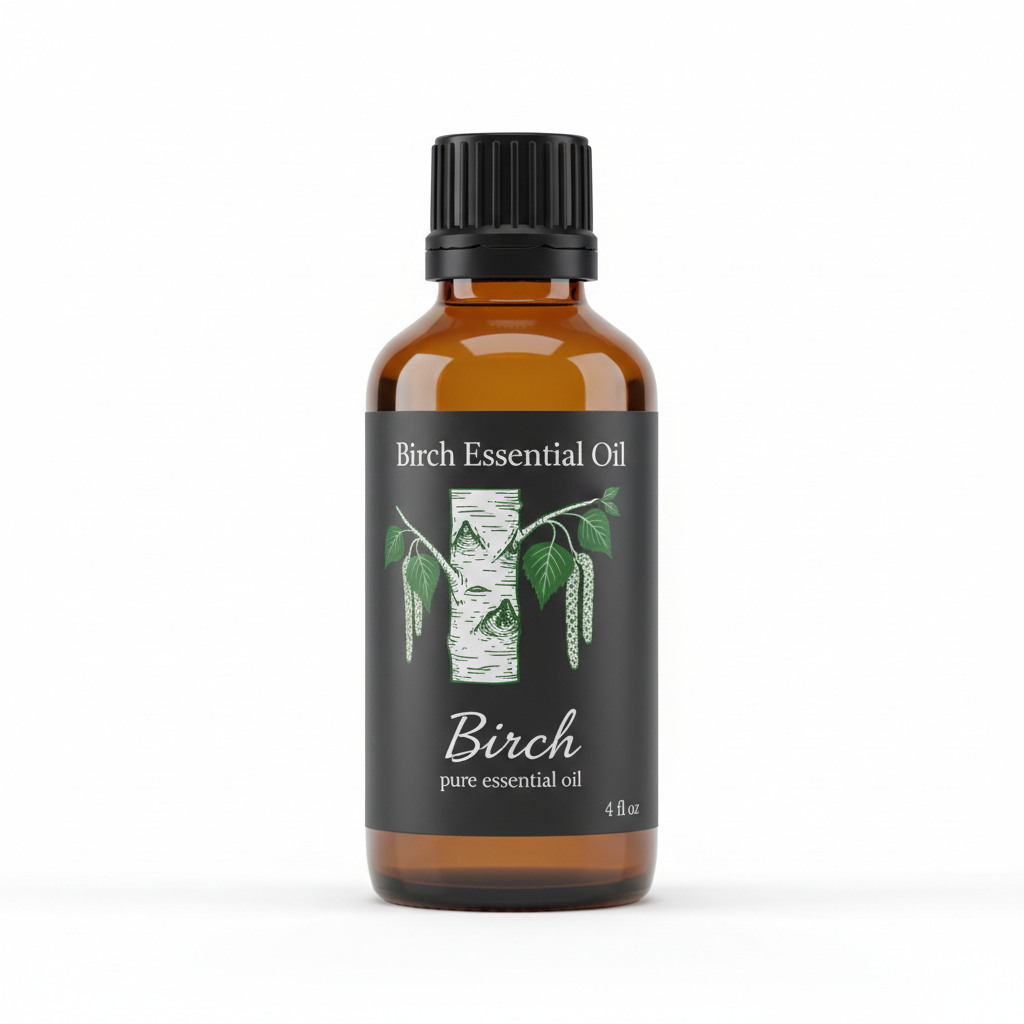
Birch Essential Oil
Birch Essential Oil from our own shop, in sizes from 1 oz to bulk.
From $17.99
Shop Now →Sources & Further Reading
- Dosoky NS, Poudel A, Satyal P, 2022. Authentication and Market Survey of Sweet Birch (Betula lenta L.) Essential Oil. Plants 11(16):2132. pmc.ncbi.nlm.nih.gov
- British Pharmaceutical Codex 1911, Oleum Rusci. henriettes-herb.com
- Regulation (EU) 2023/1545, Annex III entry 324 (text mirror). lawplayer.com