Birch vs Eucalyptus: Two Kinds of Winter Cold
Open a bottle of eucalyptus and you get a cold, clear, almost medicinal blast. Open sweet birch and the cold arrives wrapped in candy and root beer. Both say "winter" and neither says it the same way, which is why swapping one for the other changes the whole mood of a room.
Icy and sharp versus cool and sweet
ScenTree describes eucalyptol, the main molecule in eucalyptus oil, as "Herbal > Agrestic > Terpenic > Icy" and files it as a head note, meaning it is the first thing you smell and the first to fade (ScenTree, Eucalyptol). Sweet birch is built almost entirely on methyl salicylate, a heart material, with the sweet wintergreen character to match (ScenTree, Methyl salicylate). We describe our birch as intensely sweet, cool and wintergreen-like, with a woody, candy-shop edge.
So the choice is about sweetness as much as temperature. Eucalyptus smells like a freshly cleaned cabinet. Birch smells like a lodge with a sweet shop next door.
Two bottles on the bench
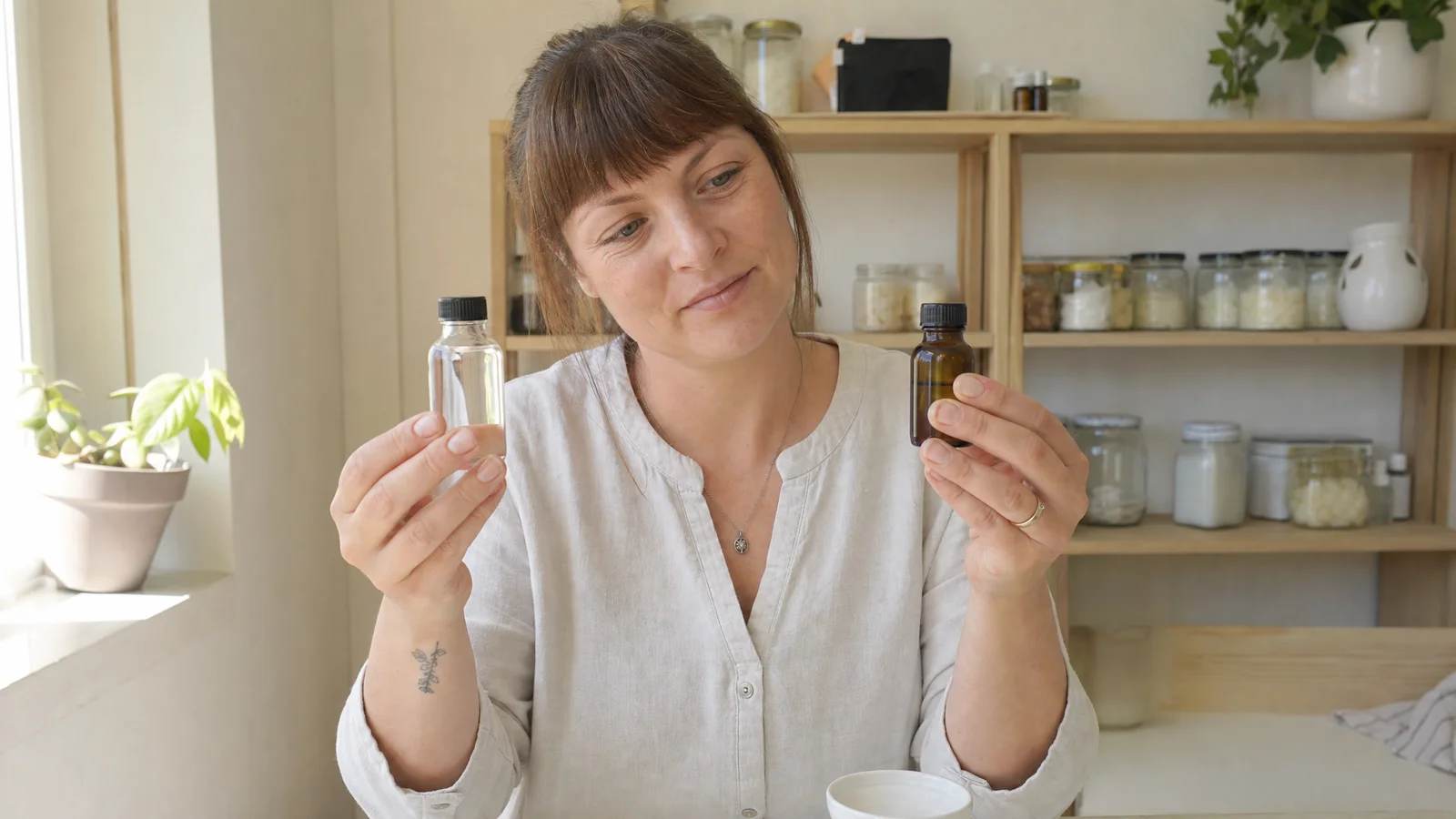
If you have both oils, open them one at a time and hold each a hand's width from your nose. Eucalyptus hits first and fast: a clear, cold rush that clears the head like a window thrown open. Birch is slower and rounder. It starts cool, then turns sweet, and the sweetness stays after the cold has gone. Neither is better; they are just two different winters, one with a sharp wind and one with a mug of something sweet.
What happens over an hour
There is a neat piece of physics behind the "head note" and "heart note" labels. The PubChem records give vapor pressures at 25 C of 1.90 mmHg for 1,8-cineole and 0.0343 mmHg for methyl salicylate (PubChem, 1,8-cineole; PubChem, methyl salicylate), which makes the eucalyptus molecule roughly 55 times more eager to leave the liquid. Those figures describe the individual molecules, not whole oils, but they suggest what you will notice: a blend that opens icy and drifts sweeter as it sits.
That drift can be a feature. Start with eucalyptus to carry the opening and let birch arrive later as the warm, sweet finish. If the sweetness arrives sooner or stronger than you want, the answer is simply a smaller share of birch.
Which one for which room
- Fresh and sharp, like a clean cabinet: eucalyptus on its own. Birch would add sweetness you did not ask for.
- Winter woods with a sweet edge: birch in a small share, with fir, pine or cedar from a craft supplier underneath. Blending birch with conifers, citrus and mint goes through pairings.
- Both: eucalyptus as the body and birch as the accent, as below.
How to smell a pairing properly
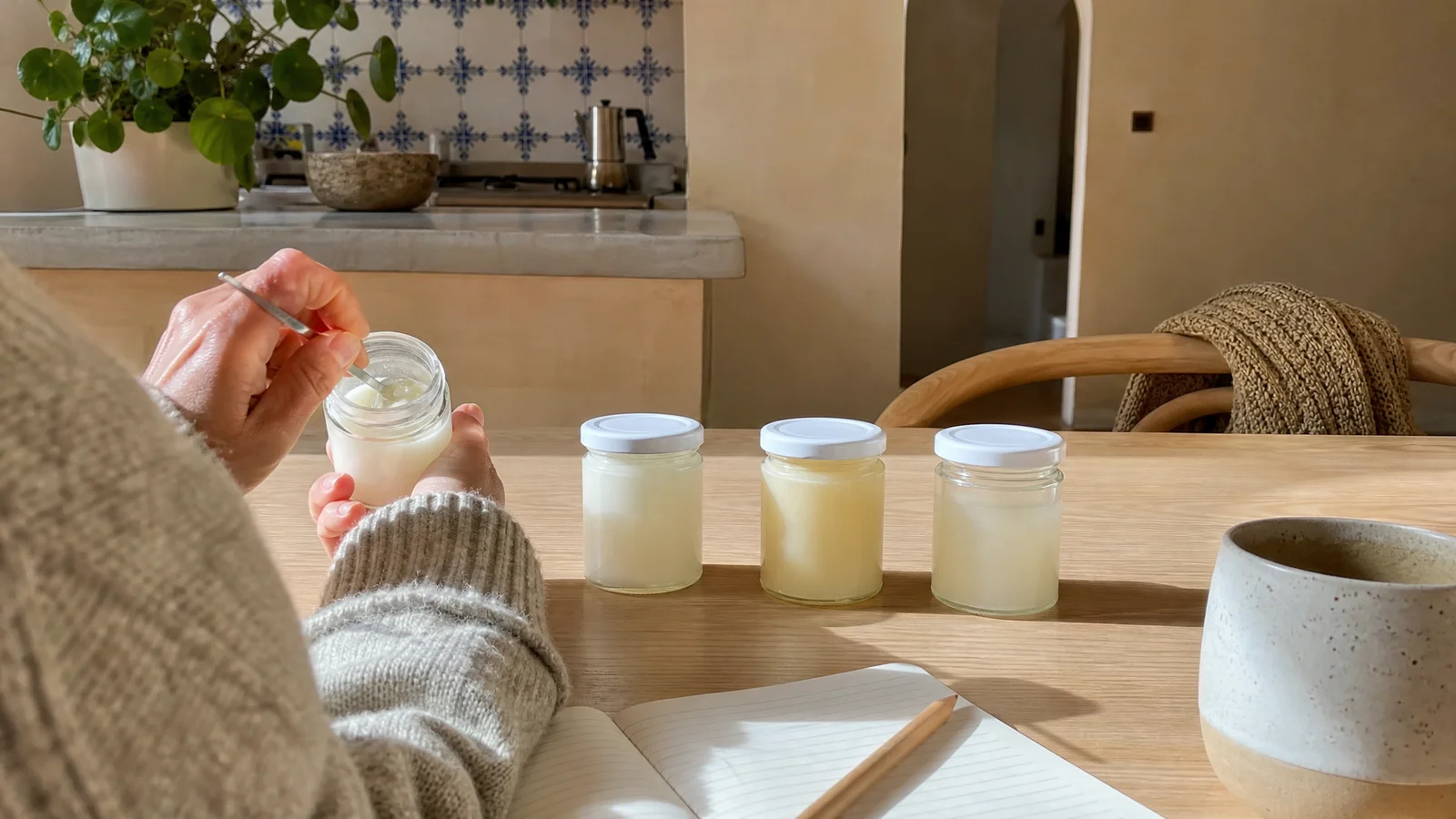
Dip a blotter and wave it gently rather than pressing it to your nose. Smell, then step away into fresh air, and come back a few minutes later. Your nose gets tired quickly with both of these oils, and a rested nose gives you a far more honest answer. Jot down what you notice at each stage so the next trial starts from your notes, not from memory.
A starting blend
This is a formulation reasoned from the figures above. Weigh the oils rather than counting drops, because a drop of one oil does not weigh the same as a drop of another. For our batch, a density of 1.183 g/mL on the published Certificate of Analysis means a milliliter of birch weighs a little over a gram.
- Eucalyptus-led: 39 parts eucalyptus to 1 part birch, about 2.5% birch.
- Balanced opening: 19 parts to 1, about 5% birch.
- Birch-forward: 9 parts to 1, 10% birch.
Start at the top row, smell it on a blotter after right away, 20 minutes and two hours, and step down the list only if the birch has disappeared. Small trial blends are plenty: at 5% birch, a 4 g blend holds just 0.2 g of it. Our dose ladder explains the stepping method.
Using birch around people and pets
Eucalyptus and birch both belong out of children's reach. Birch carries an extra layer: the Tisserand Institute advises avoiding sweet birch in children of any age, in pregnancy, and with blood-thinning medication such as aspirin or warfarin (Tisserand Institute). If anyone in the home falls into those groups, a diffuser blend without birch is the easy choice, and our aspirin sensitivity post and pregnancy and children post go further. For pets, ask your veterinarian. We sell an external cosmetic oil, and none of this is medical advice.
For skin, birch follows far lower limits than most oils; the EU caps methyl salicylate at 0.06% of most leave-on products, and our dilution chart shows what that means in practice.
If you want that sweet wintergreen character in a woody winter blend, birch is the oil that provides it, and eucalyptus will happily open the show.
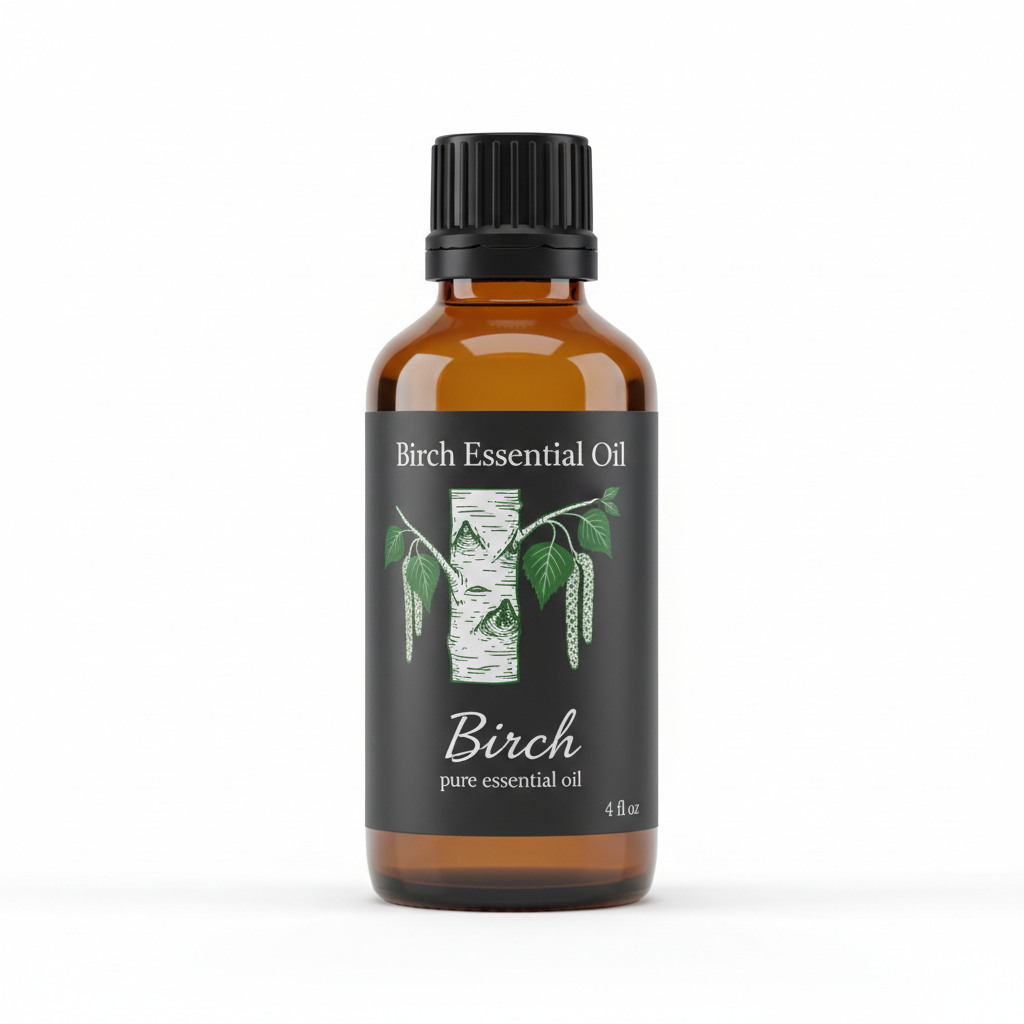
Birch Essential Oil
Birch Essential Oil from our own shop, in sizes from 1 oz to bulk.
From $17.99
Shop Now →Sources & Further Reading
- ScenTree. Eucalyptol. scentree.co
- ScenTree. Methyl salicylate. scentree.co
- National Library of Medicine. PubChem, 1,8-Cineole (CID 2758). pubchem.ncbi.nlm.nih.gov
- National Library of Medicine. PubChem, Methyl salicylate (CID 4133). pubchem.ncbi.nlm.nih.gov
- Tisserand Institute. Methyl Salicylate: Essential Oil Constituents in Food Part 5. tisserandinstitute.org