Vanilla and Birch Scent: Building a Root Beer Blend
Picture a scent that is sweet, warm and a little nostalgic, with a cool snap at the edge, the kind people call root beer or wintergreen candy. Vanilla and birch is the obvious pairing for it. It is also an easy one to get wrong, and not because the two clash. The trouble is in the vanilla, so that is where we will start.
Which vanilla do you mean?
"Vanilla" on a label can be vanillin crystals, a vanilla absolute, a fragrance oil or a food extract, and they behave differently. Everything below rests on the molecule vanillin, so ask your supplier what your material actually contains. We sell birch only, so the vanilla comes from a perfumery or aromatherapy supplier. ScenTree notes that natural vanillin has to be extracted from sources such as Bourbon vanilla absolute, which is costly, and that newer biochemical routes produce vanillin that may be considered natural (ScenTree, Vanillin).
It also helps to decide what kind of vanilla story you want before you pour anything. Some people want a creamy, bakery-warm vanilla, others a drier, almost woody one. Birch sits well with both, but the feel is very different: the creamy kind leans toward a root beer float, the drier kind toward a cold-weather cabin. Knowing which you are after makes the conversation with your supplier much easier.
Will it survive the product?
This is the step that sinks most vanilla-and-birch ideas. The same ScenTree page says vanillin "becomes red under the effect of light" and is unsuitable for candle or shower gel bases. So the container and the product matter as much as the scent:
- A pale product in clear packaging may darken. Put a small sample by a window for a week before scaling up.
- A candle needs the vanilla checked against your wax maker's data sheet. Our root beer candle post covers the birch side.
- A room spray or reed diffuser is the easiest place to start. See the room spray recipe.
- Soap or lotion brings label rules, since vanillin is a declared allergen above 0.001% in leave-on and 0.01% in rinse-off products. Those are labelling thresholds, not limits of use.
How the two behave together
Vanillin's vapor pressure at 25 C is 0.000118 mmHg, and methyl salicylate's is 0.0343 (PubChem, vanillin; PubChem, methyl salicylate). That makes the birch's main component almost 300 times more volatile, so reasoning from the pure compounds, birch greets you first and vanilla lingers long after on the blotter. That is the arrangement you want for a sweet dry-down. Both are powerful, though, and the smaller partner disappears if the other is overdosed, so set the birch first and add vanilla to taste.
Here are three starting points on paper, as percentages by weight of the fragrance blend. "Vanilla material" is whatever strength your supplier tells you is usable; vanillin is a strong solid, so ask whether it should be pre-diluted.
| Direction | Birch | Vanilla material | Wood or other base |
|---|---|---|---|
| Vanilla first, a wintergreen edge | 1% | 20% | 79% |
| Balanced, root-beer leaning | 2% | 20% | 78% |
| Birch first, vanilla rounding it | 4% | 15% | 81% |
At a 5% fragrance load, those rows put 0.05 g, 0.10 g and 0.20 g of birch into 100 g of candle or room spray. If the first row still smells like mouthwash, the birch share is too high; vanilla softens the edges but does not lower the dose. Our dilution ladder shows how to step a dominant note down, and the root beer history is a fun read on why this scent feels so familiar.
For skin, the numbers change
EU Regulation 2023/1545 caps methyl salicylate at 0.06% in most leave-on and rinse-off skin products and 0.6% in hydroalcoholic fragrances (text of the regulation). At a 5% fragrance load, 0.06% birch is 1.2% of the blend, so only the first row qualifies. The Tisserand Institute lists 2.5% as a topical maximum for sweet birch and advises against it in children, in pregnancy and with blood thinners (Tisserand Institute). Our own skin guidance is 0.5% to 2% in a carrier after a patch test, and for a product you sell, we would design to the stricter figure and ask a cosmetic chemist to confirm what applies in your market.
Where to try it first
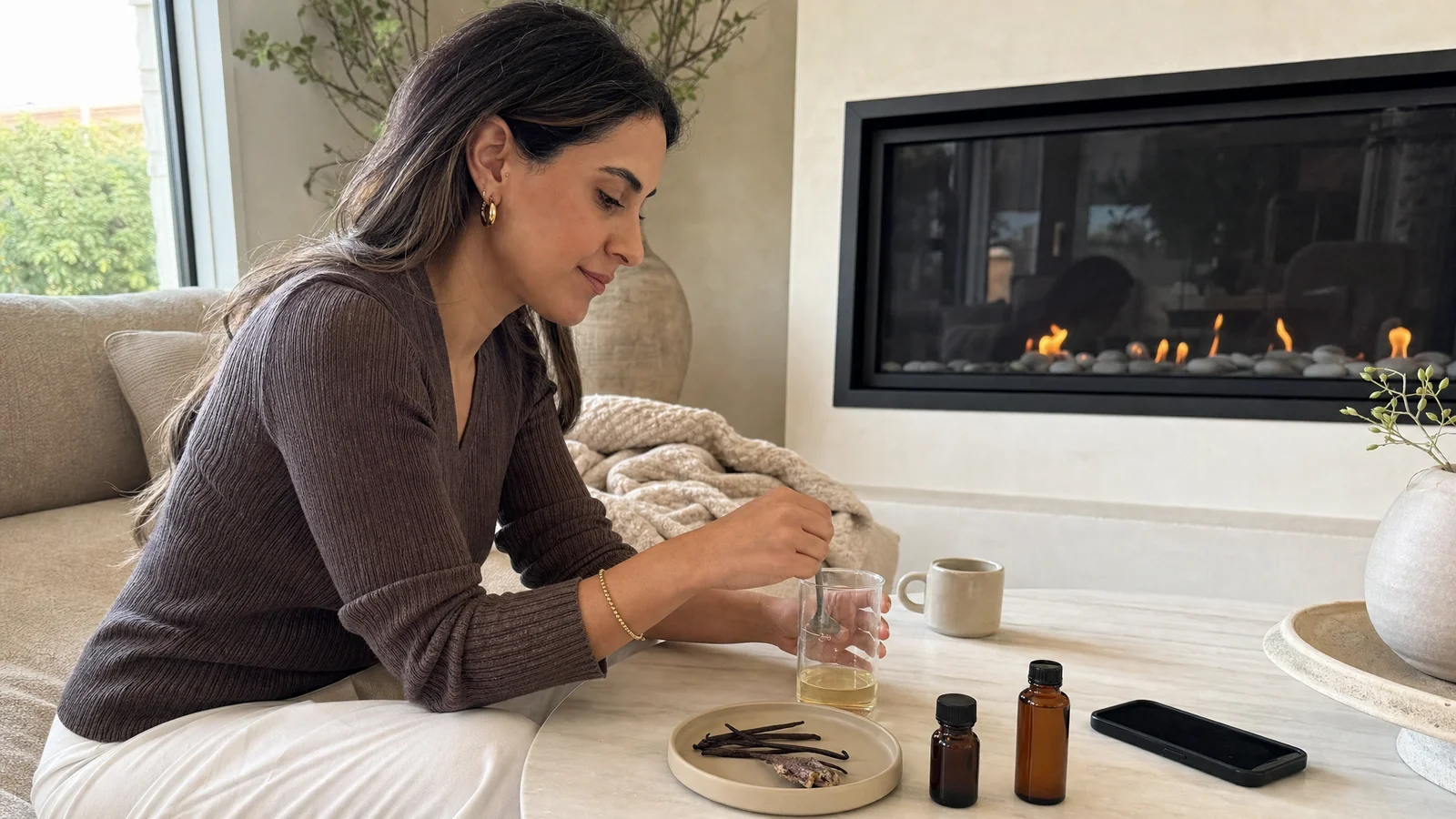
A room spray or a small reed diffuser is a forgiving place to begin, because you can adjust and re-pour. Smell the blend on a paper strip, then wait. Let the strip sit while you do something else, then come back and notice how the sweet edge has softened and the vanilla has stepped forward. That slow shift from cool and sharp to warm and round is the whole charm of the pairing, and it is why we like to judge by the second and third sniff rather than the first.
Writing it down
Note the weights of each trial on a card, with the date, the vanilla material you used and how long you waited before judging. Vanilla materials vary from supplier to supplier, so the card is what lets you repeat the blend you love.
The final test
Make the three trials at 4 g each and smell them at the start, at twenty minutes and at two hours. If birch comes first and vanilla last, the blend is behaving as the volatility figures predict. If it is the other way round, the vanilla is too high. For a composition report on your lot, write to us through the contact page.
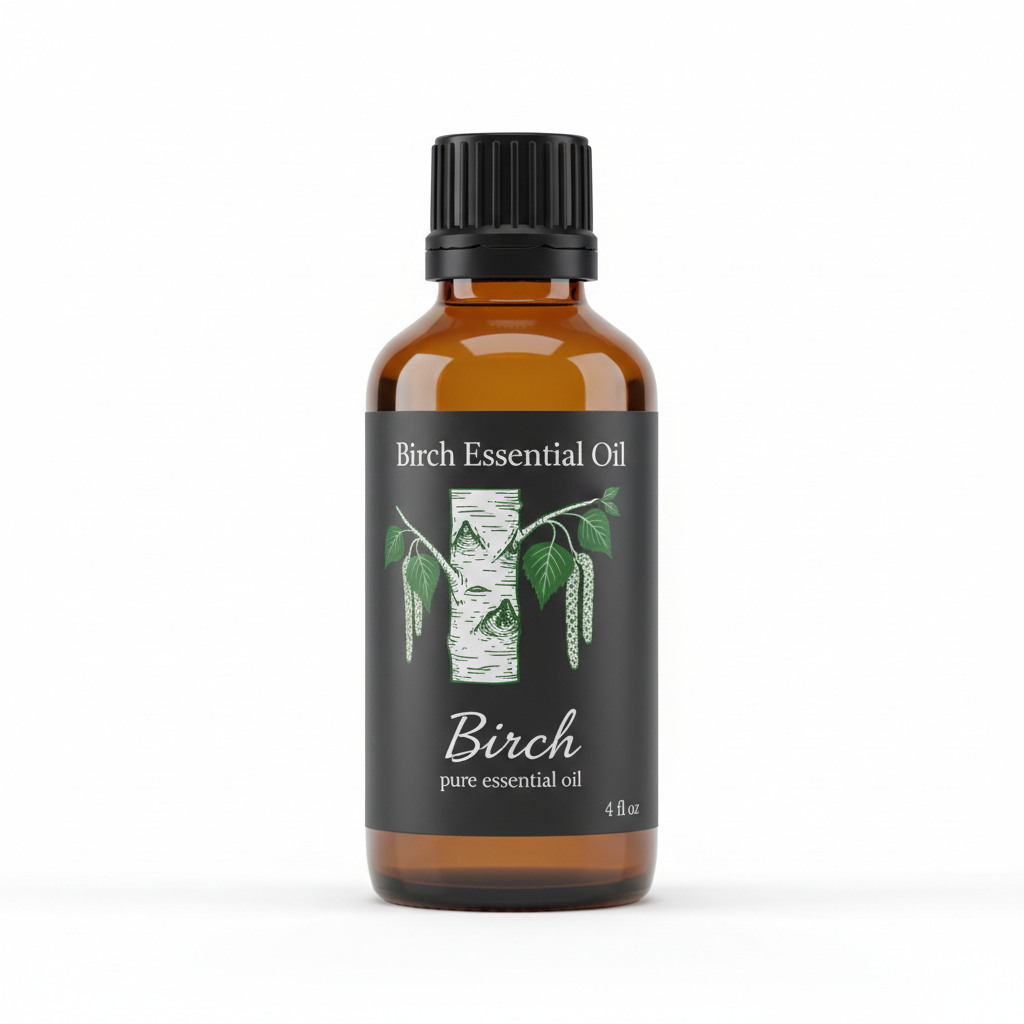
Birch Essential Oil
Birch Essential Oil from our own shop, in sizes from 1 oz to bulk.
From $17.99
Shop Now →Sources & Further Reading
- ScenTree, Vanillin. scentree.co
- PubChem, Vanillin (CID 1183). pubchem.ncbi.nlm.nih.gov
- PubChem, Methyl salicylate (CID 4133). pubchem.ncbi.nlm.nih.gov
- Regulation (EU) 2023/1545, Annex III entry 324. lawplayer.com
- Tisserand Institute, Methyl Salicylate (Part 5). tisserandinstitute.org