Birch and Black Pepper: A Cool, Spicy Woodsy Pairing
Most people reach for vanilla or cedar when they want to soften birch, and both work. Black pepper is the partner almost nobody tries, and it may be the most interesting one. Birch is sweet and cool, pepper is hot, dry and a little mineral, and each stops the other from turning into something familiar: the pepper keeps the wintergreen from drifting toward candy, and the birch keeps the pepper from smelling like a spice rack.
Why the pair works
A perfumery glossary describes black pepper oil as "hot, sharp, woody-spice with a dry, almost mineral quality," built mostly on beta-caryophyllene, and it notes the oil acts as a mild fixative as well (Premiere Peau). Birch oil is almost entirely methyl salicylate, which perfumers class as a heart note (ScenTree). So both sit in the middle of a blend, and pepper's heavier molecules should give it a little more staying power than a citrus or conifer opening would. That last part is our reading of the descriptions rather than a measurement, so let a blotter settle it: smell it at the start, after twenty minutes and again after two hours.
The pair suits three kinds of scent:
- A dry, modern woody blend with a cold edge. Pepper leads, birch is the accent. This is the pairing at its best.
- A barbershop or fougere style. Pepper adds spice to the heart, birch adds a cool, sweet lift. Our barbershop worksheet goes further into that structure.
- Not a warm, sweet blend. For that mood, vanilla is the better partner, and we cover it in vanilla and birch.
What to expect on the blotter
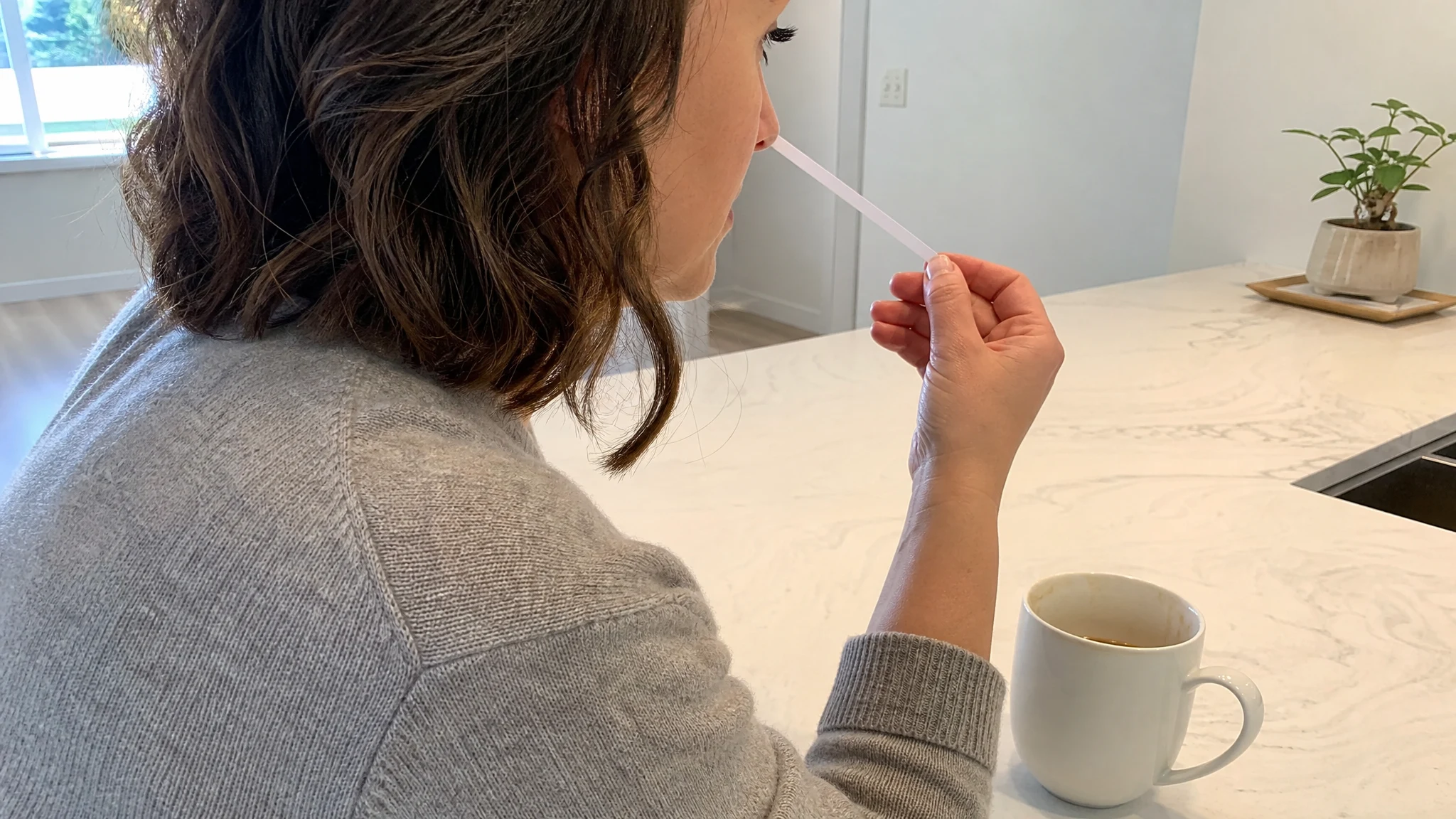
Dip two strips, one in the pepper-led row and one in the birch-forward row, and smell them side by side. The first thing you notice in the pepper-led strip is a dry, peppery crackle, and the birch shows up a moment later as a cold, sweet shimmer underneath. In the birch-forward strip the order flips: wintergreen first, with the pepper arriving as a warm, slightly dusty contrast.
Leave the strips on a saucer and come back after an hour. Pepper tends to feel rounder and softer by then, and birch tends to sit quietly in the background. Writing down which one you prefer at each stage is the most useful thing you can do with an afternoon.
Give the pair something to stand on
Two loud materials with nothing underneath just compete. Put both on a wood, with cedarwood the classic choice (see birch against cedarwood), and keep birch the smaller of the two. Birch is the one with the very low detection threshold, so it will be heard even when it is the minor share.
Here are three starting points worked out on paper, as percentages by weight of the fragrance blend, with the rest being your wood base.
| Direction | Black pepper | Birch | Wood base |
|---|---|---|---|
| Dry woody, pepper leading | 6% | 1% | 93% |
| Spice with a cool edge | 4% | 2% | 94% |
| Birch forward, pepper as contrast | 2% | 4% | 94% |
Put each into a candle or room spray at a 5% fragrance load and 100 g of finished product holds 0.05 g, 0.10 g and 0.20 g of birch. The certificate we publish for one batch lists a density of 1.183, so 0.10 g is about 0.085 ml, a drop or two at the usual rough figure of 20 drops to the milliliter. That is why we weigh instead of counting drops, and why our dilution ladder is worth a read before the first pour.
Where it feels at home
This pairing is for people who find birch alone a bit too sweet. Think of a workshop with a wooden bench and a thermos of something hot, or a coat closet in a mountain lodge. A small candle on a desk in a study suits the mood, and so does a room spray for an entryway. It is a less obvious combination than birch and vanilla, which is exactly why it is nice to give someone a scent they cannot immediately name.
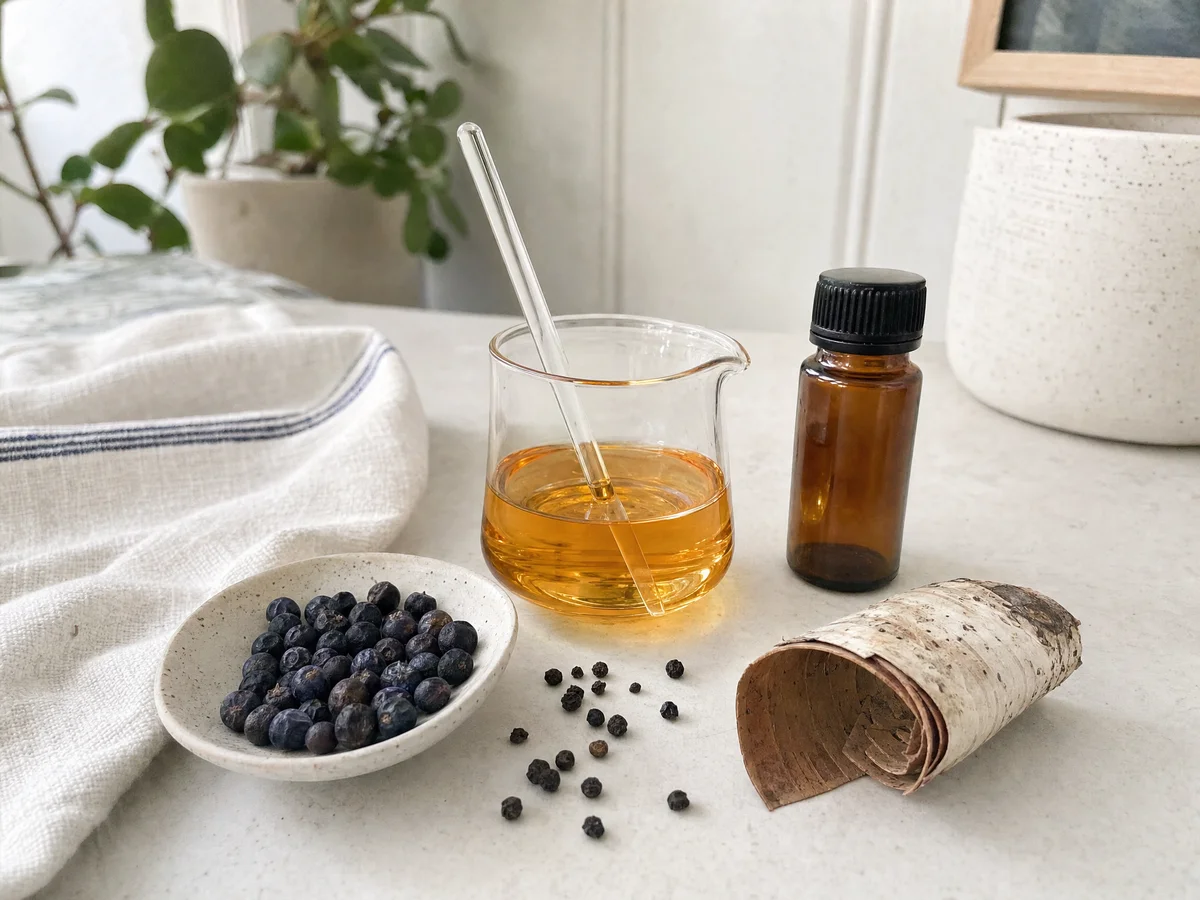
Choosing the pepper
Black pepper oils differ from lot to lot, so ask your supplier for the date and a GC report, and look for beta-caryophyllene at the front of the list. Keep the bottle capped, cool and dark, because spicy, terpene-rich oils flatten with age. We sell birch only, so the pepper and the wood come from an aromatherapy or perfumery supplier. A pepper "fragrance oil" is a compounded material rather than the essential oil, and the table above does not carry over to it.
If it will touch skin
Skin products follow different rules. EU Regulation 2023/1545 limits methyl salicylate to 0.06% in most leave-on and rinse-off products and 0.6% in hydroalcoholic fragrances, and bars it from products for children under 6 (text of the regulation). The Tisserand Institute puts the topical maximum for sweet birch at 2.5% and advises against it in children, in pregnancy and with blood thinners (Tisserand Institute). For general skin use we recommend 0.5% to 2% in a carrier after a patch test, and for anything you will sell, the lower regulatory figure is the one to design to. At a 5% fragrance load, 0.06% birch means 1.2% of the blend, so only the first row of the table fits. Candles and room sprays sidestep the question, which makes them the easiest place to begin.
Make three small 4 g trials, one per row, and note which note you notice first and last at each stage. If birch shouts in the pepper-led row, halve it and smell again before touching anything else. If you need composition data for your lot, ask us in writing through the contact page before ordering.
Birch Essential Oil
Birch Essential Oil from our own shop, in sizes from 1 oz to bulk.
From $17.99
Shop Now →Sources & Further Reading
- Premiere Peau, Black pepper oil glossary entry. premierepeau.com
- ScenTree, Methyl salicylate. scentree.co
- Regulation (EU) 2023/1545, Annex III entry 324. lawplayer.com
- Tisserand Institute, Methyl Salicylate (Part 5). tisserandinstitute.org