How to Build a Cozy Cabin Scent With Birch Oil
Wool blankets, exposed beams, low lamplight, a snowy window. A cabin has a smell in most people's imagination: cold air, resinous wood, a thread of smoke and something sweet in a mug. Sweet birch oil covers exactly one of those, and it happens to be the sparkling part.
Birch is the cold edge, not the whole cabin
Birch is nearly all methyl salicylate, the cool, sweet, root-beer-and-wintergreen molecule. We describe the scent as winter woods and old-fashioned root beer at once. On its own, that reads as a wintergreen candy shop. The wood, resin and smoke have to come from somewhere else, so the trick is to use birch as the accent over a base that supplies the rest. A good rule of thumb: if you can name the birch the moment you walk into the room, you used too much.
Build it in layers
- Cold air. This is birch's job and it needs very little. We describe a trace as enough to flavor a whole blend.
- Resin and green wood. Fir, pine or spruce, which blend beautifully with birch. Without them the room smells of candy.
- Dry wood. Cedarwood or sandalwood supply the paneling note birch lacks.
- Warm sweetness. Vanilla rounds the edge, but it also nudges birch toward root beer, so add it on purpose.
Those are the pairings we suggest, and our blending guide goes through them in detail. We sell the birch; fir, cedarwood and the rest are easy to find at a craft or supply shop. For a ready-made direction, see our northwoods blends.
What about the woodsmoke?
Sweet birch cannot supply smoke. That belongs to birch tar, a different material that we do not sell, explained in our birch tar article. For a smoky cabin, add a candle-rated woodsmoke fragrance from a candle supplier and let birch be the frost on top.
What the room should smell like, minute by minute
Picture walking in from the cold. In the first few seconds you want the bright, frosty edge: that is birch doing its small, sparkly job. A few minutes later the resin and green wood come forward, like standing under a fir tree after rain. Give it an hour and what is left is the dry, quiet paneling note, with a thread of sweetness. If the room smells of one thing from start to finish, the blend is out of balance, and the usual fix is less birch rather than more of everything else.
Matching the scent to the room
A small room with a low ceiling needs a lighter hand, since a little scent goes a long way and lingers. A big open living area can carry a fuller blend. Think about where people sit, too: a scent you notice near the door is lovely, but one that hits you at the sofa can be tiring. Place the source across the room from where you sit and let the scent drift toward you.
Choose how the scent reaches the room
The delivery method decides how much birch makes sense. A candle spreads the oil through wax and releases it slowly, and it is where we point most crafters first; take the loading numbers from our candle guide. A reed diffuser is passive and steady with no heat. A room spray is quick, though the oil needs to be dissolved properly. Each of those guides is a formulation worked out from published guidance and arithmetic.
Little touches make a cabin scent feel complete without adding more oil. A wool blanket over a chair, a bowl of pinecones, a fire laid in the grate, a lamp turned low. The scent is one thread in the picture, and it is nicest when it supports the rest instead of trying to do all the work.
Try it on a blotter first
Because birch is so easy to overdo, smell a stock before committing it to wax. The batch on our published certificate has a relative density of 1.183, so 1 g of oil is about 0.85 ml. A 10% stock by weight is 1 g of oil with 9 g of carrier. Smell it on a strip, then again an hour later. You cannot take a dominant note back out of a poured candle.
Cozy rooms and careful handling
Cabin style tends to mean kids, dogs and guests, so give the bottle a little extra care. Sweet birch oil is absorbed through skin and has caused serious poisoning, including deaths in children who swallowed it. We recommend not using it if pregnant or breastfeeding, never on children, and not at all if you take anticoagulants or are sensitive to aspirin and salicylates. The Tisserand Institute lists the same three exclusions for sweet birch (Tisserand Institute). Candles and reed diffusers keep the oil away from skin, which is a good reason to prefer them. Keep it away from open bowls and anything a child can reach, and ask a veterinarian before scenting a home with animals; the Merck Veterinary Manual notes that birch and wintergreen oils can cause aspirin toxicosis in pets (Merck Veterinary Manual). Our first aid article lists the steps and the number to call.
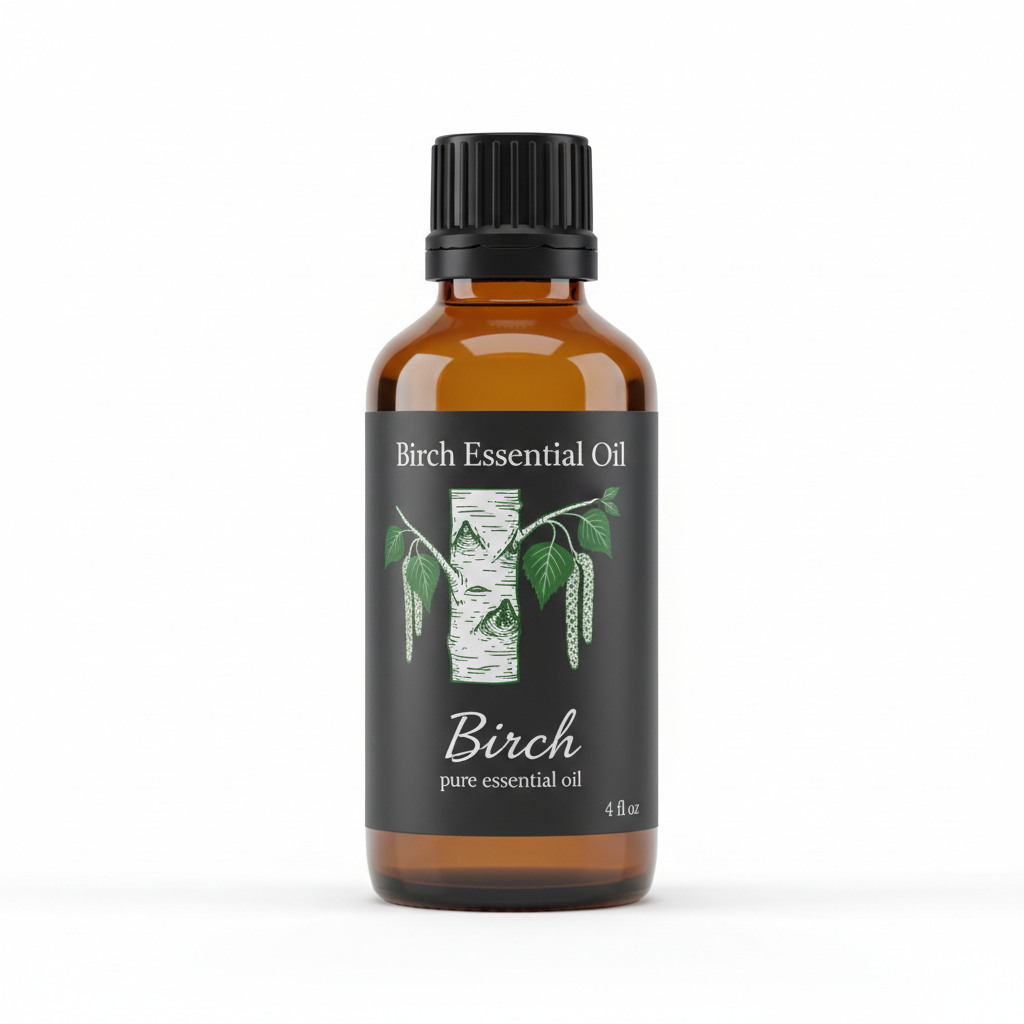
Birch Essential Oil
Birch Essential Oil from our own shop, in sizes from 1 oz to bulk.
From $17.99
Shop Now →