Why Birch Oil Smells Like Wintergreen: Methyl Salicylate
Open a bottle of sweet birch oil and the first thing you notice is wintergreen candy. That is not a coincidence or a clever blend. Birch oil is, almost entirely, one molecule: methyl salicylate. Once you know that, a lot about the oil makes sense, from how little you need to how carefully it should be handled.
An oil built on a single note
Most essential oils are crowded, with dozens of compounds sharing the stage. Sweet birch is the exception. In a study of 21 authentic Betula lenta oils, methyl salicylate made up between 93.24% and 99.84% of the oil, with a handful of trace compounds making up the rest (Dosoky, Poudel and Satyal, 2022). Orange oil has limonene; birch oil basically is methyl salicylate.
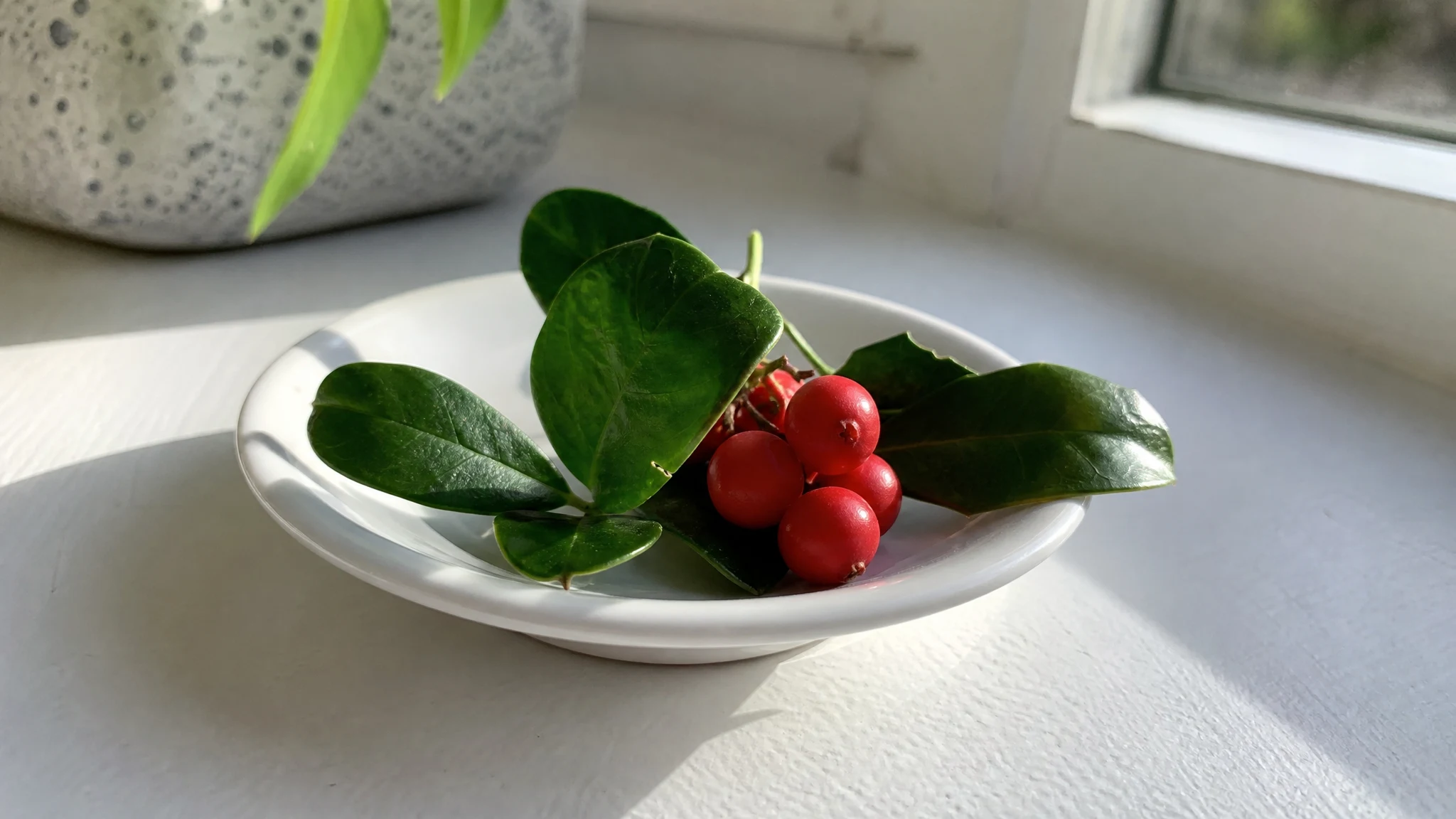
The trace compounds are where the interest lies for a buyer. Wintergreen oil (from a different plant) and synthetic methyl salicylate are also close to 100% of the same molecule, so the percentage alone cannot tell you which one is in a bottle. What separates a distilled sweet birch oil from them is a small set of markers, such as o-guaiacol and veratrole, that the study found in authentic birch oil and in none of the 27 commercial products it surveyed. We explore the practical side in is birch oil the same as wintergreen.
Why a drop goes so far
Perfumers classify methyl salicylate as a heart note and say a very low dilution is enough to notice it; its detection threshold sits in the parts-per-billion range (ScenTree). In practice that means birch oil is a trace ingredient. We describe it as a dominant note that flavors a whole blend in tiny amounts, and the chemistry explains why.
The molecule is also denser than water. PubChem collects a density of 1.176 to 1.185 and a refractive index of 1.534 to 1.538 for the pure compound (PubChem, CID 4133), and the batch on our published Certificate of Analysis sits right inside both ranges, at 1.183 and 1.537. Its optical rotation reads "Optically Inactive", which is expected, because the molecule has no mirror-image form. These are consistent with a methyl salicylate oil, though no single physical number can tell tree-derived from synthetic.
Where you have met this smell before
Most of us know this scent long before we know its name. It is the pink wintergreen mint in a candy dish, the old-fashioned root beer at a diner, the minty gum of a childhood road trip. Smelling birch oil is a bit like running into an old friend in a new coat. The first reaction is usually a smile, followed by surprise at how strong it is.
Smelling it well
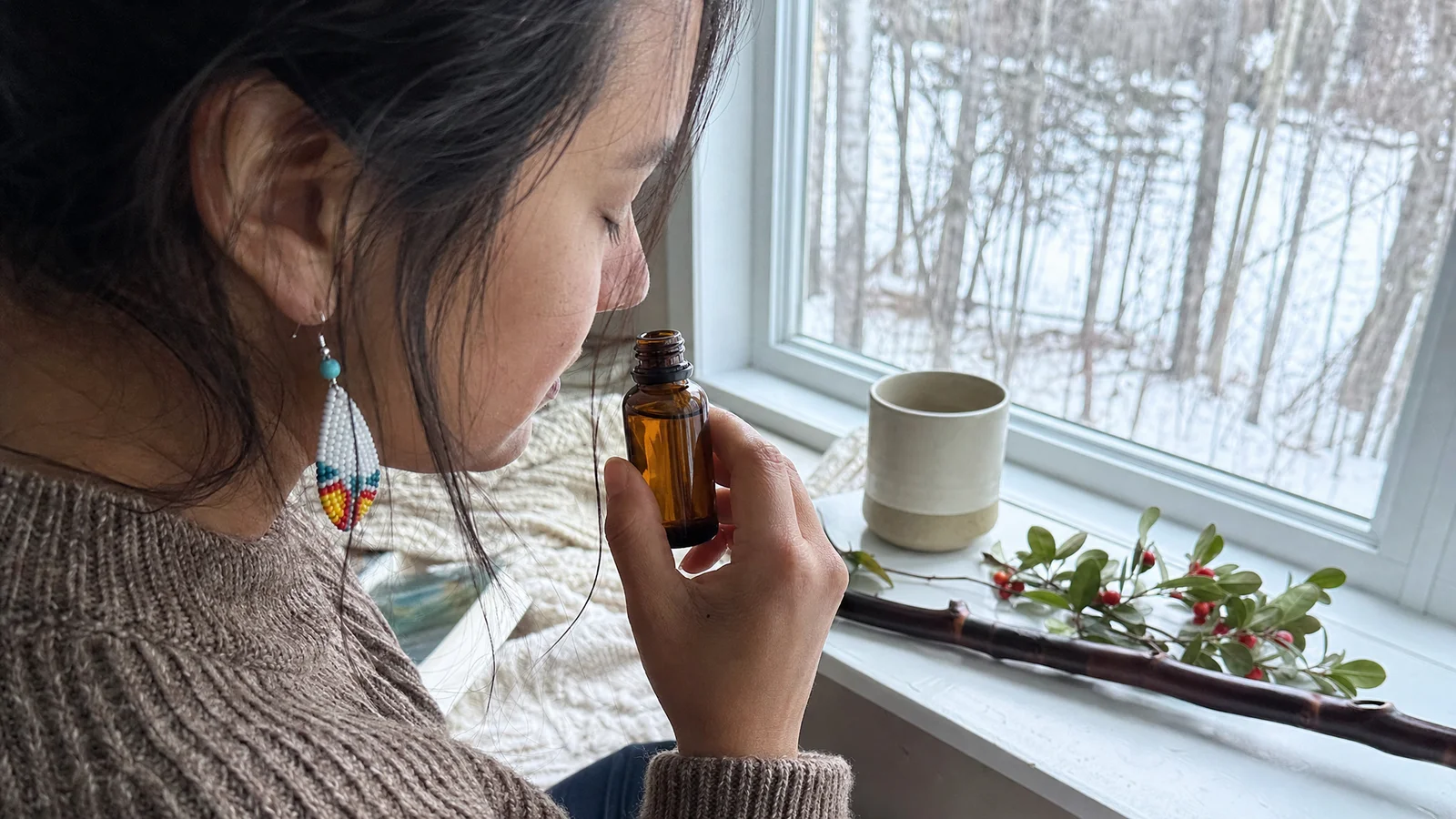
To get to know the oil, do not put your nose to the bottle. Open it, hold it at arm's length, and wave the air gently toward you. Then try a blotter with a very small amount and smell it again after a few minutes. You will notice the first sharp, cool burst settle into a rounder, sweeter, woodier scent. It is a lovely transformation, and it is a good lesson in why a trace is all a blend needs.
What the rules say about the number
Because the oil is nearly all one compound, the rules for that compound are the rules for the oil. EU cosmetics law caps methyl salicylate at 0.06% in leave-on skin products, 0.6% in hand wash and hydroalcoholic fragrances, and 0.03% in lip products, and bars it from products for children under 6 (Regulation (EU) 2023/1545, entry 324). The Tisserand Institute gives a topical maximum of 2.5% for sweet birch and advises against it in children, in pregnancy and with blood-thinning medication (Tisserand Institute). Our own dilution guidance for skin projects is 0.5% to 2% in a carrier with a patch test.
Those numbers come from different kinds of documents, so they do not have to match. Our recommendation is simple: follow the stricter figure for anything that stays on skin, and keep birch to trace levels in candles and room scenting. The dilution chart walks through the arithmetic.
Handle it like the concentrate it is
Poison Control describes swallowing wintergreen oil as "roughly the equivalent of swallowing a large number of adult aspirin tablets" (National Capital Poison Center). That is why we say to keep the bottle capped, out of reach of children and pets, and away from anyone who is pregnant, on blood thinners or sensitive to aspirin. Our aspirin sensitivity article explains the link, and reading the SDS shows how the hazard labels read. In the US, call 1-800-222-1222 if anyone swallows birch oil. We sell an external cosmetic and scenting oil only; questions about medicines or rubs belong with a pharmacist or physician.
If your project, label or safety file depends on what is in your particular lot, ask us in writing through the contact page for the lot report.
Birch Essential Oil
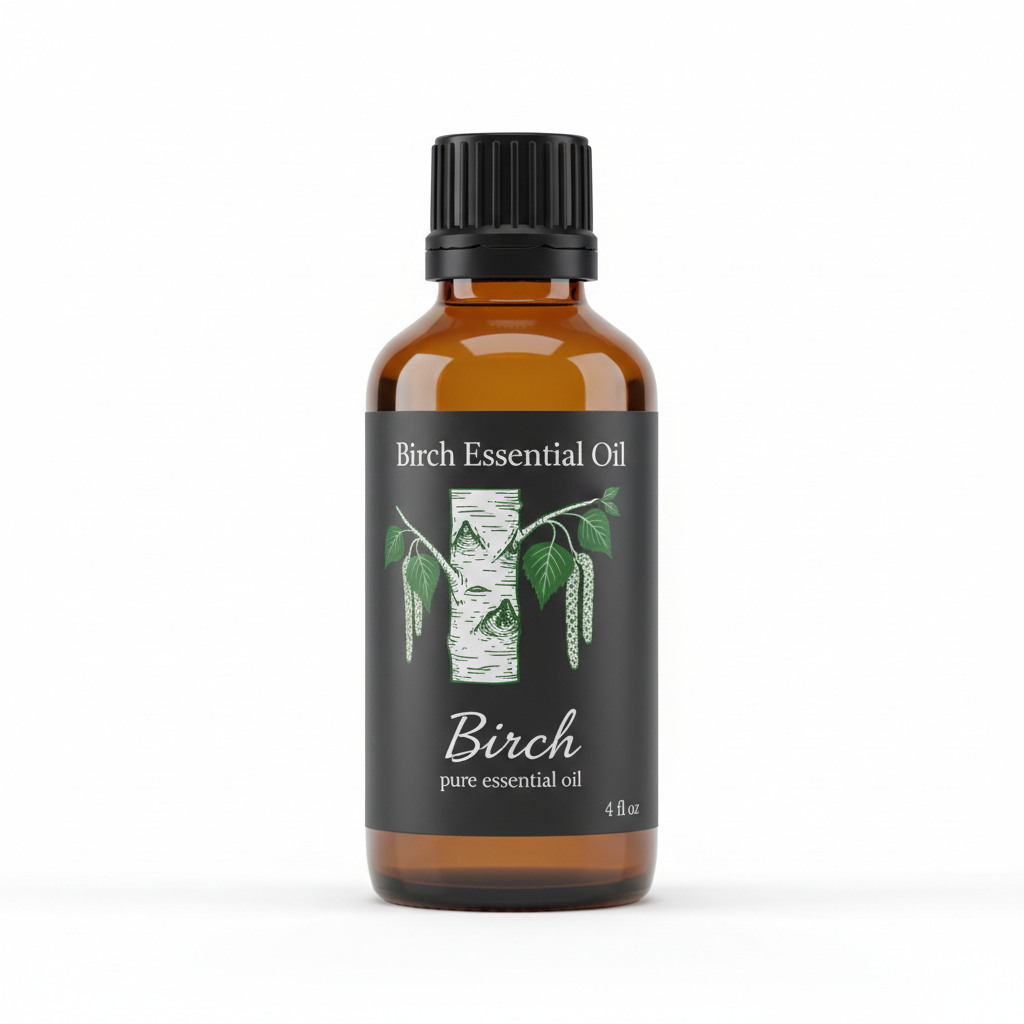
Birch Essential Oil from our own shop, in sizes from 1 oz to bulk.
From $17.99
Shop Now →Sources & Further Reading
- Dosoky NS, Poudel A, Satyal P, 2022. Authentication and Market Survey of Sweet Birch (Betula lenta L.) Essential Oil. Plants 11(16):2132.
- National Library of Medicine. PubChem, Methyl salicylate (CID 4133).
- ScenTree. Methyl salicylate.
- Commission Regulation (EU) 2023/1545, Annex III entry 324 (text mirror).
- Tisserand Institute. Essential Oil Constituents in Food, Part 5: Methyl Salicylate.
- Poison Control (National Capital Poison Center). Essential oils.