Is Birch Oil Sustainable? What a Bottle Really Takes
A 1 oz bottle of birch oil is small enough to hold in one hand. The bark behind it would fill a pickup truck bed. Sweet birch gives up its oil very reluctantly, and that single fact shapes everything about how thoughtfully this oil should be bought and used.
Why a bottle takes so much tree
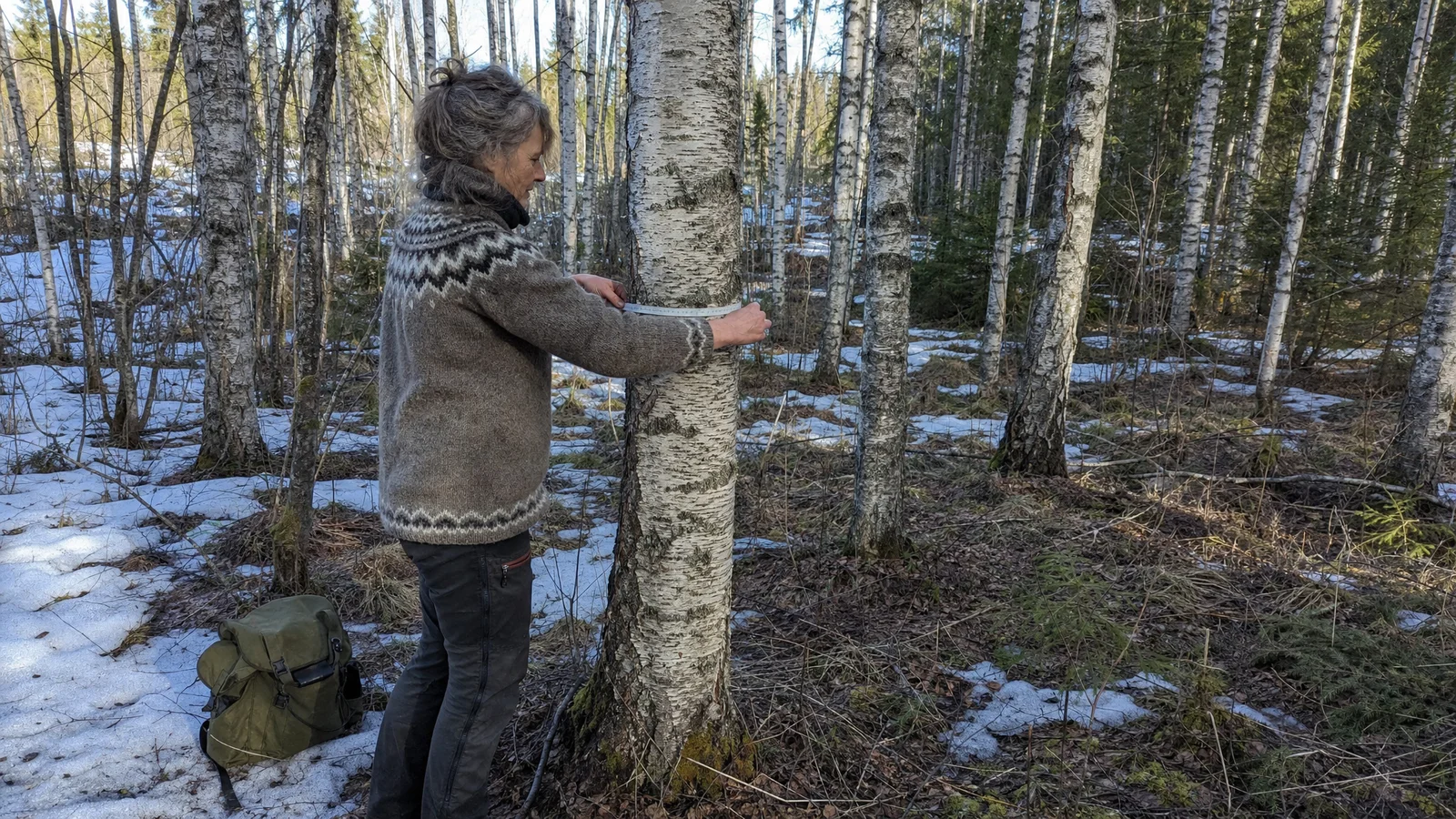
In a study of 21 authentic sweet birch oils, distillation yielded 0.07% to 0.1% oil (Dosoky, Poudel and Satyal, 2022). The paper does not say whether that is of fresh or dried material, so treat it as an order of magnitude. On that basis, a 1 oz bottle (about 35 g, using the 1.183 density on our published Certificate of Analysis) needs roughly 35 to 50 kg of bark. A pound needs 450 to 650 kg. Our smallest bulk size, 5 lb, works out to 2 to 3 tonnes.
Old stories match the arithmetic. Writing in the Smoky Mountain News, George Ellison recalls that it took about 100 saplings to make a quart of oil in the crude stills of the Appalachians, and that stands were spared complete destruction when synthetic wintergreen, made from wood alcohol and salicylic acid, took over the trade (Ellison, 2018). That is a recollection, not a survey, but the pattern is clear. Sweet birch was once the main source of wintergreen oil (Lamson, 1990, USDA Silvics).
Picturing the forest behind the bottle
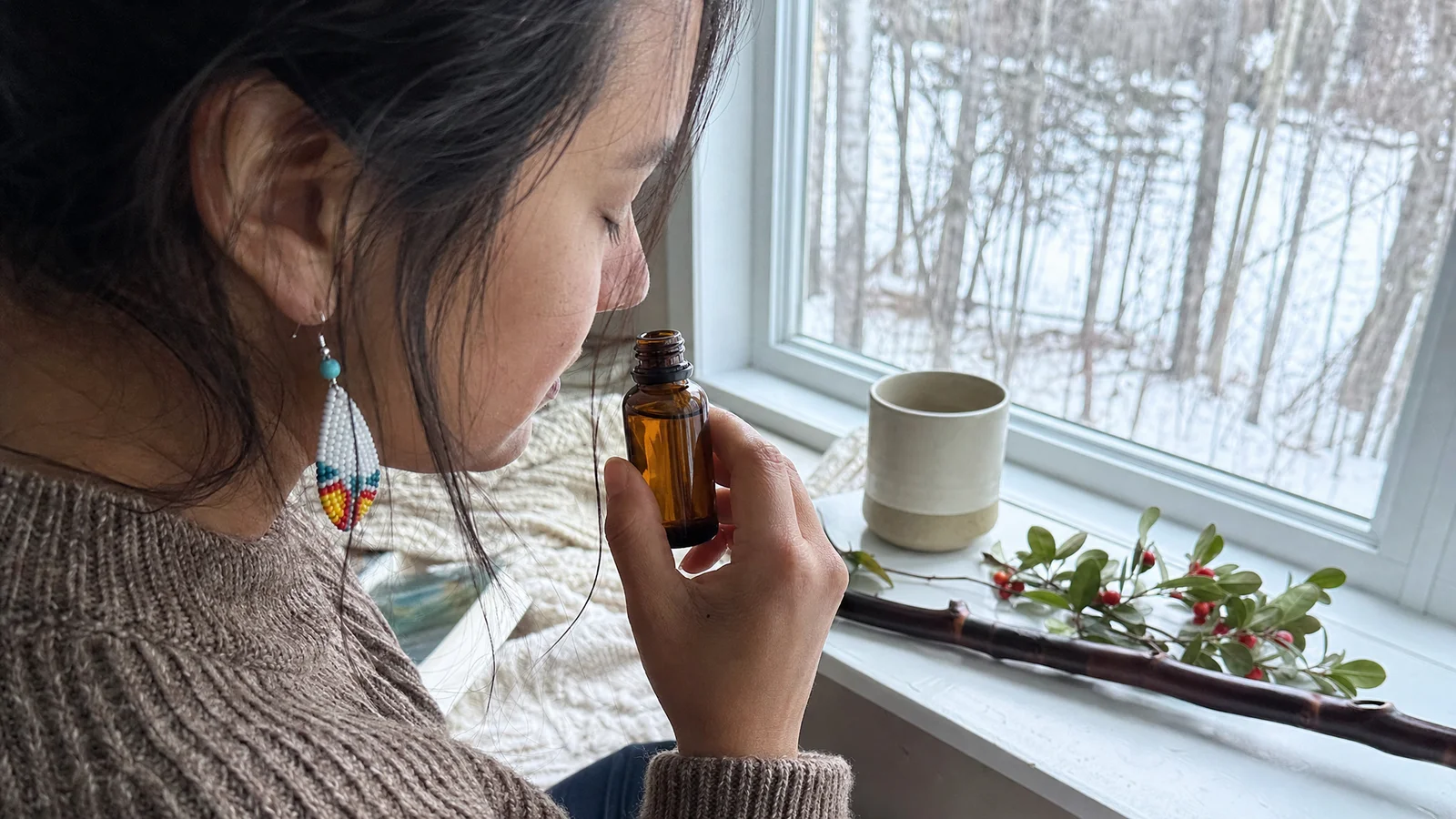
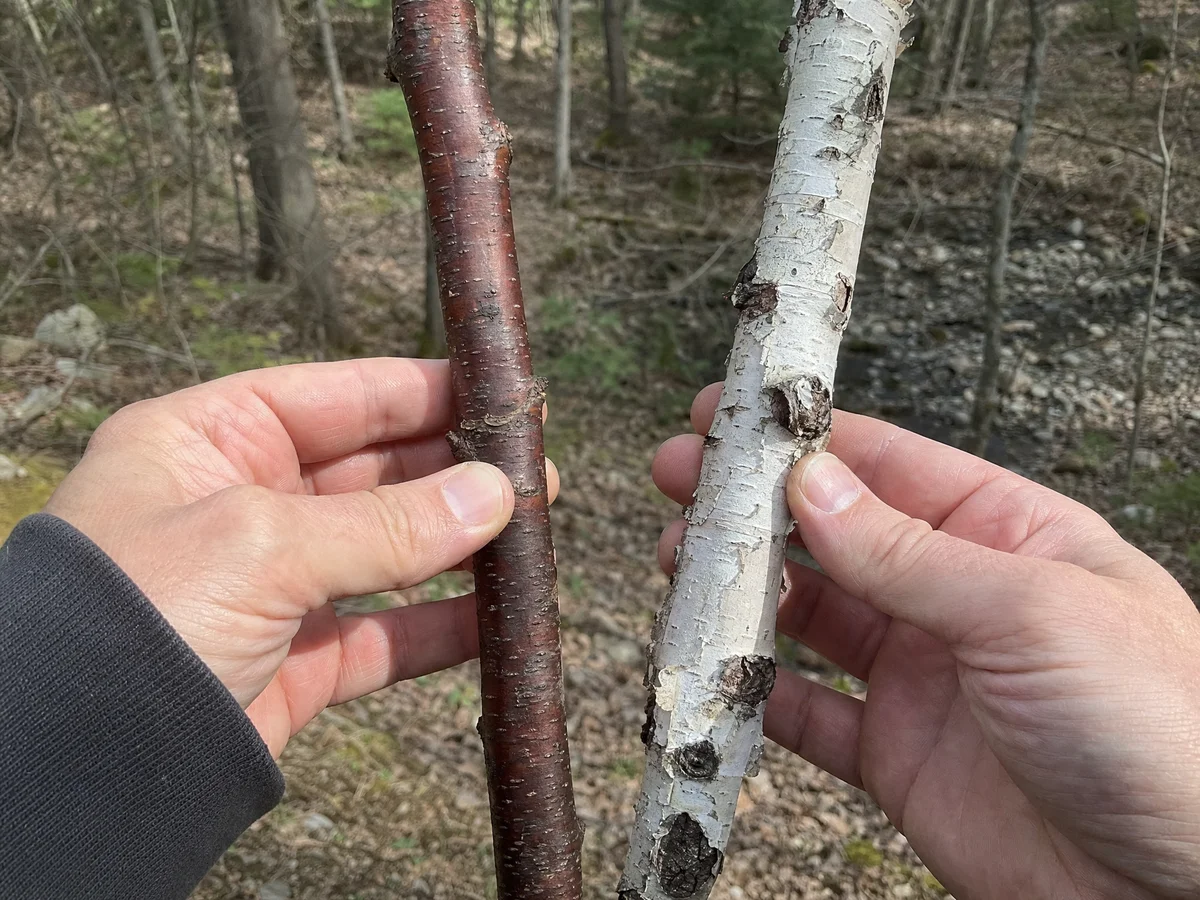
We love this oil, and part of that is the picture it puts in your head: a ridge of hardwoods in late autumn, a twig snapped between your fingers and that cool, sweet smell rising off it. It is the same candy-and-woods note that comes out of the bottle, and it is a lovely connection to have. It is also a reminder that every drop began as part of a living tree, which is a good reason to be curious about where any bottle came from.
A tree that is both common and slow
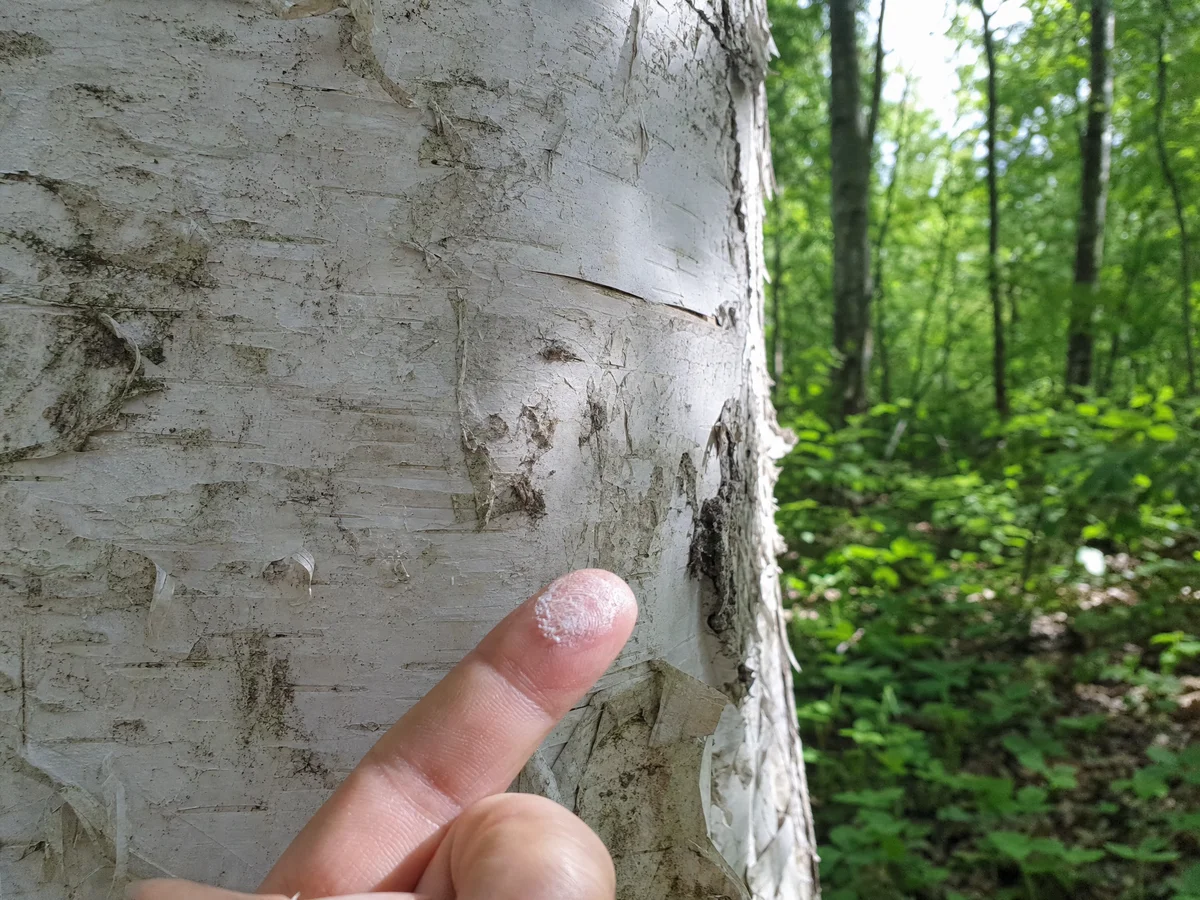
Sweet birch is a pioneer. At the Arnold Arboretum, black birch made up 75% of stems over 1 cm about ten years after a hemlock stand was removed (Orwig and Del Tredici, 2016). Yet the Forest Service notes it takes about 20 years to reach 10 cm across and 80 years to reach 25 cm, with very thin bark that fire damages easily (Lamson, above). Plentiful young regrowth and slow-growing mature trees are the same species, so "birch is common" and "this harvest is sustainable" are two different statements. Our profile of the tree goes deeper.
Four questions worth asking any seller
A word like "wildcrafted" or "ethically sourced" says little on its own. A real sustainability story answers four things:
- Where? The region, who owns the land and whether the stand is regrowth or mature forest.
- Which part, and how much? Bark from standing trees, bark from trees felled for timber, or twigs and thinnings.
- What happens afterward? A regeneration plan, or evidence the stand was thinned rather than cleared.
- Who checked? A named forest-management certification or audit, with dates.
A good answer is usually specific and a little unglamorous: a region, a part of the tree, a named audit. A vague answer wrapped in lovely nature photography deserves a polite follow-up question.
We do not put a sustainability label on our oil, and we would rather you ask these questions than take any label on faith, ours included. If sourcing documentation decides your purchase, ask us in writing through the contact page. Our bark to bottle article describes how the oil is made, and the wholesale guide has more questions for suppliers.
The easiest sustainability lever is the dose
Birch oil is a trace ingredient on safety grounds too. EU cosmetics law limits methyl salicylate to 0.06% in leave-on skin products (Regulation (EU) 2023/1545), and sweet birch oil is 93% to 99.8% methyl salicylate, so that ceiling is about 0.06% oil. A kilogram of product at that level holds 0.6 g of oil, which on the yield above is roughly 0.6 to 0.9 kg of bark. That is an illustration of scale, not a recipe, and the rule applies to cosmetics sold in the EU. The takeaway is simple: a small bottle goes a very long way, so order the size your project needs and see our dilution chart before you scale up.
Small habits that stretch a bottle
- Measure by weight, not by drops, so every batch uses exactly what the recipe needs and nothing extra.
- Write the amount on the recipe card, so a batch you love can be repeated without guessing high.
- Pour small test jars before a full run, so a miss costs a few grams rather than a whole batch.
- Cap the bottle promptly and store it cool and dark, so none of it is lost to age.
None of that is complicated, and all of it adds up.
If birch is part of your product, a little goes far, and treating the oil as the precious thing it is makes for better candles, better soaps and a lighter footprint.
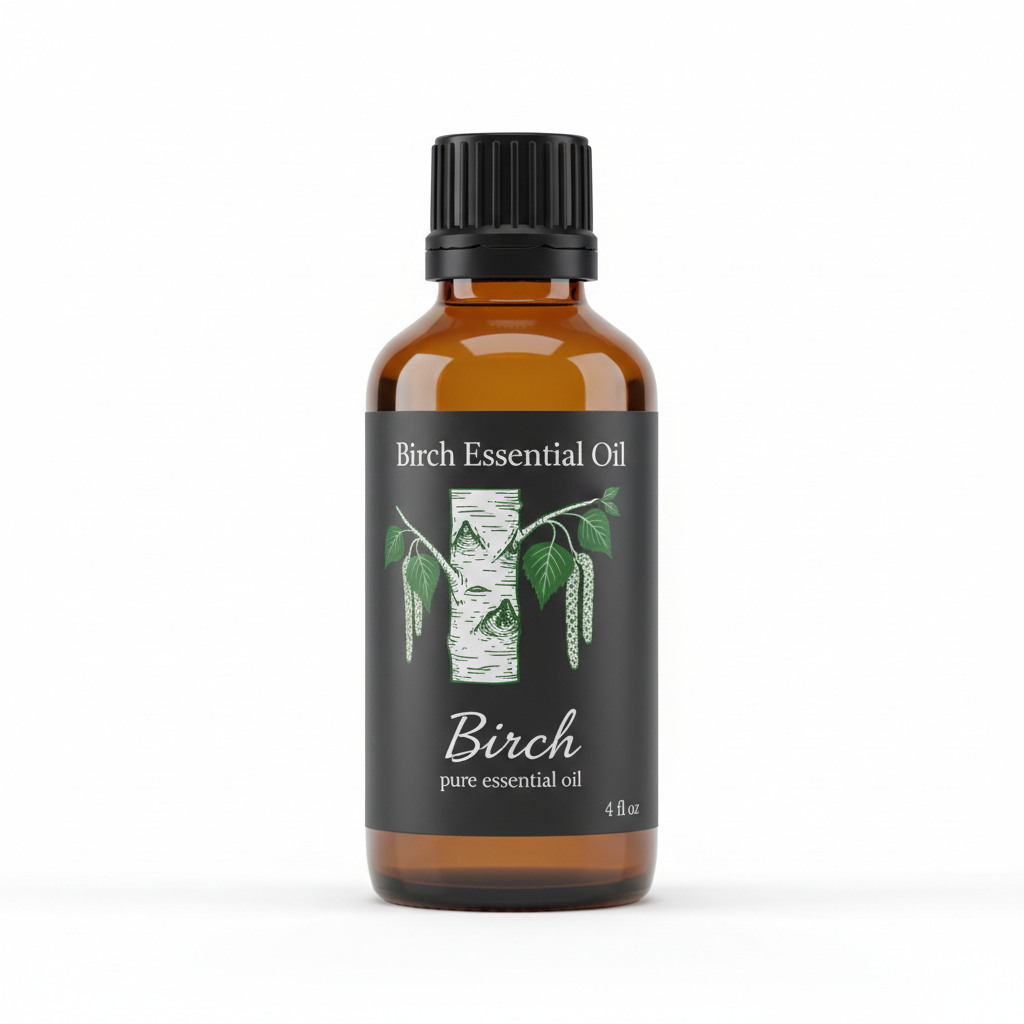
Birch Essential Oil
Birch Essential Oil from our own shop, in sizes from 1 oz to bulk.
From $17.99
Shop Now →Sources & Further Reading
- Lamson NI, 1990. Sweet Birch (Betula lenta L.). Silvics of North America, USDA Forest Service.
- Ellison G, 2018. Birch stills were once plentiful in the mountains. Smoky Mountain News.
- Dosoky NS, Poudel A, Satyal P, 2022. Plants 11(16):2132.
- Orwig D, Del Tredici P, 2016. Black birch after hemlock removal. Harvard Forest Symposium abstract.
- Commission Regulation (EU) 2023/1545, Annex III entry 324 (text mirror).