Birch Oil Muscle Rubs: What the Research Covers
Methyl salicylate is the active ingredient in some familiar over-the-counter rubs, and sweet birch oil is nearly all methyl salicylate. People put those two facts together and reach a conclusion, so it is worth looking at what the research on those products actually covers, and why a bottle of birch oil is a different thing altogether.
Why the idea feels so natural
Open a bottle of birch oil and the smell is instantly familiar: cool, sweet, medicinal-candy. For many of us that scent belongs to a gym bag, a locker room or a grandparent's bathroom cabinet. The nose makes the connection long before any facts arrive, which is exactly why it helps to slow down and look at what is actually known.
What the reviews of salicylate rubs looked at
A 2014 Cochrane review pooled trials of salicylate-containing rubefacients for muscle and joint pain. For acute pain it found a result that favored the products (six studies, 560 participants) but rated it very low quality and not robust, and it noted that any sign of benefit came from older, smaller studies while larger, more recent ones found no effect (Derry et al., 2014). An earlier BMJ review had been more optimistic, while cautioning that its estimates were unreliable for lack of good trials (Mason et al., 2004). The estimates weakened as better studies arrived.
One more detail matters here. These trials tested finished products that combined different salicylates with other ingredients. They say nothing about essential oil, and nothing in them carries over to a bottle of birch oil. We report them for context, not as an argument.
A regulated rub is not a neat bottle
The FDA's monograph for external analgesics permits methyl salicylate at 10 to 60% as a "counterirritant," and those products carry required warnings such as "For external use only" and "Do not apply to wounds or damaged skin" (FDA monograph M017). Authentic sweet birch oil is 93% to 99.8% methyl salicylate (Dosoky et al., 2022), which by simple arithmetic sits above that 60% ceiling. Neither the trial concentrations nor the monograph range describe an undiluted oil.
Regulation also looks at intent. The FDA says a product's status depends mainly on how it is intended to be used, judged from its labeling, website and advertising, and that claims such as easing pain or relaxing muscles are drug claims (FDA, Aromatherapy). That is why we present our birch oil as an aroma and craft material for candles and room scenting, and make no muscle claims for it.
What absorption looks like
Methyl salicylate passes through skin. One toxicology summary puts it at about 10 to 20% of an applied dose within 10 hours through intact skin (Hack, ACEP Now, 2025). In 12 volunteers using a 12.5% ointment, absorption rose with repeated application (Morra et al., 1996), and in six volunteers exercising in 40 C heat it rose more than threefold (Danon et al., 1986).
The FDA's 2012 safety review of over-the-counter muscle and joint products containing menthol, methyl salicylate or capsaicin identified 43 cases of first- to third-degree chemical burns. Most of the more serious burns involved products with more than 3% menthol and 10% methyl salicylate, and many followed a single application. The agency advised against tight bandaging, local heat and use on damaged skin (archived copy). Our own dilution guidance for any skin project is 0.5% to 2% in a carrier with a patch test first, though we think candles and room scenting are the safest home for this oil. Those absorption figures are also why anyone on warfarin should read our piece on aspirin sensitivity and blood thinners before going near methyl salicylate.
Where the scent really fits
If the smell is what you love, give it a home where it can simply be a smell. A candle with a trace of birch over fir or cedarwood does the same job in a room that the familiar cabinet smell does in memory, with the oil sealed in wax and away from skin. Our candle guide shows how little it takes. Keep your craft oil and any drug-labeled product in separate places, so the bottles never get mixed up.
If something hurts
Muscle and joint pain is a question for a pharmacist or physician, who can ask about the cause, your medications and your skin. A craft essential oil is not a stand-in for a labeled product. If you already own a drug-labeled rub, its label directions are the minimum to follow.
We sell birch oil for the cabin-candle side of life, and we think that is where it shines.
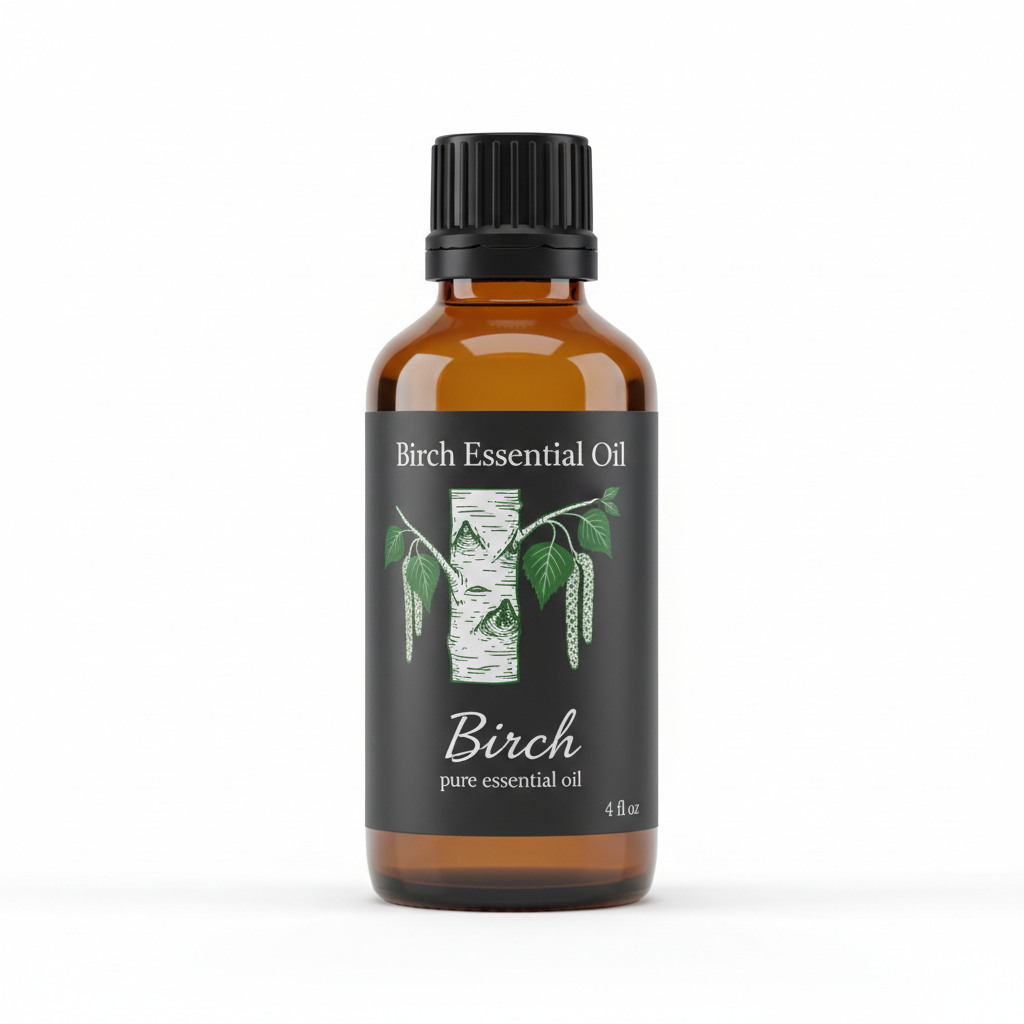
Birch Essential Oil
Birch Essential Oil from our own shop, in sizes from 1 oz to bulk.
From $17.99
Shop Now →Sources & Further Reading
- Derry S et al., 2014. Cochrane Database Syst Rev (11):CD007403.
- Mason L et al., 2004. BMJ 328:995.
- U.S. FDA, 2023. OTC Monograph M017: External Analgesic Drug Products.
- Dosoky NS, Poudel A, Satyal P, 2022. Plants 11(16):2132.
- U.S. FDA. Aromatherapy.
- Hack JB, 2025. Toxicology Answer: Oil of Wintergreen. ACEP Now.
- Morra P et al., 1996. Ann Pharmacother 30(9):935-940.
- Danon A et al., 1986. Eur J Clin Pharmacol 31(1):49-52.
- U.S. FDA, 2012. Drug Safety Communication on burns with OTC muscle and joint products (archived copy).