What Is Birch Essential Oil? Sweet Birch Explained
Open a bottle of birch oil and the first thing you notice is wintergreen candy, a cool, sweet, root-beer note with a woody edge. That is not a happy accident. Sweet birch oil is almost entirely one molecule, methyl salicylate, and understanding that one fact explains the scent, the strength of a single drop and the way we recommend using it.
One molecule with a small, telling tail
In a 2022 study of 21 sweet birch (Betula lenta) oils distilled from Pennsylvania bark, methyl salicylate made up 93% to 99.8% of each oil (Dosoky, Poudel and Satyal, Plants, 2022). What is left over is a tiny signature: traces of o-guaiacol, veratrole, two decadienals, a little ethyl salicylate and a few other compounds. That tail is what separates oil that came from a tree from oil that came from somewhere else.
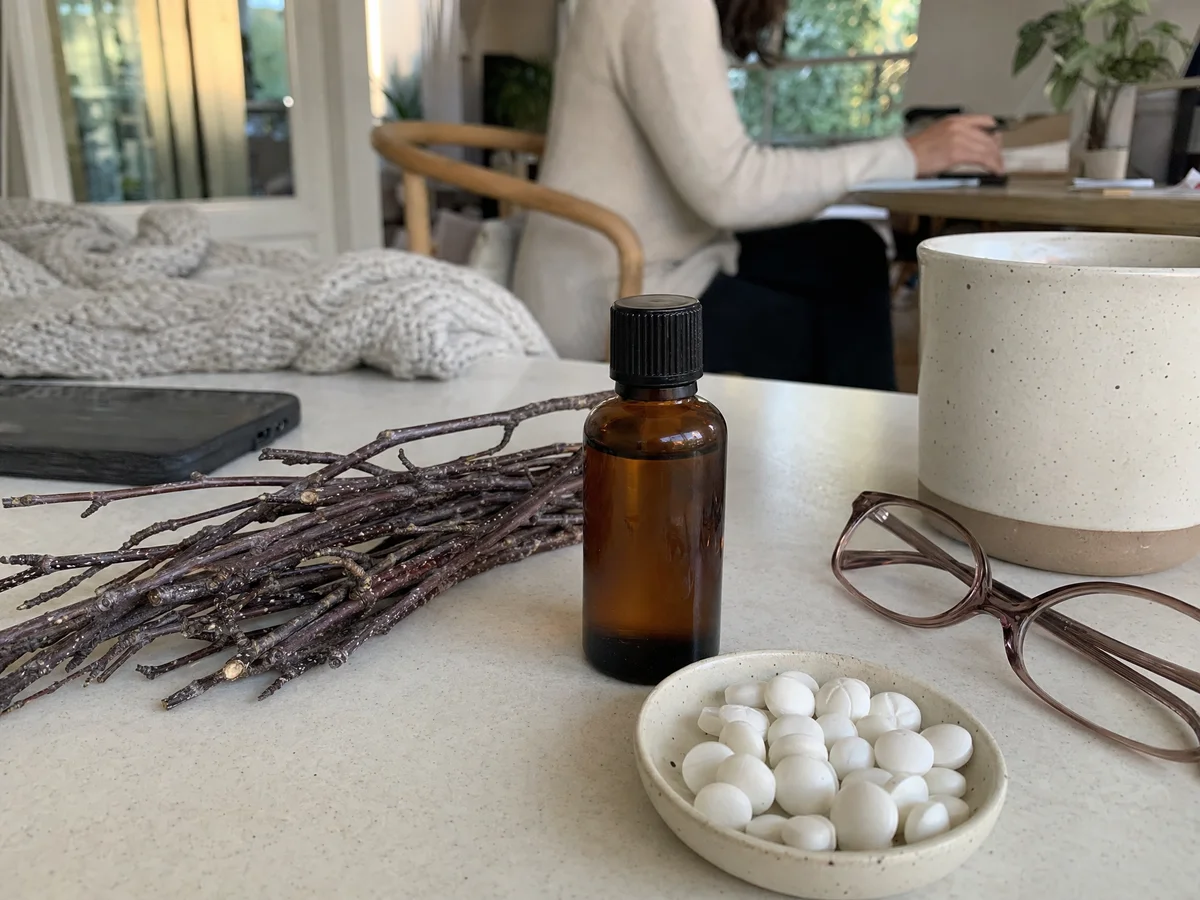
So the useful way to think about birch is not as a mild woodsy oil like cedarwood. It is a concentrated aroma material with a big personality. A trace flavors a whole blend, which is why it is so loved in cabin-style candles and winter room scents, and why we like to talk about it in drops and milligrams rather than spoonfuls. The chemistry gets its own treatment in the methyl salicylate article.
Three liquids that share a smell
Because the headline molecule is identical, a bottle marked "birch" can start from three different places.
| Material | Where it comes from | Methyl salicylate | What gives it away |
|---|---|---|---|
| Sweet birch oil | Distilled from Betula lenta bark | 93.2% to 99.8% (21 samples) | o-guaiacol, veratrole and two decadienals |
| Wintergreen oil | Distilled from Gaultheria procumbens, a small shrub | 99.5% to 100% (34 samples) | Vitispirane and beta-dehydroelsholtzia ketone |
| Synthetic methyl salicylate | Made industrially | Close to 100% | A marker compound, dimethyl hydroxy terephthalate |
The same study bought 27 birch oils from US online sellers. Methyl salicylate ranged from 56.7% to 99.9%, and none of the 27 carried the four natural birch markers. Six showed the synthetic marker and ten showed a wintergreen marker. The authors did not boil that down to a single adulteration rate, and neither will we. The takeaway is simpler: smell and a methyl salicylate percentage alone cannot tell these liquids apart, because the main molecule is the same in all of them.
Birch tar oil is a fourth, unrelated material. It is smoky and leathery, made by heating wood and bark, and it is not what we sell. The birch tar article tells the difference.
Why a real birch oil is a little treasure
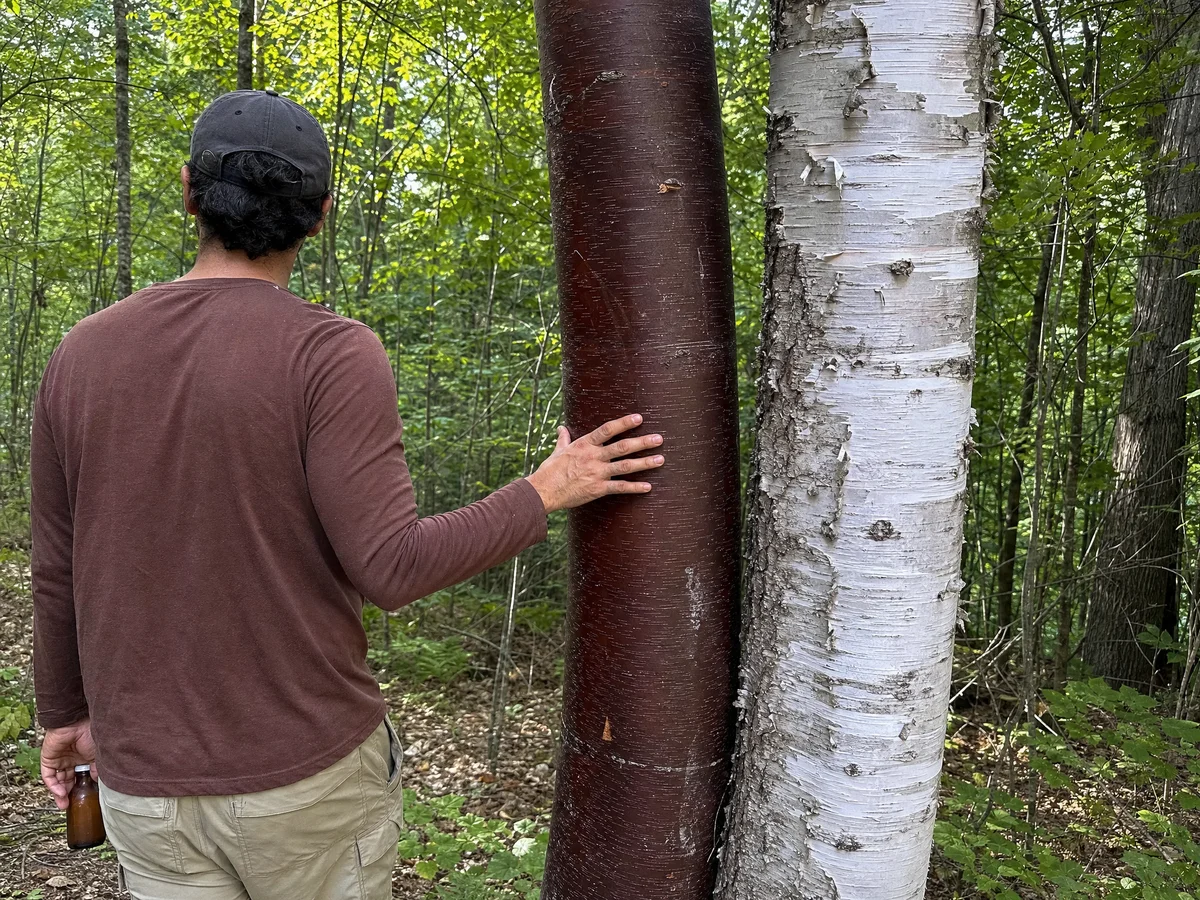
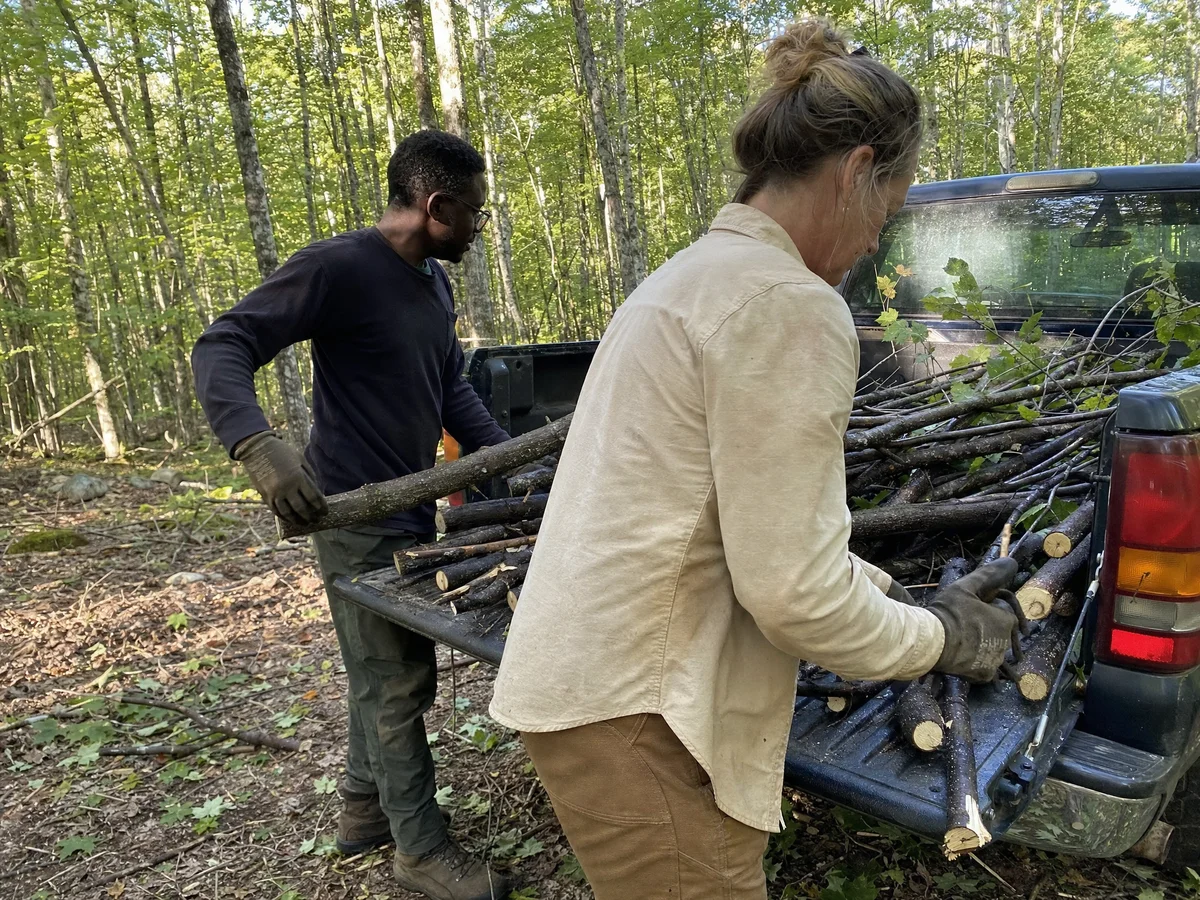
The US Forest Service notes that sweet birch was at one time the only source of oil of wintergreen (Lamson, Silvics of North America), and the tree was once heavily tapped for it until synthetic production took over in the middle of the twentieth century (Northern Woodlands). The yield explains why. Authentic oil came out at 0.07% to 0.1% by hydrodistillation, so a 1 oz bottle, about 35 g of oil at the density of the batch on our published certificate, represents very roughly 35 to 50 kg of plant material. That is an order-of-magnitude estimate, since the study does not say whether the yield was measured on fresh or dry bark. It is also a good reason to love a bottle that really came from the tree.
What we sell and how to read our certificate
We sell one product, Birch Essential Oil, undiluted and in sizes from 1 oz up to bulk. Our bark to bottle article describes how bark is macerated in warm water before distillation. The Certificate of Analysis we publish is for one batch. It names Betula lenta and lists a relative density of 1.183, a refractive index of 1.537 and "Optically Inactive" for optical rotation, with a conclusion that the batch complies with pharmacopoeia standards for birch oil.
Those numbers are meaningful. The density and refractive index sit inside the ranges compiled for methyl salicylate itself (about 1.176 to 1.185 and 1.534 to 1.538, per PubChem), and methyl salicylate has no chiral center, so optically inactive is exactly what you would expect. They describe the liquid well. What they cannot do is separate tree-derived oil from the look-alikes, which takes GC-MS marker analysis. If that matters for your project, ask us in writing through the contact page for the report on your lot, and wait for it before you build a product around the oil. Our lab report guide goes deeper.
Using it well, and who should sit this one out
Our recommendation is to treat birch as an aroma for candles and room scenting, at trace levels, and to keep it away from skin-contact products unless you are working far below the usual essential oil dilutions. Our guidance for skin is 0.5% to 2% in a carrier with a patch test first. European cosmetics law sets methyl salicylate at 0.06% in leave-on and most rinse-off products (Regulation (EU) 2023/1545), and the Tisserand Institute lists 2.5% as a topical maximum for sweet birch (Tisserand Institute). We suggest following the stricter figure for anything on skin.
Tisserand also advises against sweet birch for children of any age, in pregnancy and with blood-thinning medication, and Poison Control compares swallowing wintergreen oil to swallowing a large number of aspirin tablets (Poison Control). So keep the bottle out of reach, never use it internally, and ask a physician or pharmacist if pregnancy, anticoagulants or aspirin sensitivity apply. Our pregnancy and children article and aspirin sensitivity article cover the details, and Poison Help is 1-800-222-1222 if anyone swallows the oil. We sell this as an external aroma material, and we make no health claims for it.
If you remember one thing, make it this: a little of this oil goes a very long way, and the bottle rewards patience and a light hand.
The best question to ask of any birch oil, ours included, is what the seller can document for your lot.
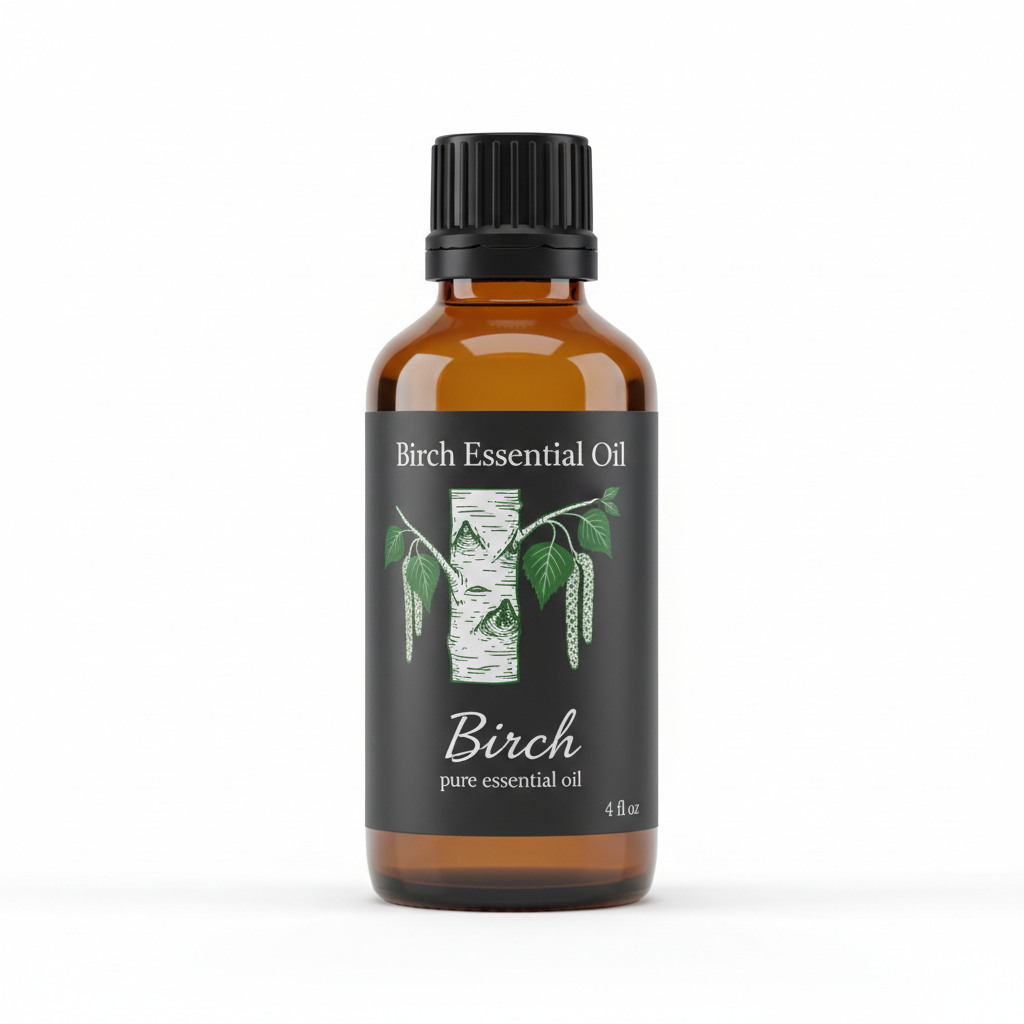
Birch Essential Oil
Birch Essential Oil from our own shop, in sizes from 1 oz to bulk.
From $17.99
Shop Now →Sources & Further Reading
- Dosoky NS, Poudel A, Satyal P, 2022. Authentication and Market Survey of Sweet Birch (Betula lenta L.) Essential Oil. Plants 11(16):2132. pmc.ncbi.nlm.nih.gov
- Lamson NI, 1990. Sweet Birch (Betula lenta L.). Silvics of North America. research.fs.usda.gov
- Barlow V, 2008. Black Birch. Northern Woodlands. northernwoodlands.org
- PubChem, Methyl salicylate (CID 4133). pubchem.ncbi.nlm.nih.gov
- Regulation (EU) 2023/1545, Annex III entry 324 (text mirror). lawplayer.com
- Tisserand Institute, Methyl Salicylate (Essential Oil Constituents in Food, Part 5). tisserandinstitute.org
- Poison Control (National Capital Poison Center), Essential oils. poison.org