Birch Solid Perfume: How to Add Just a Whisper
Solid perfume is a small pleasure: a tin of wax and oil that warms on the skin and carries a scent in a pocket. Birch can add a cool wintergreen glint to one, but only a glint. A leave-on balm is where the oil's published limit is tightest, so the fun is in designing a scent where a whisper of birch makes everything else sparkle.
Why the usual fragrance load changes
Solid perfume recipes load fragrance generously. One supplier's recipe says general fragrance percentages for solid perfumes run 10% to 15% (Wholesale Supplies Plus). Birch oil is 93% to 99.8% methyl salicylate (Dosoky et al., 2022), and European cosmetics law sets that compound at 0.06% in leave-on skin products (Regulation (EU) 2023/1545, entry 324). Ten percent birch would be about 167 times that figure. The Tisserand Institute's recommended topical maximum for sweet birch is 2.5% (Tisserand Institute), and even that is a quarter of the lowest fragrance load above.
Our general skin guidance is 0.5% to 2% in a carrier. For a leave-on balm worn for hours we recommend the stricter 0.06% figure, and that is what the formula below follows. It also means birch is the accent in the fragrance, not the whole of it, which is where it shines anyway.
The formula for one 15 g tin
| Ingredient | Weight | Note |
|---|---|---|
| Beeswax | 3.9 g | Wax to oil of about 1 to 2.5 |
| Jojoba oil | 8.8 g | Reduced from 9.6 g because the stock carries jojoba |
| Birch stock (1% birch in jojoba) | 0.8 g | Holds 8 mg of birch oil |
| Your other fragrance materials | 1.5 g | About 10% of the tin; check each one's own limits |
The total is 15.0 g, and 8 mg of birch in 15,000 mg is 0.053%, under 0.06%. Put another way, birch is about 0.5% of the 1.5 g fragrance portion, which is a very good description of a whisper. We sell only birch, so the wax, jojoba, tins and companion fragrance materials come from a craft or soap supplier.
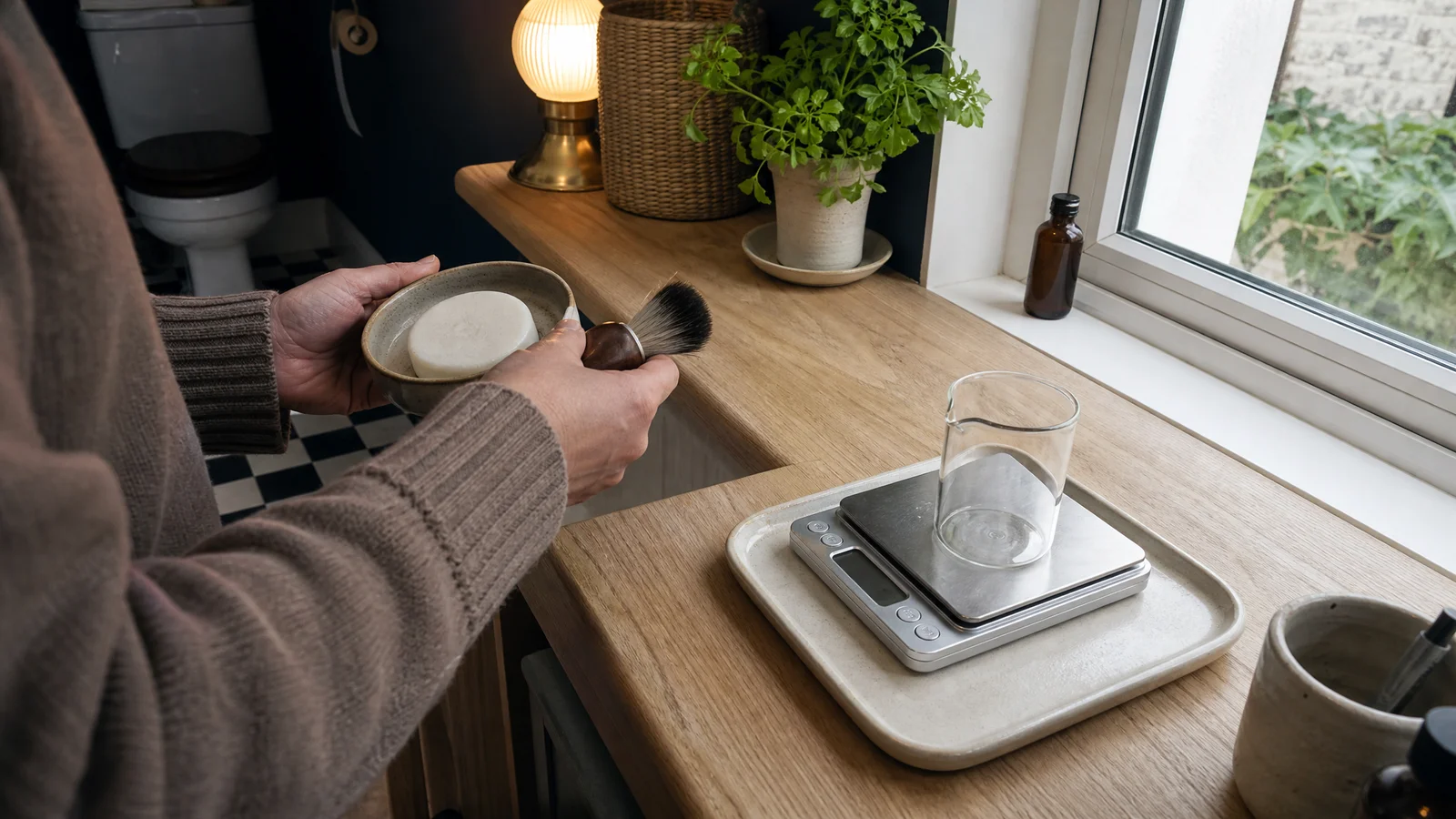
The stock is what makes weighing possible. Eight milligrams of the oil on our published certificate, at a relative density of 1.183, is about 7 microliters, which no dropper can meter. Instead, stir 1 g of birch into 99 g of jojoba and weigh 0.8 g of that stock into each tin. A scale that reads to 0.1 g can be off by 0.05 g, and at 0.8 g of stock the worst case is about 8.9 mg of birch, which still sits under the 9 mg ceiling. Do not round up to 0.9 g of stock.
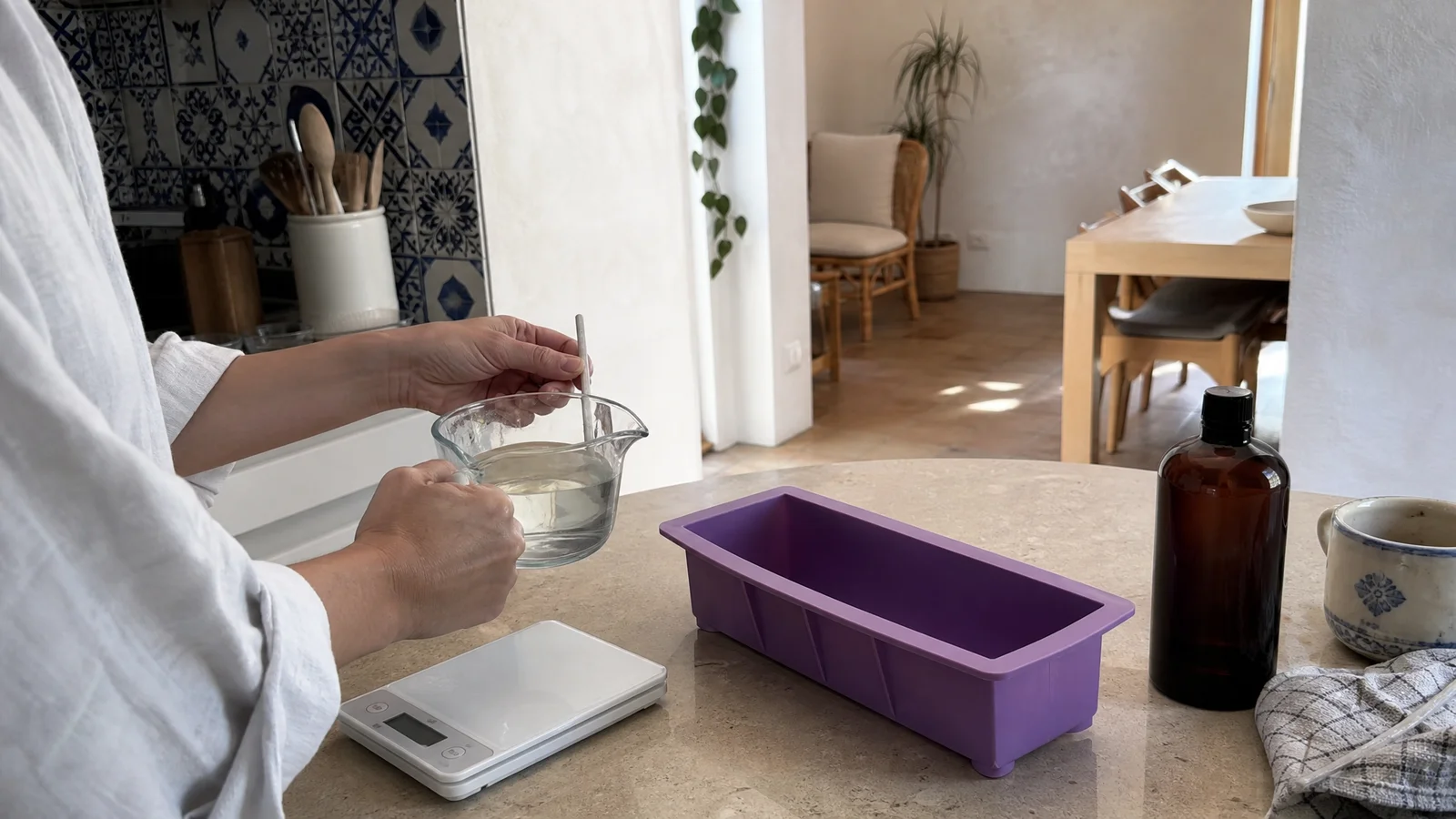
Melt the wax and jojoba together, take the pot off the heat, then stir in the stock and the rest of the fragrance as late and as cool as the base allows. PubChem's record lists methyl salicylate as sensitive to light and heat (PubChem). Pour into the tin and let it set undisturbed.
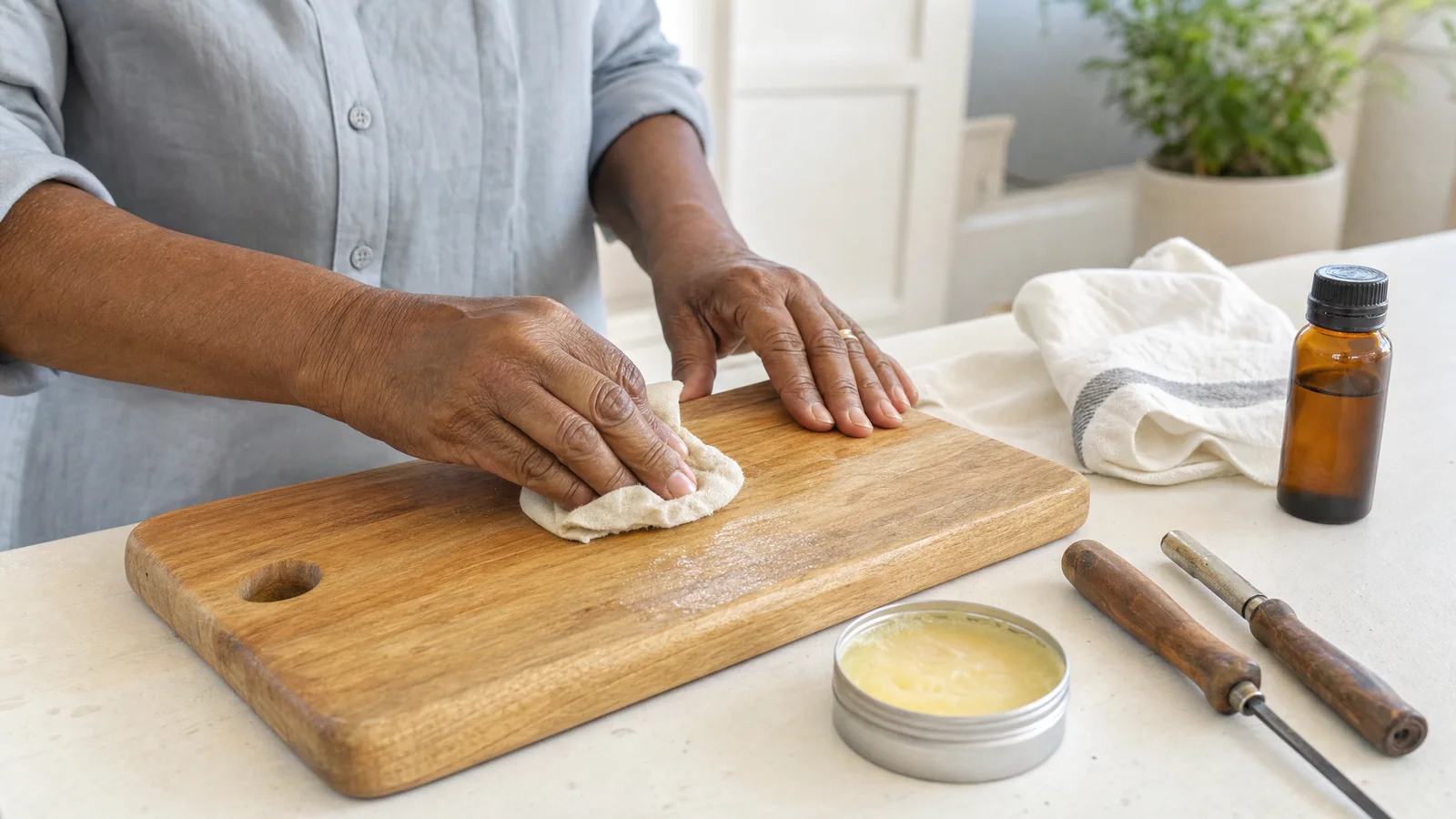
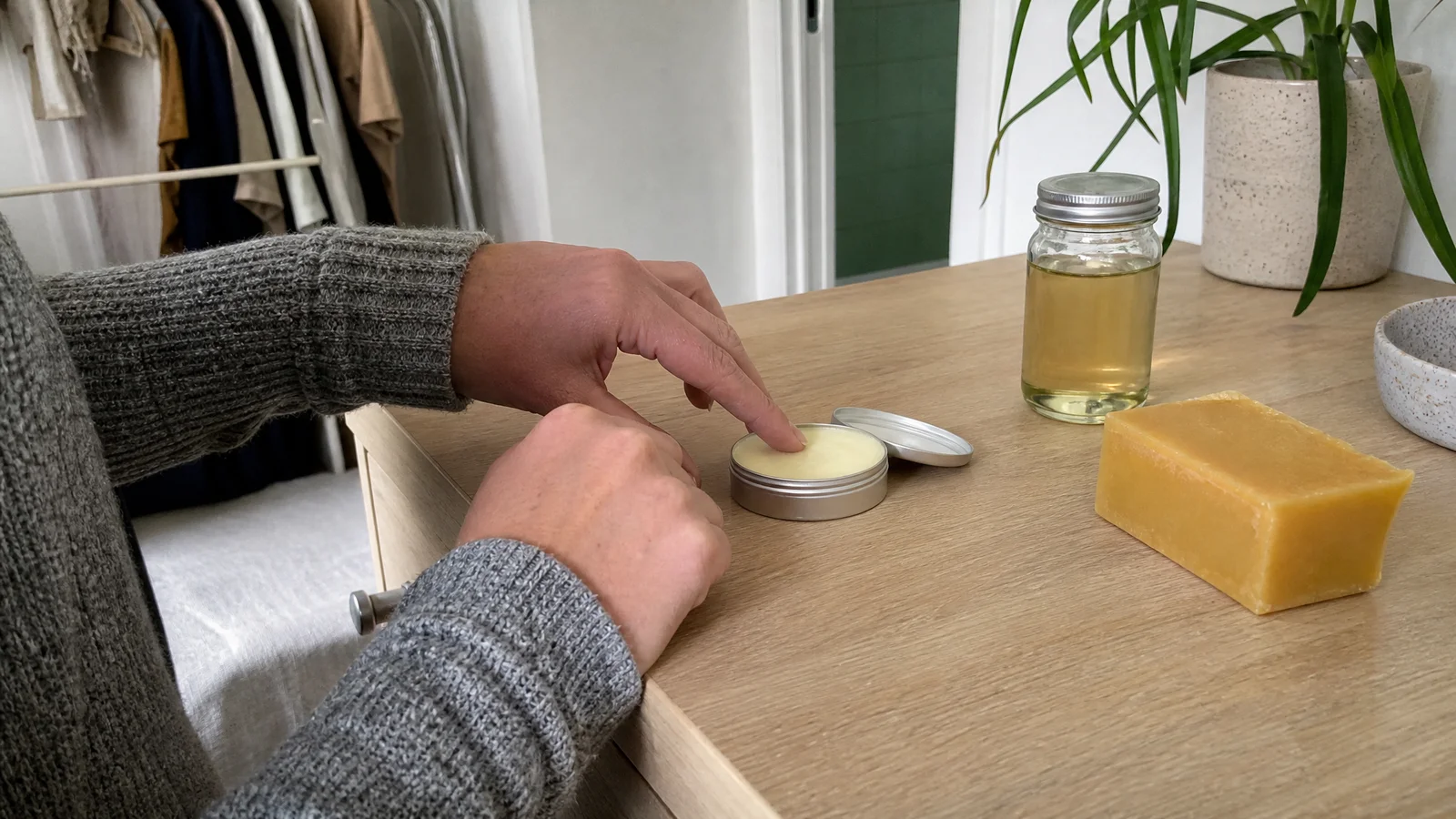
A tin of solid perfume is a very tactile thing, so judge it with your fingers as well as your nose. Once it has set, press a fingertip lightly into the surface. It should give a little and melt into a thin, glossy film on your skin. If it feels like a candle, the base is too hard; if it smears like soft butter, it is too soft. Either way, write down what you changed so the next tin is better, and leave the lid off until the wax is completely set.
Designing the scent around the trace
ScenTree describes methyl salicylate as a heart note that needs only a very low dilution to make its impact felt (ScenTree). So think of birch as seasoning. It pairs beautifully with the woods and resins we suggest for blends, such as fir, cedarwood, vanilla and sandalwood, and with citrus and lavender in a barbershop direction. Our barbershop and fougere worksheet and vanilla and birch article offer ideas for the other 1.5 g. A good habit is a paper-strip comparison: the same base with and without the stock, judged side by side, so you can decide whether the glint earns its place.
Quantity points the same way. A 1 oz bottle holds about 35 g of oil, and at 8 mg a tin that is thousands of tins, while 100 g of stock makes about 125. If solid perfume is your only project, one small bottle, or a shared one, goes a very long way, and birch also does well in a candle, where there is more room to enjoy it.
Small habits that make the tin yours
Write the date and the weights on a card, or on the bottom of the tin with a marker, before you forget. Months from now, when one batch turns out to be your favorite, you will be glad the recipe is written down rather than remembered. When you do the paper-strip comparison, try one more thing: put a little on your wrist and walk away. Come back after an hour and notice whether the cool glint is still there or has settled into the background. A whisper is something you find when you go looking for it, not something that announces you when you walk into a room.
It is also worth having a plain tin with no birch at all in your test round. Smelling the two together makes the stock's contribution obvious, and it keeps you honest about whether the trace is earning its place.
Who should leave it out
Do not use birch on children, during pregnancy or breastfeeding, if you take anticoagulants or are sensitive to aspirin, or on broken skin. The EU's scientific committee describes methyl salicylate as a weak skin sensitiser in humans and an eye irritant (SCCS/1633/21). Treat 0.06% as a ceiling to stay under, not a target to reach, patch test before wearing it, and check our dilution chart for the other limits.
Birch Essential Oil
Birch Essential Oil from our own shop, in sizes from 1 oz to bulk.
From $17.99
Shop Now →Sources & Further Reading
- Wholesale Supplies Plus, DIY Solid Perfume Recipe. wholesalesuppliesplus.com
- Dosoky NS, Poudel A, Satyal P, 2022. Plants 11(16):2132. pmc.ncbi.nlm.nih.gov
- Regulation (EU) 2023/1545, Annex III entry 324. lawplayer.com
- Tisserand Institute, Methyl Salicylate (Part 5). tisserandinstitute.org
- PubChem, Methyl salicylate (CID 4133). pubchem.ncbi.nlm.nih.gov
- ScenTree, Methyl salicylate. scentree.co
- SCCS/1633/21, Opinion on methyl salicylate. health.ec.europa.eu