Birch Essential Oil FAQ: Common Questions Before You Buy
If you've been reading ingredient labels, comparing bottles, or just trying to figure out whether birch essential oil is right for your home, you probably have a running list of questions. This birch essential oil FAQ pulls together the common questions about birch oil we hear most often, grouped by theme so you can jump to what matters to you: what the oil actually is, whether birch essential oil is safe to diffuse, how to dilute it, and what to look for when comparing suppliers. Think of it as the birch oil questions before buying checklist we wish someone had handed us early on.
Understanding Birch Essential Oil
What is birch essential oil, and where does it come from?
Birch essential oil is steam-distilled from the bark of sweet birch (Betula lenta) trees, most often sourced from cool northern forests in the United States and Canada. Distillers typically work with bark harvested from mature trees, since the aromatic compounds concentrate there rather than in the leaves or wood. If you're curious about the full process, our walkthrough of bark-to-bottle distillation covers each step.
What does birch essential oil smell like?
Most people describe it as crisp, minty, and slightly sweet, with a woody undertone that lingers after the initial brightness fades. It's often compared to wintergreen because the two share a dominant aromatic compound. For a closer breakdown of the scent profile, see what birch essential oil actually smells like.
Is birch essential oil the same as wintergreen oil?
Not exactly, though the confusion is understandable. Both oils get their signature scent from methyl salicylate, but they're distilled from different plants using different methods, and sourcing, sustainability, and price can vary quite a bit between the two. We've written a longer comparison in birch oil versus wintergreen: scent myths explained if you want the full picture.
What's the chemistry behind that wintergreen-like scent?
The aromatic compound responsible is methyl salicylate, which occurs naturally in sweet birch bark and gives the oil its recognizable minty-sweet character. Understanding this compound also explains a lot about how birch oil should be handled and diluted. Our deep dive into methyl salicylate chemistry goes further into how it behaves in blends and on skin.
What's the difference between sweet birch and white birch oil?
Sweet birch (Betula lenta) is the species most associated with the classic wintergreen-like aroma, while white or paper birch bark doesn't yield the same compound profile and is used more for its own distinct, milder woody character. When a label just says "birch essential oil" without specifying species, it's worth asking the supplier which tree it came from. We compare the two directly in white birch versus sweet birch oil.
Safety Questions Before You Buy
Is birch essential oil safe to diffuse?
Many people diffuse birch oil in small amounts as part of a home fragrance rotation, typically a few drops in a well-ventilated room rather than continuously all day. As with any essential oil, individual sensitivity varies, so starting with a shorter session and paying attention to how you and anyone else in the room respond is a reasonable approach. If you have specific concerns, particularly around young children, pregnancy, or anyone with known sensitivities, checking with a qualified healthcare provider before regular use is the safest path.
Can I apply birch essential oil directly to my skin?
Undiluted application isn't something we'd recommend. Birch oil is concentrated, and like most essential oils it should be blended into a carrier oil before it touches skin. Our safety basics and sensible dilution guide walks through ratios and application tips in more detail.
What's a reasonable dilution ratio for birch oil in DIY blends?
A common starting point for body-safe blends is around 1 to 2 percent, which works out to roughly 5 to 10 drops of essential oil per ounce of carrier oil such as jojoba or sweet almond oil. For a first-time blend, or for use on sensitive areas, starting lower and adjusting from there is a sensible approach. Always dilute before the oil contacts skin, and avoid using it around the eyes or on broken skin.
Should I patch test before using birch oil on my skin?
Yes. Apply a small amount of your diluted blend to an inconspicuous area, like the inside of your forearm, and wait 24 to 48 hours before using it more broadly. This simple step catches most individual sensitivities before they become a bigger issue, and it's worth doing every time you try a new supplier or a new blend, not just the first time.
Are there people who should be extra cautious with birch oil?
Anyone who is pregnant or nursing, caring for young children, or managing a sensitive skin type should approach any new essential oil, birch included, with extra care and a lower starting concentration. If you take regular medication or have any concerns about how a particular ingredient might interact with your circumstances, a conversation with a qualified healthcare provider before use is the most reliable way to get guidance specific to you. This oil, like any essential oil, is intended for cosmetic and aromatic use only.
Diffusing and Aromatic Use
How much birch oil should I use in a diffuser?
Diffuser sizes and manufacturer guidance vary, so it's worth checking your specific device's instructions first. As a general starting point, many people use around 3 to 5 drops in a standard reservoir and run it in intervals rather than continuously.
Can I diffuse birch oil around pets?
This is one of the birch oil questions before buying that deserves real caution. Cats in particular process aromatic compounds differently than people or dogs do, so it's worth checking with your veterinarian before diffusing around them, and always giving any pet the option to leave the room. Our guide for pet owners goes into more detail on ventilation and exposure.
What blends well with birch essential oil aromatically?
Birch pairs naturally with other winter and woodland notes: conifers like fir or spruce, citrus for brightness, and mint for extra crispness. For a full set of combinations to try, see blending birch with conifers, citrus, and mint, and if you're comparing it against another popular cold-weather scent, birch versus eucalyptus for winter diffusing is worth a read too.
How long can I diffuse birch oil at a time?
Shorter, intermittent sessions, something like 30 to 60 minutes with breaks in between, tend to be more comfortable than running a diffuser continuously for hours. Keep the room ventilated, and reduce the amount or the duration if the scent feels overwhelming to anyone in the space.
Buying and Quality Questions
How do I know if a birch essential oil is high quality?
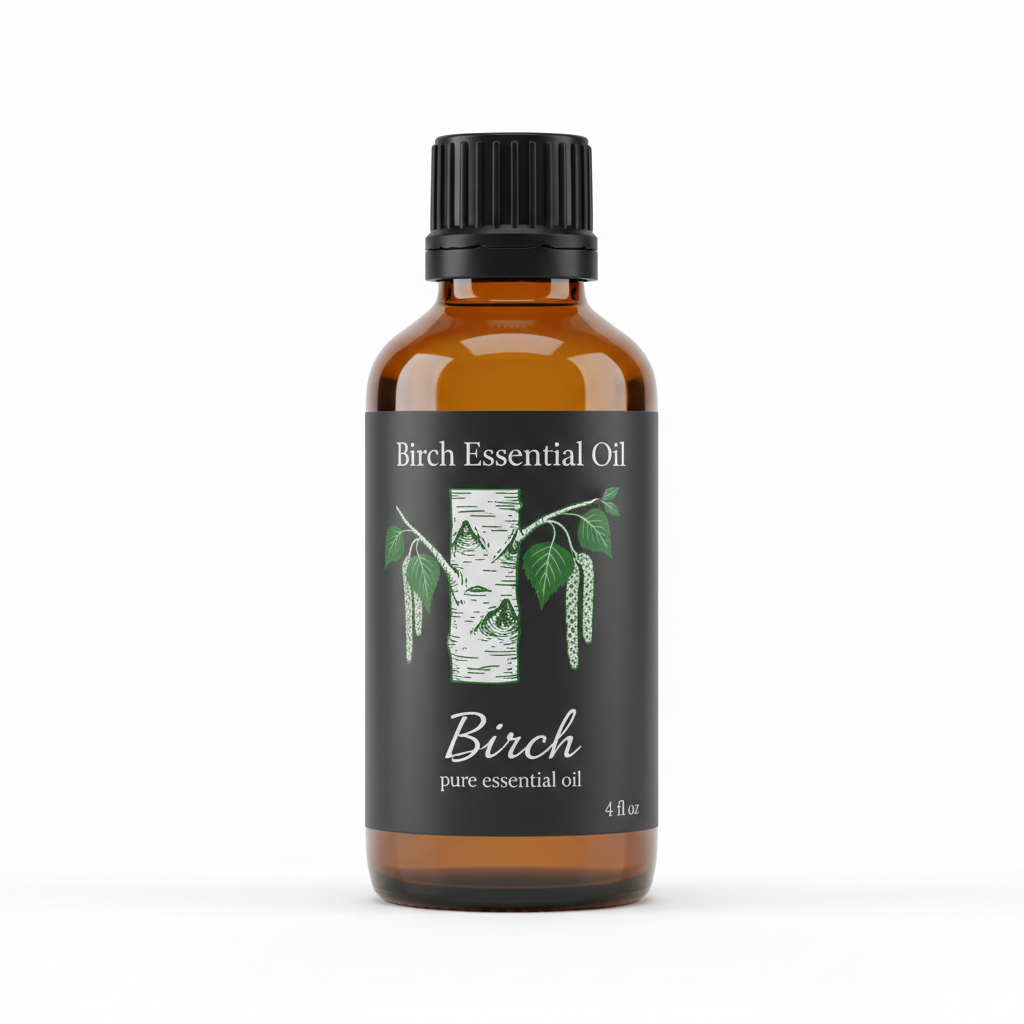
Look for the Latin name Betula lenta on the label, a clear statement of steam distillation, and ideally batch-specific testing information from the supplier. Packaging matters too: quality oils are typically bottled in amber or cobalt glass to protect against light degradation. Our complete quality-buying guide covers label details worth checking before you order.
Why do birch oil prices vary so much between brands?
Sourcing practices, harvest sustainability, batch testing, and bottle size all factor into price differences. Oil that's wild-harvested and independently tested tends to cost more than mass-produced or synthetically supplemented versions. For a closer look at what drives cost, see how much birch essential oil costs and why.
Is birch essential oil ever adulterated with synthetic wintergreen compounds?
It can be, since methyl salicylate can be produced synthetically at a much lower cost than distilling it from real bark. This is exactly why third-party testing and transparent sourcing matter when comparing suppliers. Our guide to spotting real sweet birch oil lists the specific quality checks to run before you buy.
Is GC/MS testing important when buying birch oil?
Gas chromatography-mass spectrometry (GC/MS) testing verifies the actual chemical composition of a batch, which helps confirm the oil hasn't been diluted with synthetic material or another plant extract. Reputable suppliers will usually share a batch-specific report on request or post it directly on their product page. If a seller can't or won't provide one, that's worth factoring into your decision.
DIY, Blending, and Storage
How should I store birch essential oil to keep it fresh?
Keep the bottle tightly capped in a cool, dark place away from direct sunlight and temperature swings, ideally in its original amber glass container. Properly stored, an unopened bottle can typically stay in good condition for two to three years. Our storage and shelf life guide has more specifics on signs the oil has started to degrade.
Can I make my own blend with birch oil at home?
Yes, as long as you dilute it properly in a carrier oil and patch test before broader use. Common beginner mistakes include using too much oil, skipping the patch test, or pairing it with other strong oils without accounting for total concentration. Before you start, it's worth reading 10 birch essential oil blending mistakes to avoid so you don't repeat the most common ones.
Does birch oil have uses beyond skin and diffuser blends?
Some people use birch essential oil in non-cosmetic household projects as well, such as furniture care, where its scent and natural properties as a wood oil are the draw rather than any skin application. If that's the direction you're headed, our DIY wood conditioner recipe is a good starting point.
What should I check before placing my first order?
Confirm the species (Betula lenta for the classic wintergreen-like profile), ask about testing documentation, check the bottle size against how often you'll actually use it, and read a supplier's storage and shipping practices if you're ordering in warmer months. Starting with a smaller bottle is a reasonable way to confirm you like the scent and how your skin responds before committing to a larger size.
Still have a question that wasn't covered here? Most of what you'll want to know before buying comes down to sourcing, dilution, and honest testing information from the supplier, so when in doubt, ask directly and expect a straight answer.