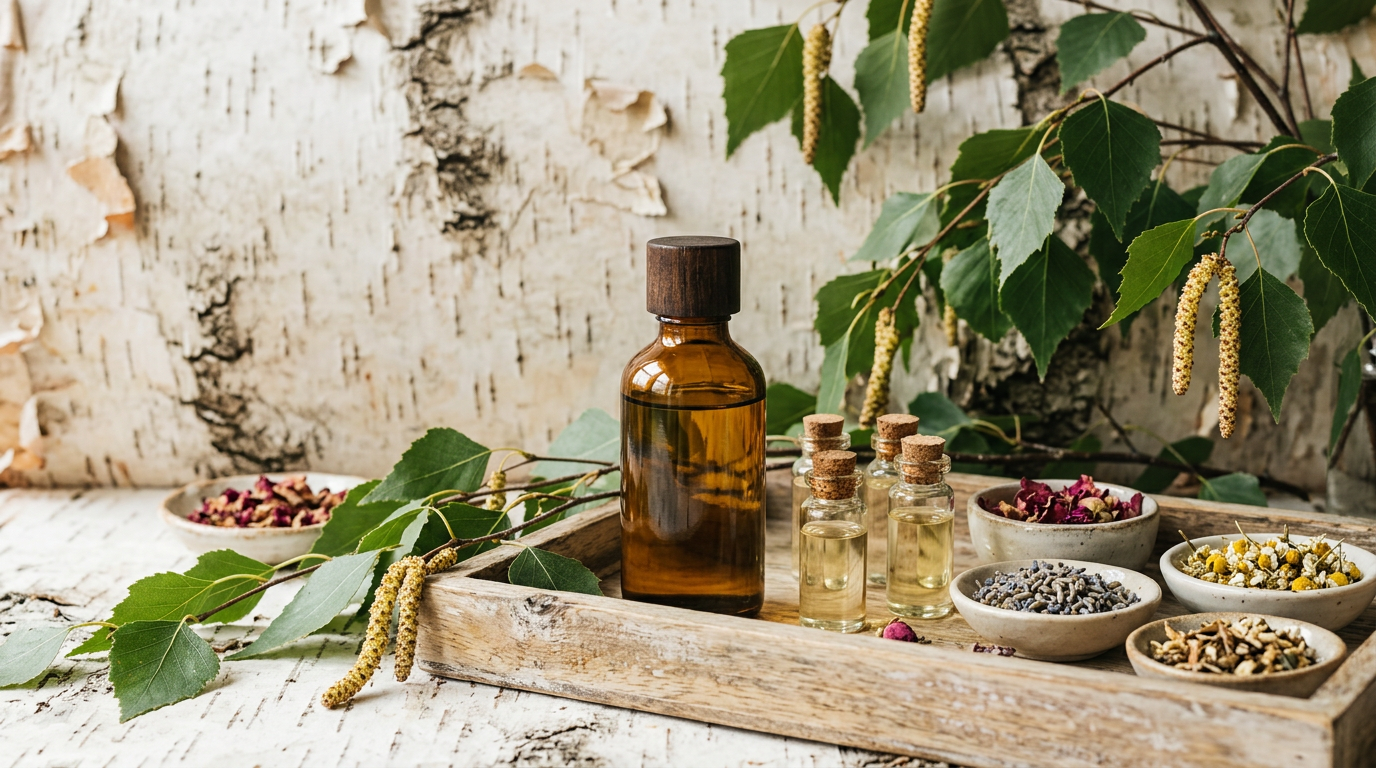
Cabincore Fragrance: Why Birch Essential Oil Is Trending Right Now
If your feed has turned into a scroll of plaid wool blankets, wood-paneled reading nooks, and steam rising off a mug by a frosted window, you've already met the cabincore fragrance trend. What started as a visual aesthetic has, over the past year, become a scent conversation. People aren't just decorating like they live in a northern cabin. They want their home to smell like one. That's where birch essential oil trending scent searches come in: crisp, cool, faintly minty, and unmistakably forest floor rather than florist shop.
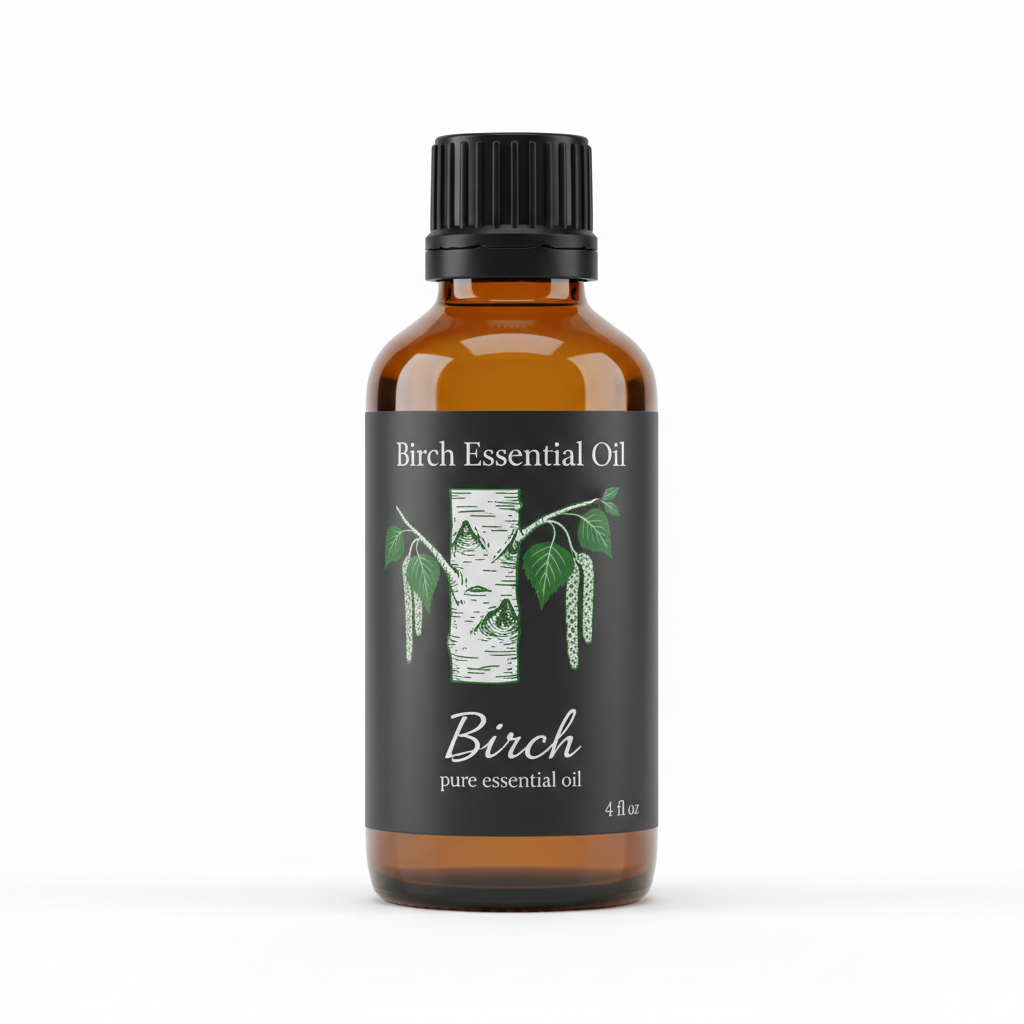
This piece looks at why birch is having a moment inside the broader forestcore aesthetic scent movement, how to actually build a cozy cabin fragrance 2026 style at home, and where to be careful along the way.
What Is Cabincore, and Why Does It Need a Scent?
Cabincore is a design language: exposed wood, wool textiles, candlelight, low clutter, a general sense of having escaped somewhere quieter. Forestcore is its wilder cousin, leaning less into curated interiors and more into moss, bark, and the idea of a forest floor brought indoors. Both trends have been building on Pinterest and TikTok for a couple of seasons, and both eventually ran into the same limitation: you can style a room to look like a cabin, but a photo can't carry a smell.
That gap is exactly what's pulling people toward home fragrance right now. A candle or a diffuser blend finishes the room in a way that furniture alone can't. And when people search for a scent to match a forest aesthetic, they tend to land somewhere far from the usual vanilla-and-sugar cozy playbook. They want something that smells like it grew outside, not something that smells like a bakery.
Why Birch Keeps Showing Up in Cabincore Fragrance Searches
Sweet birch essential oil has a scent profile that most cozy-season staples don't: cool, minty, faintly sweet, with a woody base that reads more like snow-dusted bark than a spice rack. It sits closer to wintergreen than to cinnamon or clove, which makes it stand out in a fragrance category that otherwise repeats the same warm-spice notes every autumn.
That distinctiveness is a big part of why birch fits the cabincore fragrance trend so well. Forestcore isn't asking for "cozy" in the generic sense. It's asking for something that smells specific: a particular tree, a particular cold-morning air, a particular walk through actual woods. Birch delivers that specificity in a way a generic "balsam and cedar" blend often doesn't.
If you're not sure what the raw oil smells like before you start blending, it's worth reading through what birch essential oil actually smells like first, since the wintergreen-forward profile surprises people who expect something closer to pine.
Building a Cozy Cabin Fragrance at Home
You don't need a large collection of oils to get a convincing cabincore effect. A few well-chosen combinations do most of the work.
Diffuser Blends
Birch pairs naturally with conifer notes like fir or pine, which is where most of the "walking through a northern forest" effect comes from. A simple starting ratio is 2 drops birch to 3 drops fir or pine, adjusted to your diffuser's size and your own preference. For a more layered version, see the northwoods diffuser blend guide, which walks through ratios for smaller rooms versus open living spaces.
DIY Room Spray
A basic room spray recipe: combine 10 to 15 drops of essential oil total (a mix of birch, fir, and a touch of cedarwood works well) with 2 tablespoons of high-proof alcohol or witch hazel as a dispersant, then top off a 4-ounce glass spray bottle with distilled water. Shake before each use. Always patch test a small amount on skin or fabric first, and keep any spray away from eyes, broken skin, and reach of children and pets.
Candles and Wax Melts
Birch's cool, resinous character holds up well in soy and coconut wax blends, especially paired with a touch of smoky birch tar for a fireside note. If you're set on the crackling-fire effect specifically, the fireside candle scent guide covers fragrance load percentages and which birch variety gives the most convincing smoke note without tipping into harshness.
Linens and Sachets
For closets, drawers, or throw blankets, a few drops of diluted birch oil on an unscented sachet or wool dryer ball gives a subtle, lasting version of the same forest note, without needing heat or a diffuser running constantly.
Seasonal Variations: Adjusting Birch Blends Through the Year
Part of what makes birch versatile for a cozy cabin fragrance 2026 approach is that it doesn't have to stay locked into deep winter. Adjusting the supporting notes shifts the same base oil across the whole year.
| Season | Suggested pairing | Effect |
|---|---|---|
| Fall | Birch, clove bud, sweet orange peel | Warm, spiced, still forest-forward |
| Winter | Birch, fir, a touch of vanilla-adjacent warmth | Deep, fireside, snowbound cabin |
| Spring | Birch, bergamot, a hint of mint | Lighter, "melting snow" freshness |
| Summer | Birch, peppermint, eucalyptus (light dilution) | Crisp, open-window, cabin-porch air |
For the winter pairing, the vanilla and birch blending guide is a good reference for keeping the sweetness subtle rather than letting it overpower the woody base. And for lighter seasonal versions, the birch, citrus, and mint blending guide covers ratios that keep things from tipping into medicinal territory, which is an easy mistake with birch's naturally strong minty note.
A Few Safety Basics Before You Start Blending
Sweet birch essential oil is potent and should always be diluted before it touches skin or fabric that touches skin. A general topical dilution guideline is 1 to 2 percent (roughly 1 to 2 drops of essential oil per teaspoon of carrier oil) for adult use, and always patch test on a small area first. Keep essential oils away from children, pets, and anyone who is pregnant or nursing without first checking with a qualified healthcare provider, since birch oil's chemistry has specific considerations that not every carrier oil or blend accommodates. Never ingest essential oils. If you have any skin sensitivity or existing condition, talk to a healthcare provider before adding a new oil to your routine.
For a fuller walkthrough of ratios, patch testing, and where birch differs from milder oils, see birch essential oil safety basics.
Sourcing Birch Oil That's Actually Worth the Trend
Trend-driven demand tends to bring a wave of lower-quality or mislabeled products into the market, and birch is an easy category to get confused. "Birch oil," "wintergreen oil," and "birch tar oil" are related but chemically distinct, and synthetic "birch fragrance oil" is a different product entirely from steam-distilled sweet birch essential oil, even though the labels can look nearly identical on a shelf. Before buying based on the cabincore fragrance trend alone, it's worth checking sourcing details like distillation method, plant part, and country of origin. A supplier who won't share that information is usually a sign to look elsewhere.
The complete guide to buying quality birch essential oil breaks down what those labels actually mean and what questions to ask a supplier directly.
Common Blending Mistakes When Chasing the Cabincore Look
The most common misstep with a trending scent is overcorrecting: using too much birch in an attempt to make a blend read as authentically "forest," which instead tips it into a sharp, medicinal smell closer to a first-aid cabinet than a cabin. Birch is strong enough that it should usually play a supporting role rather than dominate a blend, especially in a diffuser running for hours at a time.
A rundown of the other frequent errors, from mismatched carrier oils to poor bottle storage habits that shorten a blend's shelf life, is covered in 10 birch essential oil blending mistakes to avoid.
Quick Answers Before You Buy
New to birch oil specifically and not sure where to start? The birch essential oil FAQ answers the most common first-time-buyer questions, including diffuser safety basics and how to tell if a bottle has gone off.
Beyond the Diffuser: Bringing Cabincore Into the Rest of the Home
Fragrance is only one layer of the cabincore aesthetic. Birch oil's woody character also lends itself to non-fragrance uses around the house, like conditioning real wood furniture so it smells (subtly) as good as it looks. The DIY birch wood conditioner guide is a natural next step if you're leaning fully into the aesthetic.
Trends move fast, and by next season the algorithm will have moved on to something else. But birch's appeal isn't only about timing. It's a genuinely distinct, cold-weather scent that most home fragrance collections were missing before cabincore made people go looking for it. Start small, dilute properly, and build a blend around one clear note rather than crowding in every conifer on the shelf at once. That's the difference between a room that smells like a candle aisle and one that actually smells like a cabin.